
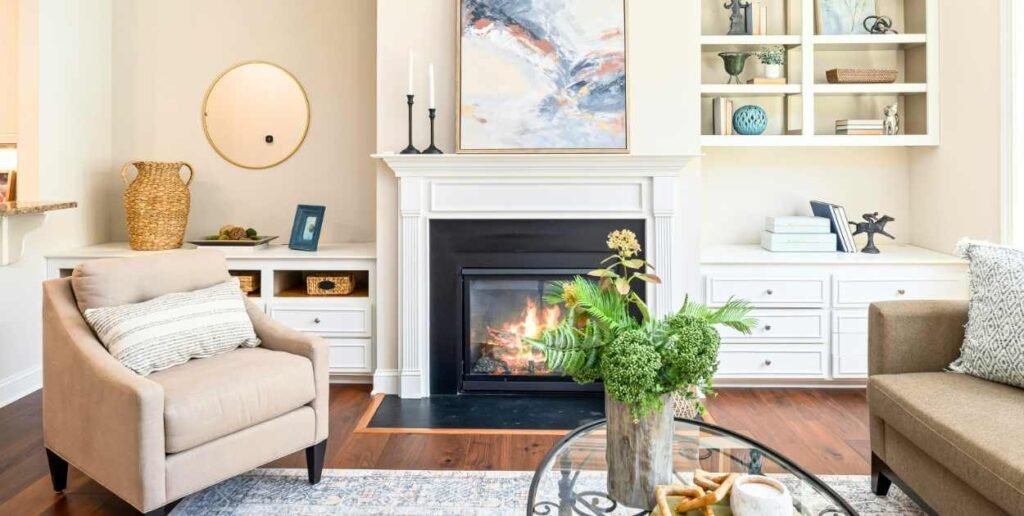
Warm neutral living rooms are one of the most searched aesthetics in home decor right now, and also one of the most commonly gotten wrong.
People paint the walls beige, get a cream sofa, add some white curtains, and then stand back and wonder why the room looks like a waiting room at a dental office instead of the cozy, layered space they had in their head.
The problem is not the neutral palette. Neutral rooms can feel incredibly warm and lived-in.
The problem is that most people confuse neutral with simple, and simple without texture, warmth, and organic elements is just empty.
This is how to build that.
Starting from what most people already have and working forward.
The Real Reason Neutral Rooms Go Cold (And It’s Not What You Think)
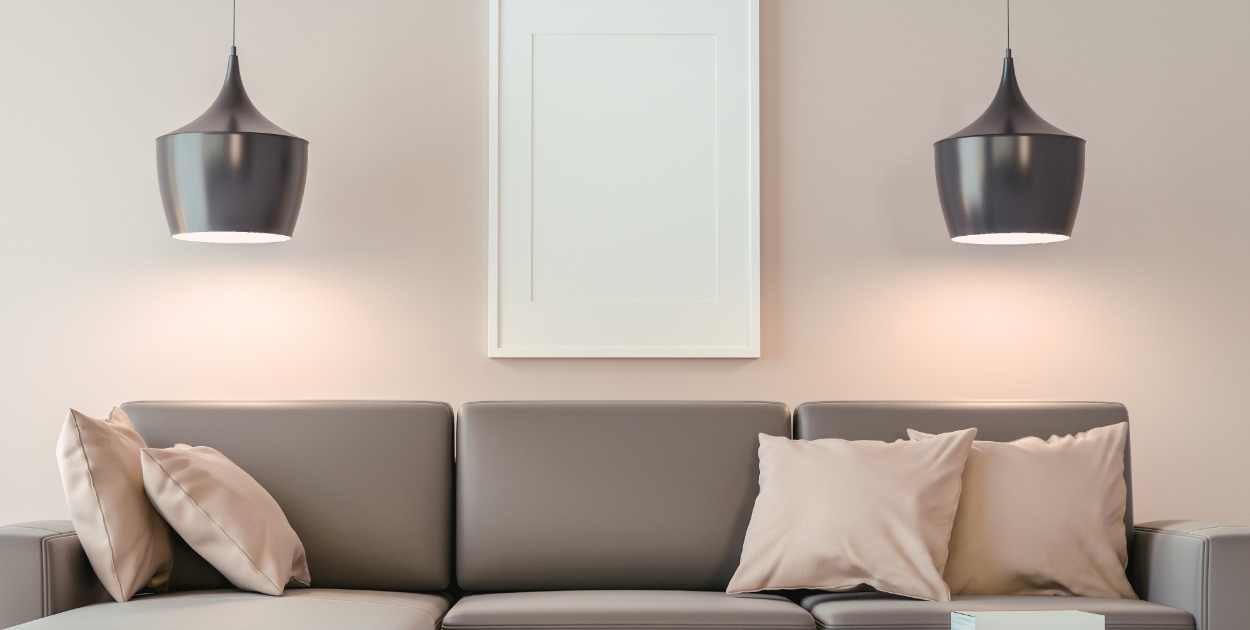
Most people assume a cold-looking neutral room just needs more color added to it.
So they bring in a blue accent cushion or a dark throw and wonder why it still feels off.
The issue is usually undertones, and nobody talks about this enough.
Every neutral color has an undertone. Beige can pull pink, green, gray, or yellow, depending on the specific shade and the light it’s in.
White can look ice-blue under cool overhead lighting or creamy and soft under warm light.
Two walls painted in shades both called “neutral beige” can look completely different next to each other because their undertones are reading differently against the light in that room.
Cold-looking neutral rooms usually have one of three problems.
The first is cool undertones everywhere: gray-whites, blue-beiges, greenish off-whites.
These read clean and modern in the right context, but cold and clinical in a living space that’s meant to feel warm.
The second problem is cool lighting that strips what little warmth the palette has.
The third is a complete absence of texture, so every surface reflects light in the same flat way, and the room ends up looking like a render rather than a real space.
Fix the undertones, fix the light, add texture. That’s the entire solution. The rest of this article is just the specific version of that for a living room.
Quick test: Hold a piece of white paper next to your wall in natural daylight. If the wall looks yellow or peachy next to it, you have warm undertones. If it looks gray or blue, you have cool undertones. Cool undertones are the most common reason neutral rooms feel sterile.
Warm Neutrals vs. Cool Neutrals: The Colors That Actually Work

Warm neutrals sit in a specific part of the color spectrum. Ivory, oatmeal, flax, warm sand, camel, wheat, clay, warm taupe.
These colors all have yellow, orange, or red in their base.
They read as beige or neutral from a distance, but they carry warmth in a way that cool neutrals simply don’t.
Cool neutrals, on the other hand, pull toward gray, lavender, or green.
Greige (gray-beige), warm gray, cool white, sage that edges toward gray: these are all beautiful colors in the right setting, but they fight against warmth.
If your goal is a cozy room that feels like it belongs to someone, these will work against you unless you balance them with strong, warm elements elsewhere.
I’ve seen this work in rooms with fairly cool gray walls where swapping the cushion covers from charcoal and white to oatmeal and terracotta made the entire room feel warmer within one afternoon.

The Textures That Make a Neutral Room Feel Warm Instead of Flat

A room painted in warm neutral tones but furnished with smooth, flat surfaces will still feel cold.
Texture is what traps visual warmth in a room.
Without it, the eye slides off every surface, and nothing holds. With it, the eye slows down. It finds things to rest on. The room starts to feel crowded.
The textures that work best in a warm neutral room are the ones that already look warm by nature: linen, cotton waffle weave, chunky knit, jute, woven rattan, raw wood, and unglazed ceramic.
These materials have surface variation that catches light at different angles, which is what makes them read as warm even before you factor in their color.
Smooth, shiny, or synthetic surfaces do the opposite.
A polyester throw, a glossy coffee table, and acrylic cushion covers in a neutral room will read as cold and flat, no matter what color they are, because their surface quality reflects light uniformly, and the eye gets nothing to engage with.
The single highest-impact texture addition in most living rooms is a good throw blanket.
Not because blankets are decorative, but because a well-chosen throw draped on a sofa adds visible weight, softness, and warmth in one move.
It also photographs well, which matters if you ever share photos of your space.
A chunky knit or waffle-weave blanket in cream or caramel costs around $28 to $40, and it does more visual work than most things at that price.

Light Is the Most Underrated Tool in a Warm Neutral Room

You can have the perfect warm neutral palette on the walls and still kill the whole effect with the wrong light.
Cool, bright overhead lighting turns warm beige into flat gray.
It removes shadow, flattens texture, and makes every surface read the same way.
This is why rooms that look warm and cozy in the evening look sterile in the morning under a cold overhead bulb.
Warm neutrals need warm light to perform.
The number on the bulb packaging that matters is the Kelvin rating.
Bulbs between 2700K and 2900K produce a golden, amber-toned light that brings out the yellow and orange in warm neutral tones.
Bulbs above 3500K start trending toward white and cool, and above 5000K, they produce the blue-white light you see in offices and hospitals.
Switching to warm bulbs is one of the cheapest fixes in home decor.
A pack of warm white LED bulbs costs under $15, and the difference in how a room feels at night is immediate.
If you have warm walls, warm textiles, and a warm rug, but your bulb is daylight white, those warm elements are being cancelled out every time you turn the light on.
Beyond the bulb, add at least one light source lower than the ceiling.
A table lamp or floor lamp with a fabric shade creates a pool of warm light that overhead fixtures simply cannot replicate.

Turn off your overhead light tonight and sit with just one floor lamp or table lamp. If the room suddenly feels warmer and more comfortable, your overhead bulb is the problem, not your palette.
Wood, Rattan, and Natural Materials: The Warmth No Paint Can Add

There’s a warmth that comes specifically from natural, imperfect materials that paint, cushions, and blankets cannot fully replicate.
Raw wood grain, the uneven weave of a rattan basket, a rough ceramic bowl, and a jute rug with slight variation in its fibers.
These things carry warmth because they’re organic, because no two are exactly alike, and because they remind your eye of things found outside rather than manufactured inside.
A warm neutral room that has no natural materials in it, even if the colors are right, tends to feel like a very good imitation of warmth rather than the real thing.
The natural elements are what make it feel inhabited rather than styled.
Wood is the easiest place to start. If your coffee table, shelf, or TV unit has a wood-toned surface, that’s already working for you.
Keep it. If you’re working with all-white or all-black furniture, bring in wood through smaller objects: a wooden tray, a carved bowl, a wooden frame on the wall.
Even a few wooden elements scattered through the room add organic warmth that manufactured finishes don’t.

Plants: The One Element That Warm Neutral Rooms Almost Always Need

I keep plants everywhere I can. On the balcony, inside the house, herbs and vegetables are growing in pots near the windows.
And the reason isn’t purely practical, though having fresh herbs is genuinely great.
It’s that being around growing things changes how a space feels. It makes it calmer.
More grounded. Like the room is connected to something outside itself.
In a warm neutral living room, specifically, a plant does something no other element can: it provides contrast that feels natural rather than forced.
A neutral room without any plants risks becoming monotonous, because everything sits in the same beige-to-tan-to-cream range.
A plant, especially one with large leaves or an interesting form, breaks that sameness without introducing a color that clashes.
Green sits naturally within the warm neutral palette because it’s organic, not a designed accent.
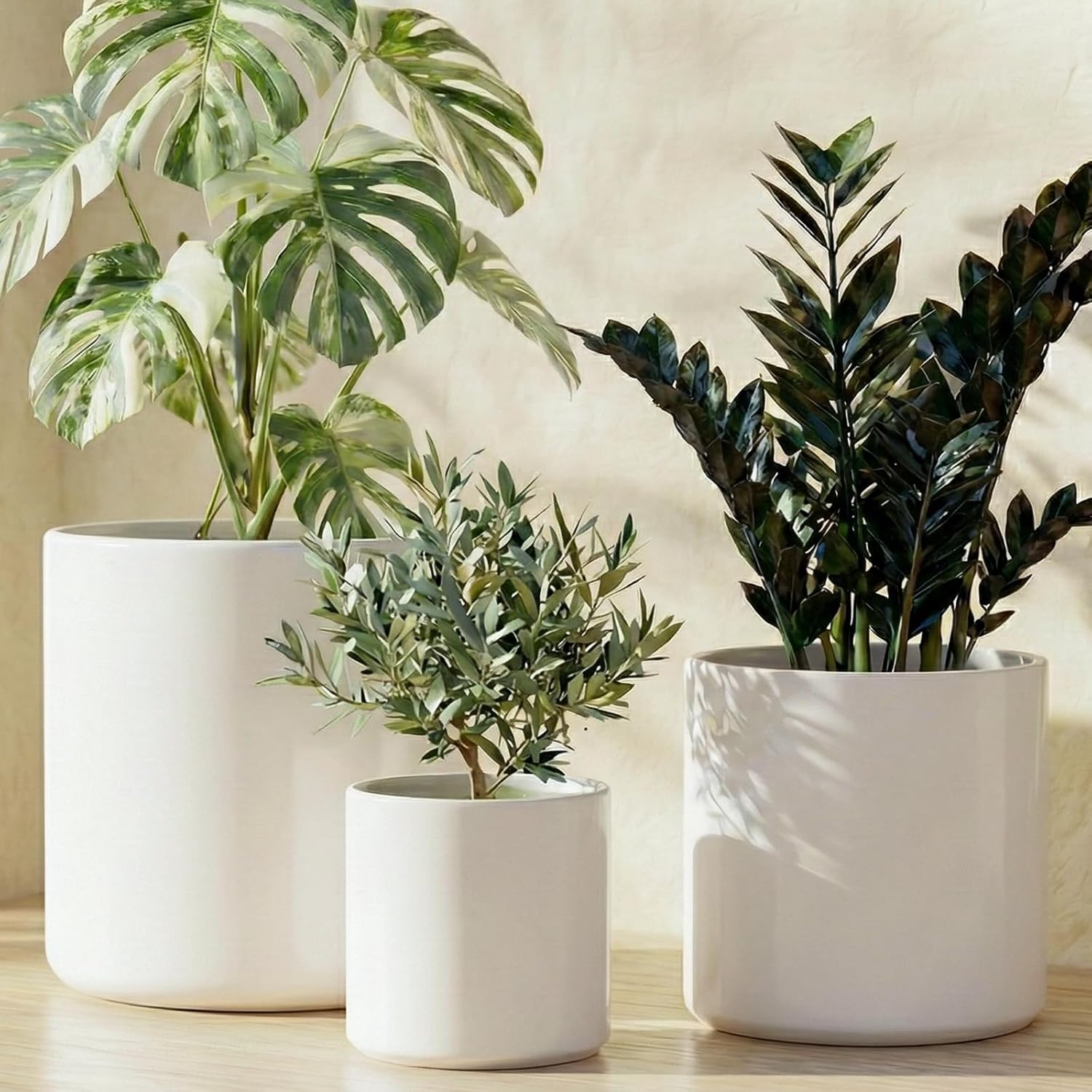
The best plants for a warm neutral living room are the ones with strong shape and interesting leaf structure.
A fiddle leaf fig, a monstera, a snake plant, a pothos trailing off a shelf.
These plants photograph well, hold their visual presence from across the room, and they don’t need much attention once they’re settled.
Final Thoughts
A warm neutral living room isn’t about choosing beige and hoping for the best. It’s about understanding that warmth in a room comes from undertones, texture, light, and organic material, not from the label on the paint tin.
Get the undertones right: pull toward amber, ochre, and sand, not gray or blue. Layer surfaces with real texture: linen, jute, wood grain, woven fibers.
Switch to warm white light at 2700K. Bring in at least one natural material.
Add one plant where the room needs life most. And swap out anything that’s smooth, synthetic, and uniformly reflecting.

Abraham is the creator of Mountain Bike Insider. He is a writer and researcher who enjoys mountain biking, working on DIY projects, organizing spaces, and testing ideas in real life. He focuses on clear and honest explanations based on experience and research, without pretending to be a professional expert.