
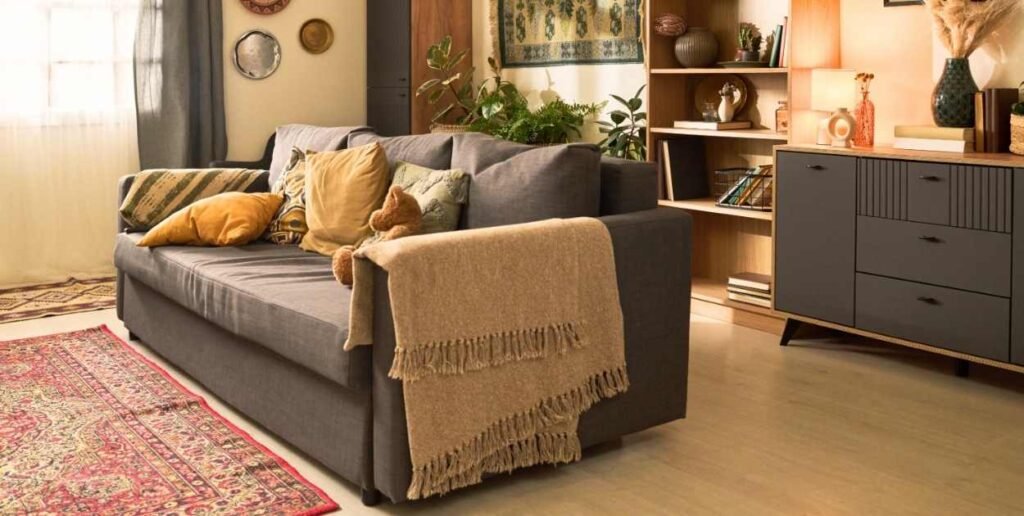
Most living rooms that feel flat have the same problem: everything in them is the same kind of surface. Smooth sofa, smooth walls, smooth coffee table, maybe a rug that has no real weight or feel to it.
There’s nothing for your eye, or your hand, or your body to land on.
The room is technically furnished, but it doesn’t feel like anything.
Texture layering is exactly what fixes this.
It’s the thing interior designers are almost always doing when they make a room feel rich and cozy without spending a lot of money or replacing the furniture.
The idea is simple: you layer different surface types on top of each other, rough next to smooth, soft next to hard, woven next to plain. The contrast is what creates warmth.
What “Layering Textures” Actually Means (It’s Not Complicated)
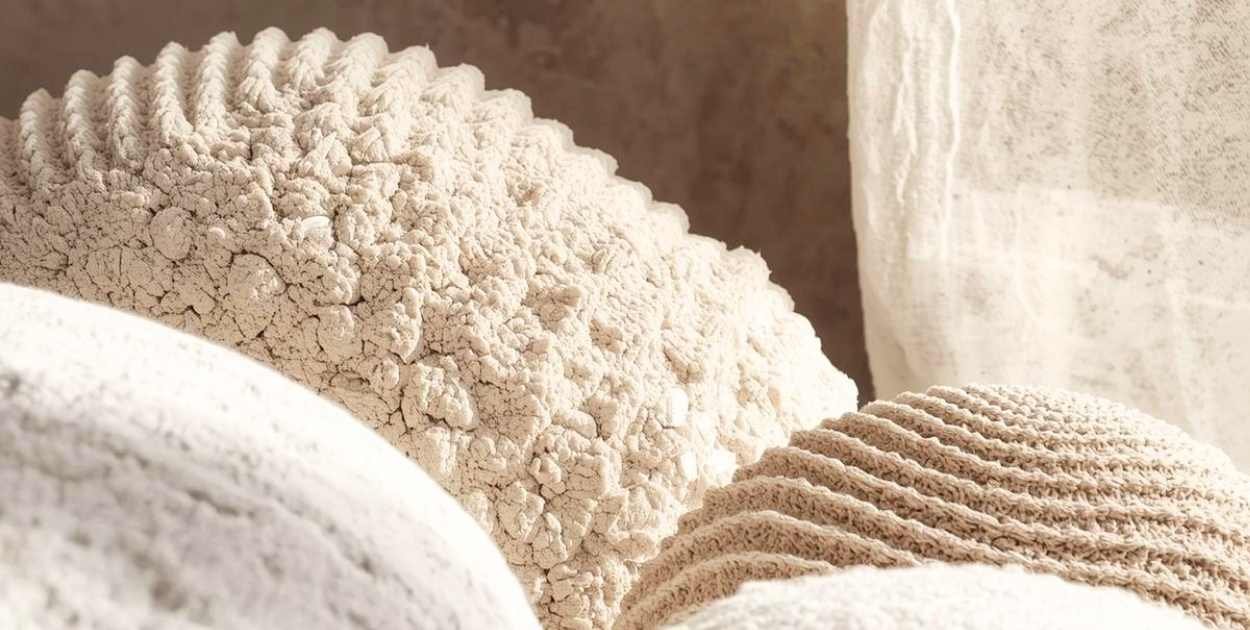
Texture in a room refers to the surface quality of everything in it.
How something feels, or how it would feel.
A rough jute rug has texture.
So does a smooth ceramic vase, a velvet cushion, a woven blanket, a wooden shelf, linen curtains that catch the light differently at different times of day.
Layering just means you’re intentionally putting more than one texture type in the same space so they play off each other.
- A room with only smooth, hard surfaces feels cold and corporate.
- A room with only soft things can feel heavy and suffocating.
What you want is contrast: soft against hard, rough against smooth, matte against something with a slight sheen.
That’s the whole idea, you’re not decorating randomly, you’re building contrast on purpose, and it’s the contrast that makes the room feel alive.
The fastest way to know if your room lacks texture: stand at the doorway and squint. If everything blends into one flat surface, that’s your answer.
The Rug Is Your First and Most Important Layer
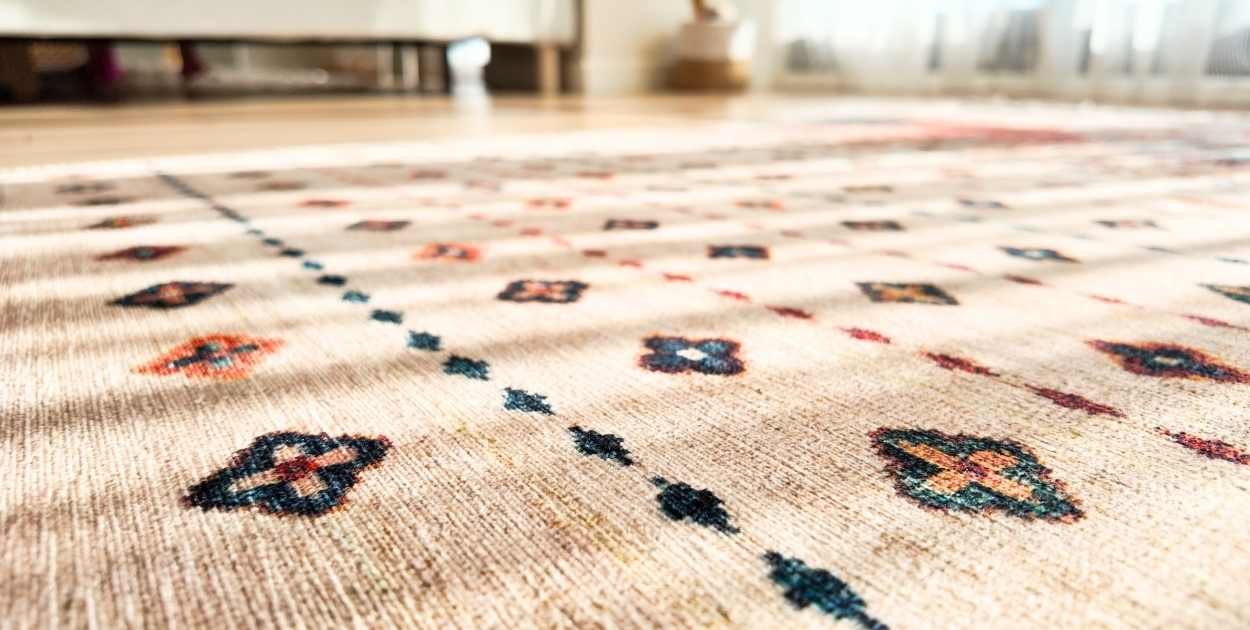
If your living room has a bare floor and nothing else changes, adding a rug does more for texture than almost any other single thing.
This is because the floor is the largest horizontal surface in the room, and it sets the foundation for every other texture that goes on top.
The texture of the rug matters as much as the color.
- A low-pile flatweave or a woven dhurrie gives the room a grounded, casual feel.
- A jute or sisal rug brings in an earthy, organic roughness that pairs well with soft furnishings above it.
- A thicker wool or shaggy rug adds warmth and depth, especially in smaller seating areas.
What you want to avoid is a rug that has the same visual weight as everything else in the room.
A thin, smooth polyester rug sitting under a smooth sofa with smooth throw cushions adds no contrast at all. It just adds color, and color alone isn’t texture.
For most living rooms, a jute blend or a low-pile woven rug in a neutral or earthy tone is the most versatile starting point.
It works under almost any furniture style, old or new, traditional or simple. And it ages well, which matters if you’re buying on a budget and want something that lasts.

Your Sofa Is the Biggest Texture Opportunity in the Room
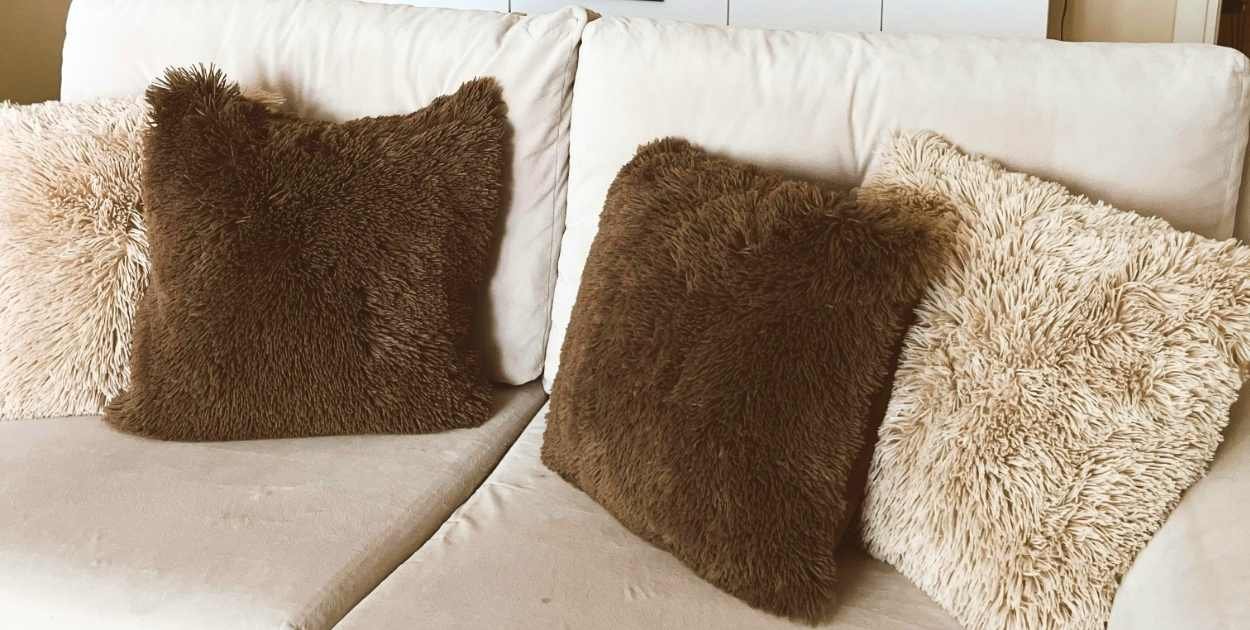
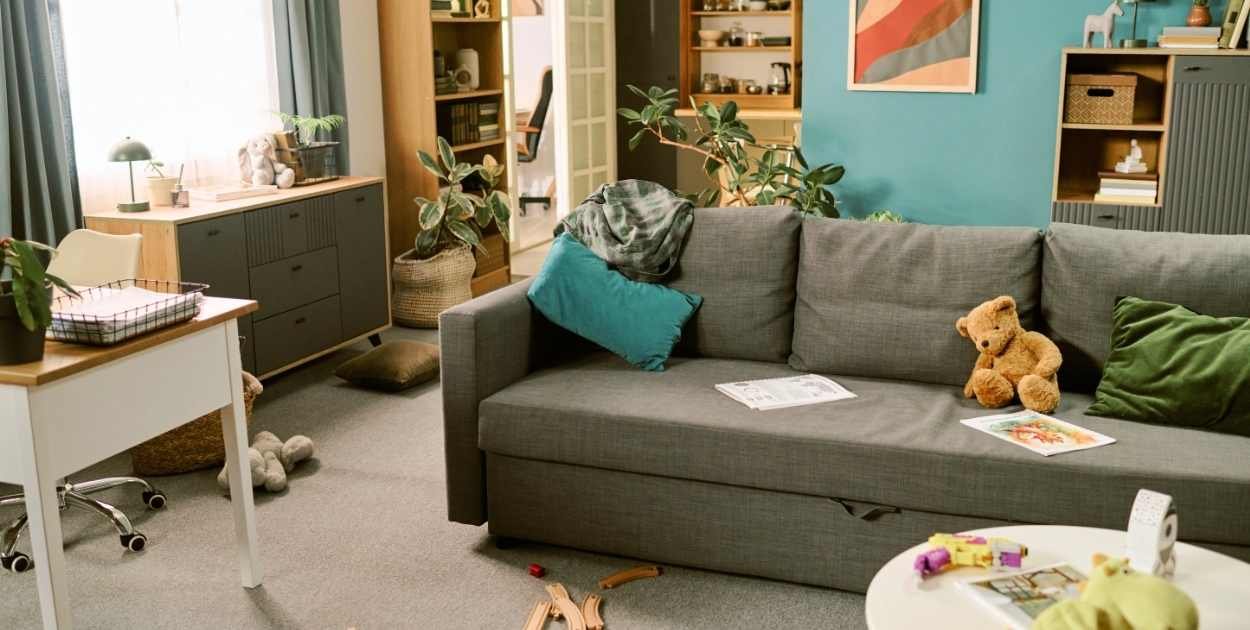
The sofa is the largest piece of furniture in most living rooms, and most people use it as one flat surface.
One color, one material, a few matching cushions that came in the same set.
That’s not layering, that’s a display.
And it’s why a lot of sofas look like they belong in a showroom rather than a home.
What actually works is putting different textures on the sofa together, so there’s contrast even within that one piece.
- A velvet cushion next to a linen cushion.
- A chunky knit throw draped over the arm next to a flat-weave cushion.
- The contrast is what gives the eye something to land on.
When I changed out our sofa cushion covers to something with a bit of ribbing and texture, my mother noticed it before I said anything.
She said the room felt “more like something.” That’s exactly the effect you’re going for. The sofa went from being a thing you sit on to being part of the room.
For the throw blanket, weight matters.
A thin, cheap throw draped on a sofa doesn’t read as texture; it reads as a wrinkled piece of fabric.
A chunky knit or a thicker woven blanket has enough visual weight to register as a real layer. It also photographs much better if you share photos of your space.

And then the throw:

Curtains Add a Texture Layer Most People Completely Miss

Curtains are one of the most underrated texture decisions in a living room.
Most people treat them as just a way to block light or cover a window.
But they cover a large vertical surface, they move when there’s a breeze, and they change how light falls in the room depending on their weight and weave.
That’s a significant texture contribution, and it’s usually just… ignored.
The difference between polyester curtains and linen curtains in the same room is not subtle.
- Polyester hangs flat, has a slight shine, and doesn’t respond to light in any interesting way.
- Linen has natural variation in the weave, falls softly, catches light differently throughout the day, and has that slightly rumpled quality that reads as warm and lived-in rather than institutional.
You don’t have to spend a lot; linen-look curtain panels, even blended ones that aren’t 100% linen, do most of the same work visually.
The key things to get right are: the length (floor-length always looks more considered than panels that stop at the window sill), the color (off-white, cream, and warm grey all work with most living rooms), and the hang (two panels per window, hung from as high as possible, close to the ceiling).
If your current curtains are sheer polyester or something plasticky, swapping them out is one of the higher-impact texture changes you can make without touching the furniture at all.
Hard Textures Matter Just as Much as Soft Ones
There’s a mistake that’s easy to make with texture layering: going all-soft. Rugs, throws, cushions, curtains.
The room ends up feeling heavy and muffled, like it’s been padded.
What keeps texture layering feeling balanced is including hard or natural textures in the mix, too.
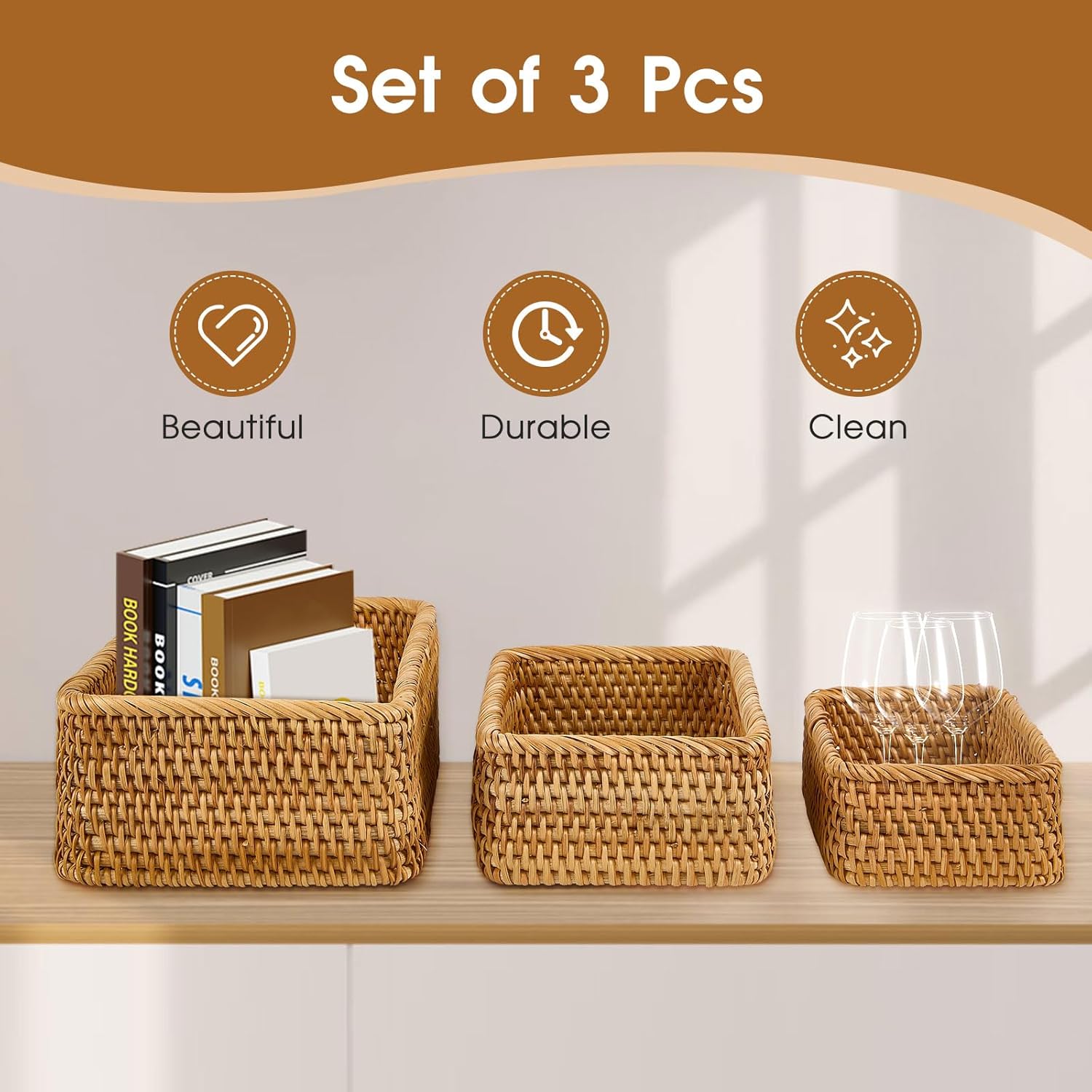
This is where materials like rattan, wicker, raw wood, ceramic, and woven baskets come in.
These materials have surface texture you can see and feel, and they add visual contrast against the soft textiles in the room.
- A woven rattan basket sitting next to a chunky knit throw.
- A rough ceramic vase on a smooth wooden shelf. A small wooden tray on a glass coffee table.
Woven storage baskets are probably the easiest way to bring in this kind of texture.
They’re functional (you can actually store things in them), they’re affordable, and they introduce that natural, organic quality that makes a room feel layered without looking like you tried too hard.
Put one next to the sofa for throw blanket storage, or use one as a plant pot holder near a window.
A wooden tray on a coffee table also does a lot of quiet work. It’s a hard texture against a soft rug, and it gives the table surface definition without adding clutter.
Mistakes That Make Texture Layering Look Cluttered Instead of Cozy
- The first mistake is mixing too many colors while also mixing textures. If your textures are already creating visual complexity, your colors need to be calm.
- The second is scale mismatch. A tiny jute table mat on a large living room floor doesn’t read as a texture layer. It reads as an afterthought. The rug needs to be large enough to anchor the seating area.
- The third is fake textures that read as fake: There are throw pillows with a printed “linen” pattern that are actually smooth polyester.
There are “chunky knit” blankets that are thin and lightweight.
These don’t create the same effect because the texture isn’t real.
Your eye knows the difference, even if you can’t articulate exactly why.
Final Thoughts
Texture layering isn’t a design trick that requires a big budget or a completely new room.
It’s a way of paying attention to the surface quality of what you already have and then adding contrast where it’s missing.
Start with the floor. Add softness to the sofa.
Look at your curtains, bring in one or two hard natural textures.
Keep it to three dominant materials and let the room breathe.
That’s the whole method, and it works whether your furniture is old, plain, traditional, or a mix of everything.
The goal isn’t a room that looks designed. It’s a room that feels comfortable to actually be in. Texture is what gets you there, and most of it costs less than you’d think.
FAQs
Can I layer textures if my furniture is old or traditional-style?
Yes, and it actually works well. Older, heavier furniture tends to have its own texture already, carved wood, upholstered arms, thick legs.
What it usually needs is softness added on top, like cushions and a throw, and something natural on the floor.
Traditional furniture and jute rugs go together better than people expect.
What if I’m renting and can’t change much?
Texture layering is almost perfectly suited to rentals because almost none of it involves anything permanent.
Rugs, cushions, throws, baskets, and curtains (if you can swap them temporarily) all go back in a box when you move.
You can completely transform the feel of a rented room without touching the walls or the floors.
How do I know which textures work together and which don’t?
The simple version: rough and smooth always work together.
Natural materials (jute, wood, ceramic, linen) almost always work with each other and with softer synthetic fabrics.
What usually clashes are two fabrics that have similar visual weight but different vibes, like a very formal velvet next to a very casual macrame.
When in doubt, anchor with a natural texture and build from there.
Is this only for a certain style of living room?
No. Texture layering works in minimalist rooms, maximalist rooms, traditional rooms, and modern ones.
The textures you choose change the style, but the technique is universal.
- A minimalist room uses fewer, more refined textures.
- A warm bohemian room uses more, looser ones.
The principle of contrast between surface types applies in both.
What’s the one thing to add first if my room feels flat?
A rug, if you don’t have one. If you already have a rug, add one set of cushion covers in a fabric that contrasts with your sofa. Velvet on a plain cotton sofa.
Linen on a velvet sofa.
That single contrast is usually what breaks the flatness and makes the room feel like it has depth.

Abraham is the creator of Mountain Bike Insider. He is a writer and researcher who enjoys mountain biking, working on DIY projects, organizing spaces, and testing ideas in real life. He focuses on clear and honest explanations based on experience and research, without pretending to be a professional expert.