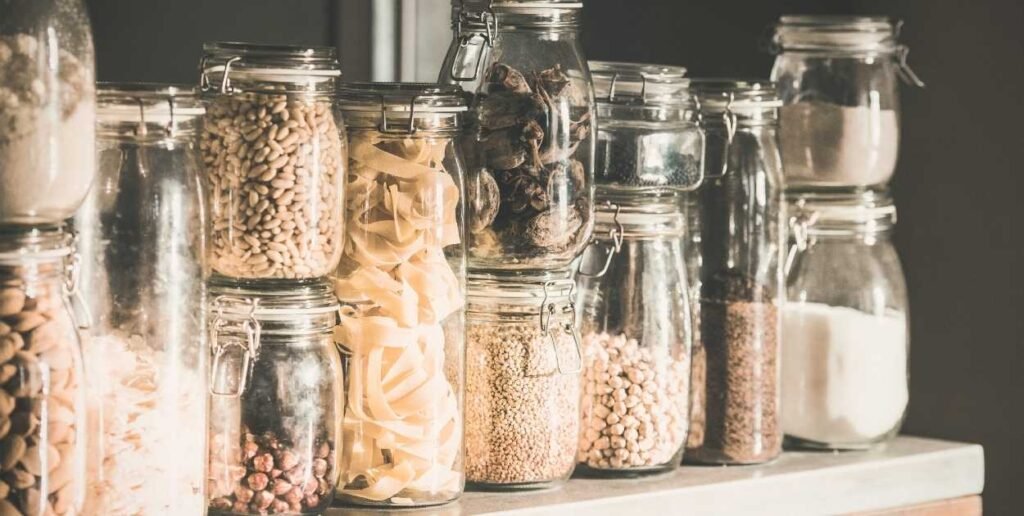
The duplicate spice problem is not really about being forgetful, but it happens when you have to push three things aside, spot the cumin, assume you are out, and buy another one.
Then two weeks later, both jars are sitting there together, one of them half finished, one brand new.
This happens in dedicated spice cabinets, and it happens on pantry shelves.
My mother sorted out our spice situation years ago, so our kitchen does not have this problem anymore.
But I have seen it in other homes and heard about it from people in my community, and the fix is almost always the same thing: make everything visible at once.
Why the Duplicate Buy Keeps Happening
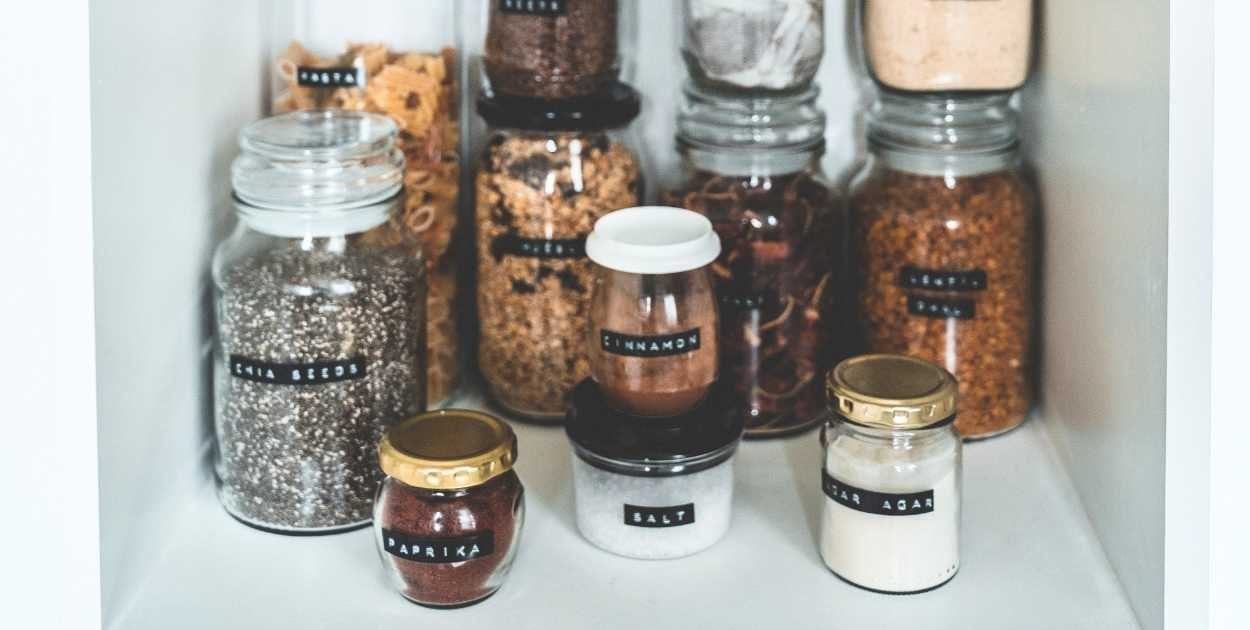
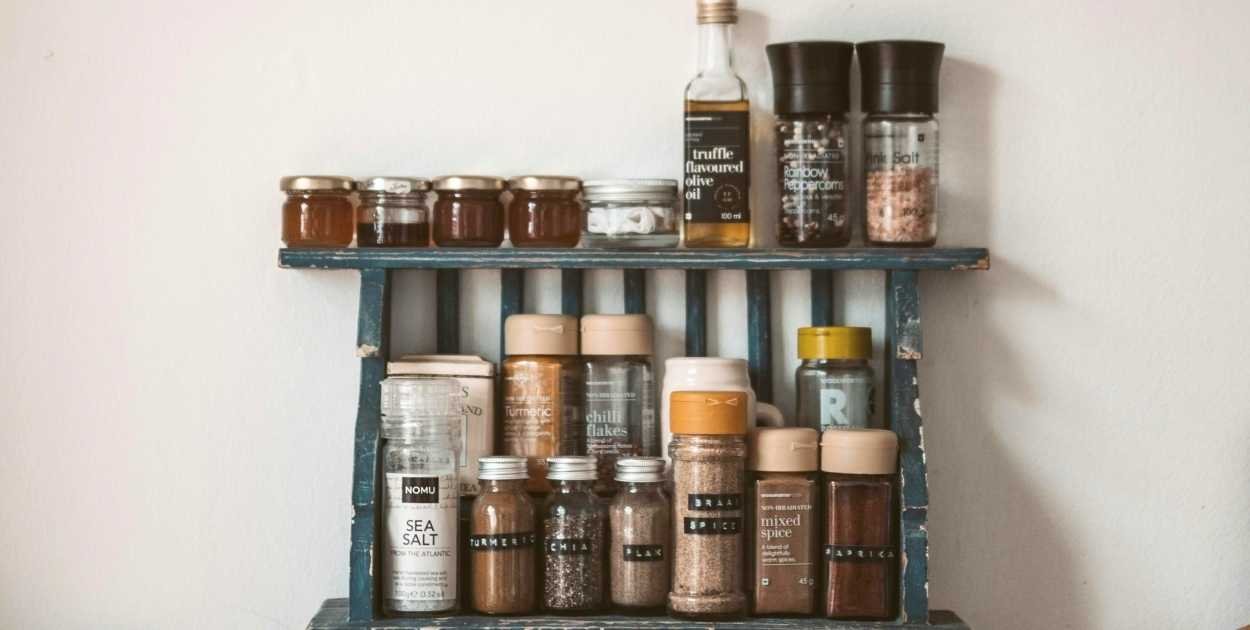
That’s because kitchen cabinets are deep enough that the back row of spices is invisible unless you physically move the front row.
And most spice bottles are different heights, so shorter ones disappear behind taller ones even on the same tier.
The result is that maybe half your spices are visible and reachable at any given time, and also the mixed-container problem, original store packaging comes in completely different shapes and sizes.
The solutions all point in the same direction: tiered visibility, uniform containers, and labels facing forward.
If You Have a Dedicated Spice Cabinet
A dedicated spice cabinet is the best situation, but only if it is set up right.
A flat shelf with bottles standing in rows is still a problem because the back row disappears.
The right approach uses one of these two things.
The Pull-Out Spice Rack
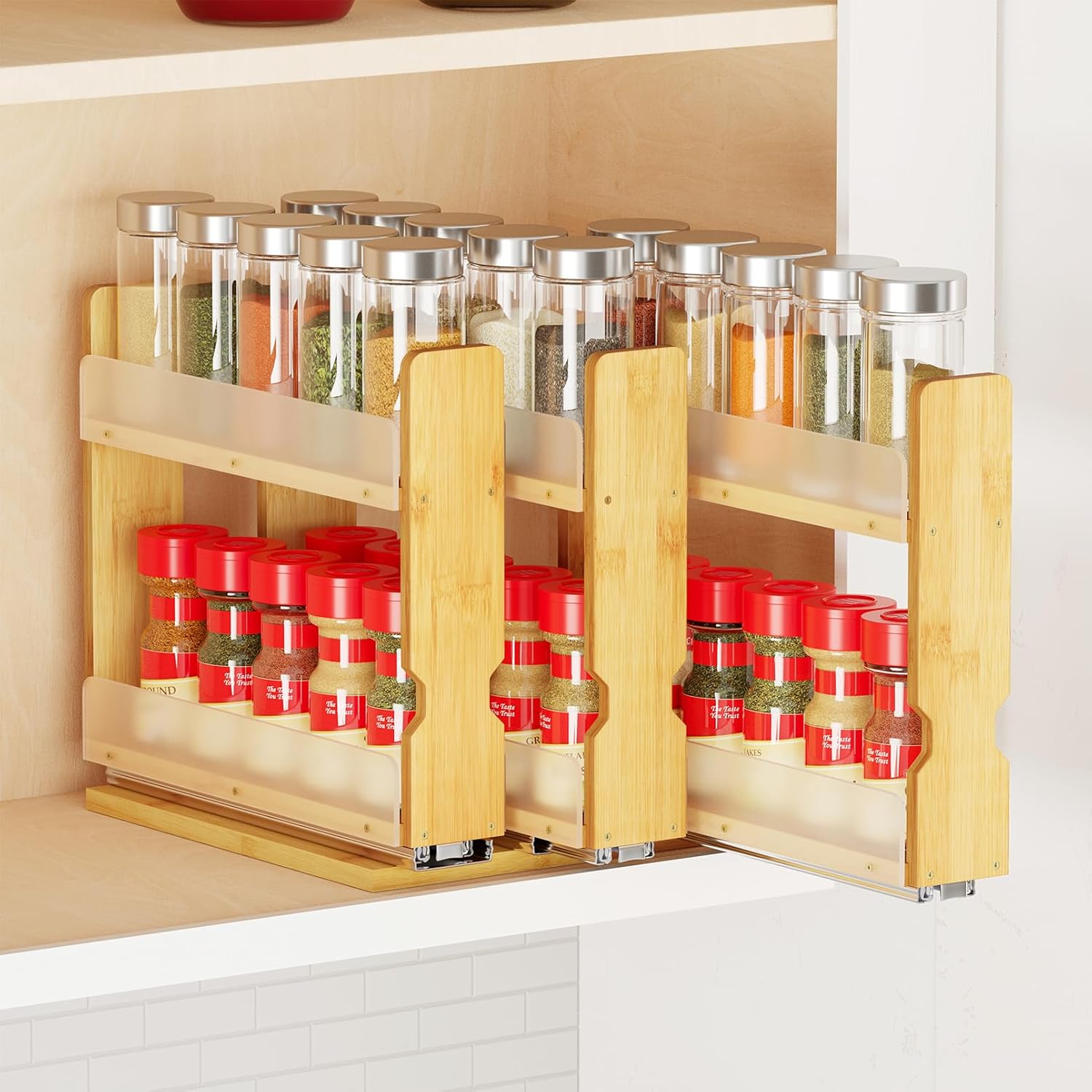
A pull-out spice rack installs inside the cabinet on a sliding track and comes fully out when you pull it.
Every single jar is visible and reachable at once; you are not looking at a deep cabinet trying to see the back.
You pull the whole thing toward you, and it is all right there.
SpaceAid makes the most consistently recommended version on Amazon.
It comes with the rack, glass spice jars, hundreds of preprinted labels, and a chalk marker for anything not on the list.
The jars are square, uniform, and labeled on top so you can also see them from above if the rack is below eye level.
One important thing: measure your cabinet before ordering. This is the most common mistake people make with pull-out racks.
The 3-Tier Expandable Spice Riser (If You Cannot Install a Pull-Out)
Not every cabinet has the right dimensions for a pull-out rack, and not everyone wants to install one.
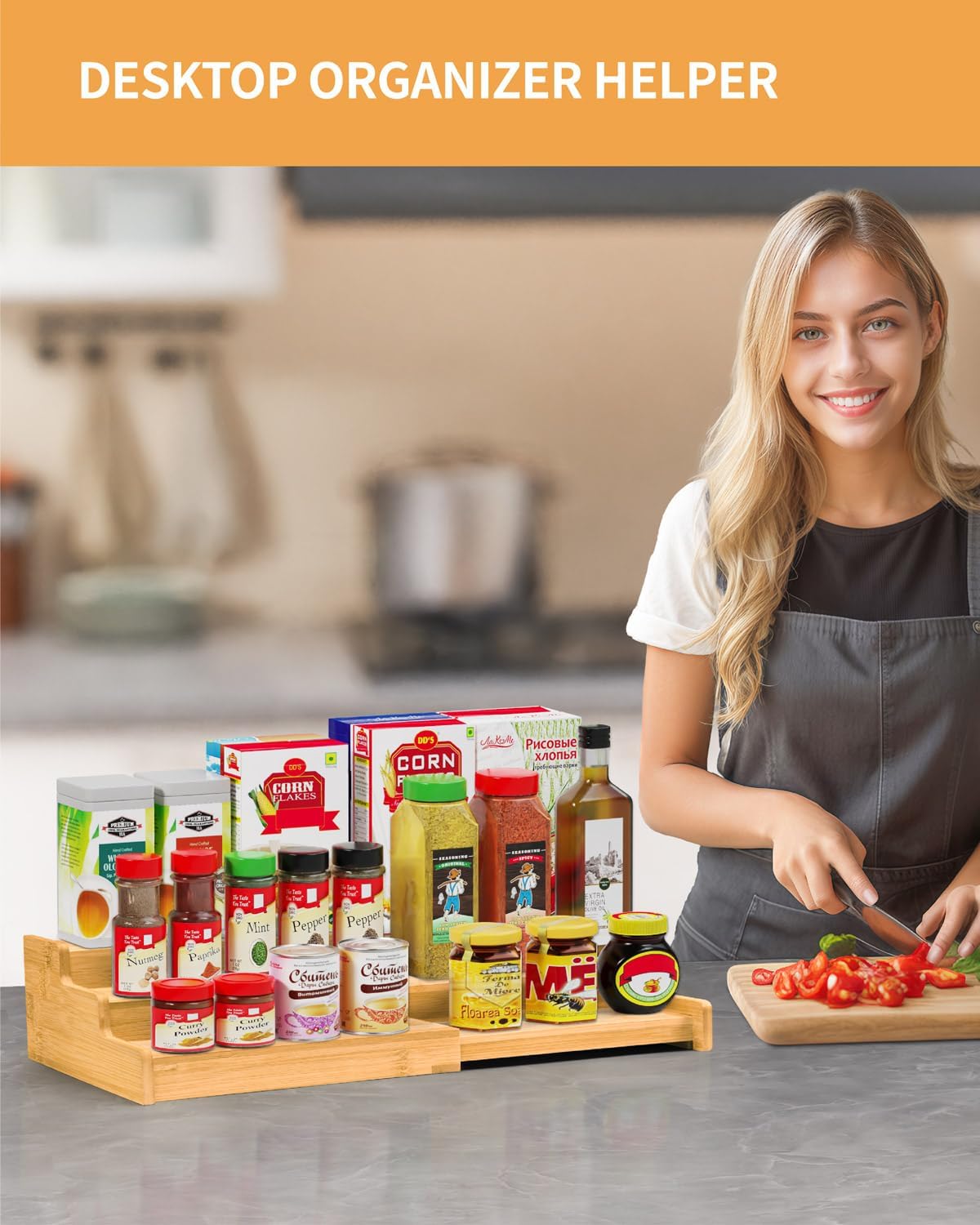
A 3-tier expandable riser sits on the shelf without any installation and staggers the spice jars so all three rows are visible from the front.
The back row sits highest, the front row sits lowest, and everything is readable at once.
And expandable versions stretch to fit your exact shelf width, the non-slip surface keeps jars from sliding when you grab one.
This is the lower-commitment option that still solves the visibility problem for about $15 to $20.
It does not solve the container uniformity problem, but if your spices are already in reasonably similar-sized bottles, the riser alone makes a big difference.
If Your Spices Live on a Pantry Shelf
A pantry shelf setup is actually easier to fix than a dedicated cabinet because you usually have more visual access.
The shelf is open and at eye level, so the visibility problem is less about depth and more about arrangement.
The same tiered riser works here; a lazy susan works particularly well on a pantry shelf because you have room to spin it, and it does not need to fit inside a cabinet door opening.
For a pantry shelf with spices, the 2-tier lazy susan is useful because it doubles the surface area in the same footprint and lets you spin to the row you need.
AMAZON PRODUCT BOX: 2-Tier Lazy Susan Turntable for Pantry Shelf, Spice Storage | Brands: YATINEY, Copco, LAMU | Key points: 2-tier doubles storage in the same footprint, spins 360 degrees so back row comes forward, non-skid base, works on pantry shelf or inside cabinet. CTA: View on Amazon | [PASTE AFFILIATE LINK + PRODUCT IMAGE]
One thing worth knowing about the pantry shelf setup: because it is open and easier to see, it is also easier for spices to collect dust and grease over time, especially if it is close to the stove.
Giving the shelf a wipe-down every few months and keeping the jars closed properly handles this.
If You Have a Kitchen Drawer for Spices
This is the setup that people who have tried it consistently say they wish they had done sooner.
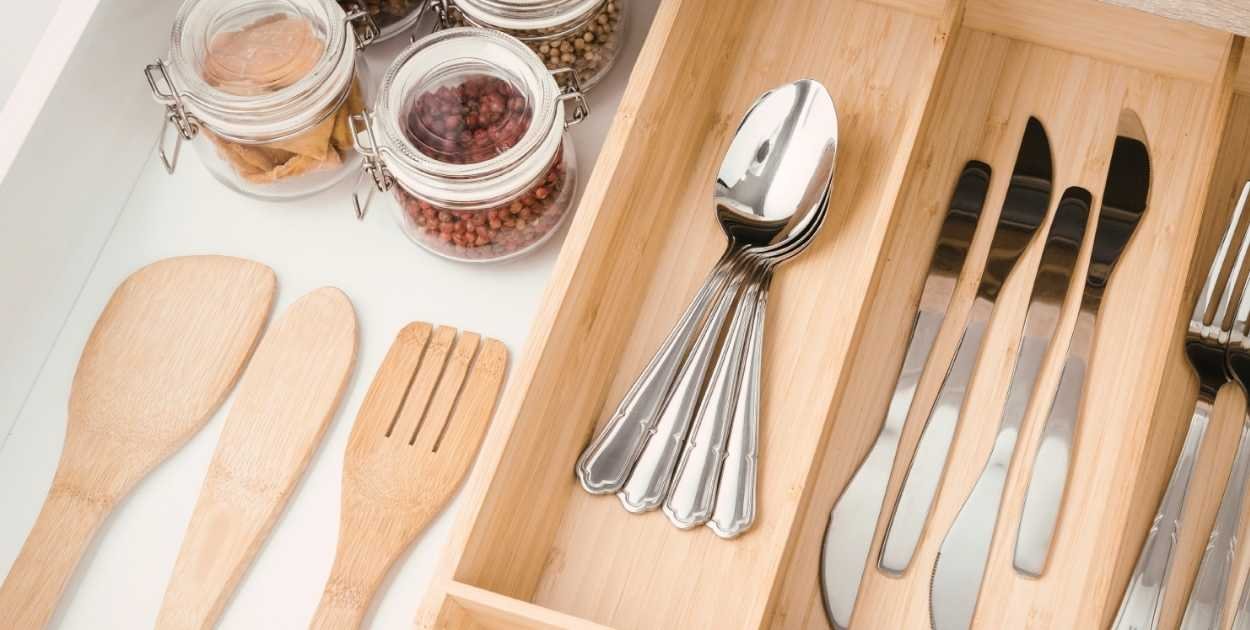
A drawer with spices lying flat and labeled on top is genuinely the most efficient spice storage possible.
You open the drawer and see every single jar labeled and facing up. One glance. Everything is visible, no tiers, no spinning, no reaching.
The SpaceAid drawer organizer is the one that comes up most in online communities.
It has a 4-tier angled tray that sits in the drawer, holds 28 to 36 jars depending on the size, and comes with the same glass jars, labels and chalk marker as the cabinet version.
The angled tier means even though the jars are lying flat, the labels tilt toward you so you can read them without picking anything up.
If you have a drawer you can dedicate to spices, this is the single best spice organization solution.
It takes an afternoon to transfer everything, label the jars, and fill them, and then the spice problem is essentially solved for years.

Uniform Jars Are the Thing That Changes Everything
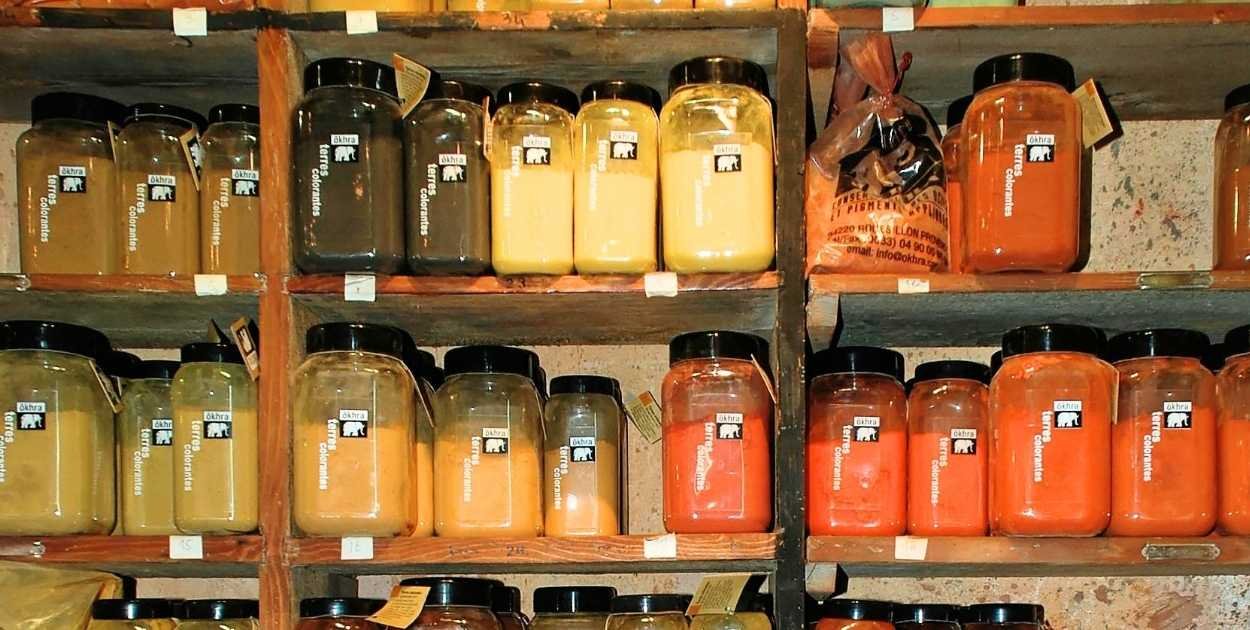
You can have a tiered riser, a pull-out rack, or a drawer organizer, and if your spices are still in 12 different original containers of different shapes and heights, it will still look chaotic.
The mismatched packaging is the visual noise that makes the cabinet feel disorganized even when it technically is not.
Switching to uniform jars is the step most people hesitate at because it takes time.
You pour each spice from its original container into a matching jar, label it, and put it in its place.
For a normal home spice collection of 20 to 30 spices, this takes about 90 minutes the first time.
After that, it is just a matter of refilling when you run out.

How This Actually Saves Money
Two ways, and both are straightforward.
- You stop buying duplicates: If every spice is visible every time you open the cabinet or drawer, you never buy something you already have. For a typical home that cooks a few times a week, duplicate spice buys add up to $20 to $40 a year without anyone really noticing. It feels like a small purchase each time, but across a year, it is real money.
- You stop throwing away expired spices: Spices that are hidden in the back of a cabinet get forgotten. They expire, you find them, you throw them out. Ground spices generally stay potent for about two to three years. If a jar is invisible for most of that time, it expires without being used. With a visible system, you use the older spices first, and they all get used before they go stale.
There is also a subtler benefit: when you can see your spices, you cook with more of them.
Where to Start If You Have Never Organized Spices Before
Do not buy anything yet. Firstly, pull every spice out of the cabinet, check the dates, and throw out anything expired or anything you have not used in two years and have no realistic plan for.
Most people find they go from 35 spices to about 22 just from this step.
Then measure your cabinet depth, width, and height, and the depth and width of any drawers you could use.
You need these numbers before ordering any organizer.
- Cabinet with enough depth and height: pull-out rack or tiered riser.
- Pantry shelf: 2-tier lazy susan or expandable riser.
- Kitchen drawer at least 3 inches deep: drawer organizer with jars.
After picking the organizer, get a jar set if you do not already have uniform containers.
Transfer the spices, label them, and you are done. It is a 90-minute job that stays solved for years.
Final Thought
The duplicate spice buy is one of those small frustrations that does not feel worth fixing until you fix it and realize how much easier cooking is when everything is visible.
You can stop second-guessing what you have, you stop buying things you already own, and the cabinet or drawer feels calm instead of like something to avoid opening.
The right organizer depends entirely on your setup: a pull-out rack for a deep cabinet, a tiered riser if you want no installation.
Pick the one that fits your kitchen, measure first, and do the jar transfer in one go.
FAQs
How do I know if my cabinet is deep enough for a pull-out spice rack?
Most pull-out racks need around 10.5 to 11 inches of cabinet depth and at least 12 inches of height.
Standard upper kitchen cabinets are 12 inches deep, so most pull-out racks fit.
Measure the interior depth and height before ordering.
The width varies by rack model, usually 4.5 to 7 inches, so check that too.
Is it worth buying uniform spice jars, or can I just keep the original bottles?
If all your original bottles are similar in height and width, you can skip the uniform jars and just use a tiered riser.
But if you have a real mix of tins, plastic bottles, paper packets, and glass jars, the visual chaos stays, no matter how good your organizer is.
Uniform jars are worth it if you want the system to feel clean and be easy to maintain.
What is the best way to organize if I have a mix of a dedicated cabinet and a pantry shelf?
Keep your most-used everyday spices in the dedicated cabinet where they are easiest to reach.
Backup spices, bulk buys, and less-used seasonings go on the pantry shelf.
This also helps you see at a glance when something is running low in the main cabinet, which is when you check the pantry backup rather than buying a third jar.
Do I have to label every jar, or can I just keep the original spice name on the jar?
You do not have to label everything, but labeling on top matters if the jars are in a drawer or on a shelf where you look down at them.
Labels on the front matter if the jars face you on a tiered riser.
The point is that the name should be readable without picking the jar up. However, if you achieve that, it’s fine.
How often do spices actually expire, and is it a real concern?
Ground spices lose most of their potency within two to three years.
Whole spices like peppercorns and whole cumin last longer, up to four or five years.
They are not harmful after that, just weaker and less flavorful.

Abraham is the creator of Mountain Bike Insider. He is a writer and researcher who enjoys mountain biking, working on DIY projects, organizing spaces, and testing ideas in real life. He focuses on clear and honest explanations based on experience and research, without pretending to be a professional expert.