Half-open cereal bags held with a rubber band, rice in the original packaging stuffed behind a bottle of oil that nobody can reach.
Three bags of pasta, none of them full, no system, no containers, no logic.
People in my home decor Facebook community share this more than almost anything else.
Because their pantry chaos builds quietly, and nobody deals with it until a box of cornstarch falls on them at 7 am.
The $47 number is real, not everything on this list bought at once, but the starting setup for whichever pantry type you have that actually solves the problem.
I will break it down by pantry setup, so you only spend on what applies to your kitchen.
Why Pantries Go Wrong (And It Is Not Because You Are Lazy)

Two things cause almost every chaotic pantry:
First, mismatched containers, like bags, boxes, jars, all different heights and shapes, are fighting for the same shelf.
So you should not get fifty matching containers at once. It is picking two or three categories that make the most mess and containing those first.
Second, no system for depth; most pantry shelves are deep.
Things go to the back and live there for months until you find them expired.
A lazy susan, a tiered riser, or a pull-out bin fixes this.
Without one, a deep shelf is just an expensive hiding place.
The third problem is trying to fix everything at once, and this is how you end up with half the pantry on the floor and nothing finished.
If You Have a Pantry Cabinet (1 to 3 Shelves in a Kitchen Cabinet)
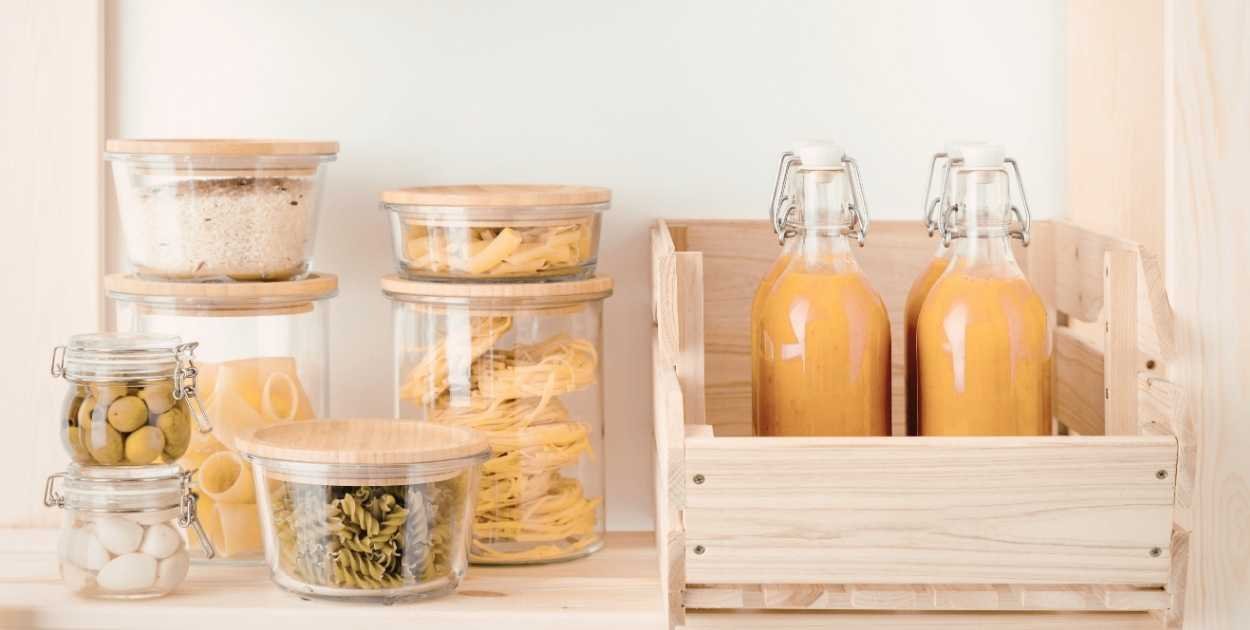
The most common setup in apartments and smaller kitchens is usually two or three fixed shelves, and the problem is almost always vertical space wasted.
Eight inches of product, twelve inches of dead air above it; these three products fix that.
A Lazy Susan for the Back of the Shelf
If you have one product to buy for a cabinet pantry, this is it. Spin it, and everything that was buried in the back comes forward.
No digging, no pushing, it works for oils, sauces, condiments, vinegars, and anything small that gets lost.
The 10-inch non-slip versions fit most standard cabinets, and a 2-pack means you can put one on two different shelves.

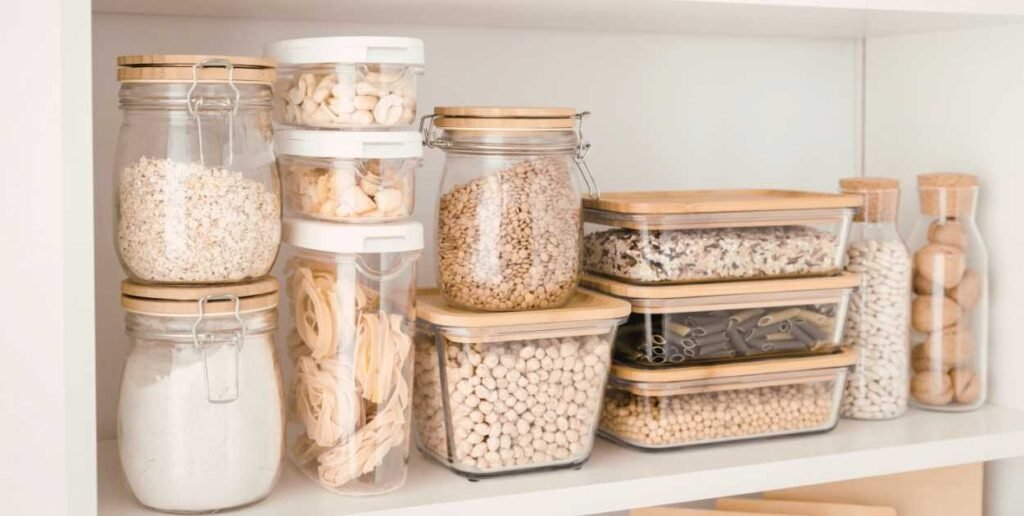
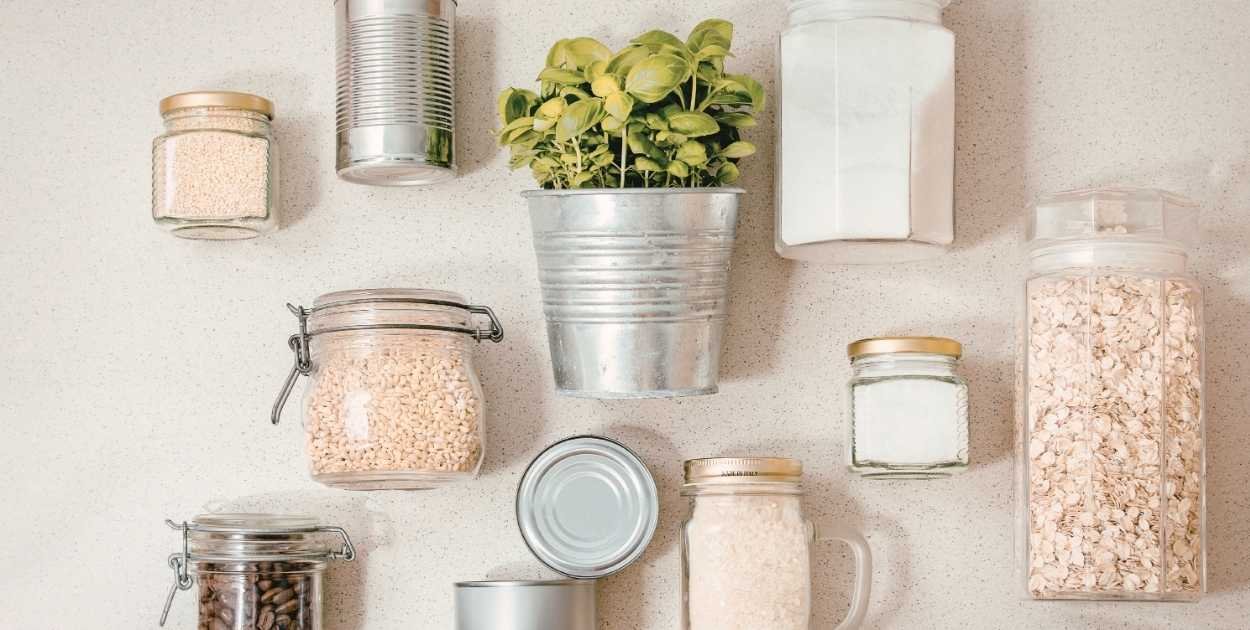
Airtight Containers for Dry Goods
Rice and pasta in open bags attract moisture and pests; cereal in its original box takes up three times the space of cereal in a square container.
Flour in a bag tips over and makes a mess.
Four to six matching airtight containers lined up with labels on a shelf is the single biggest visual transformation for the least effort.
Start with just the four things you use most; the shelf will look like a different place.

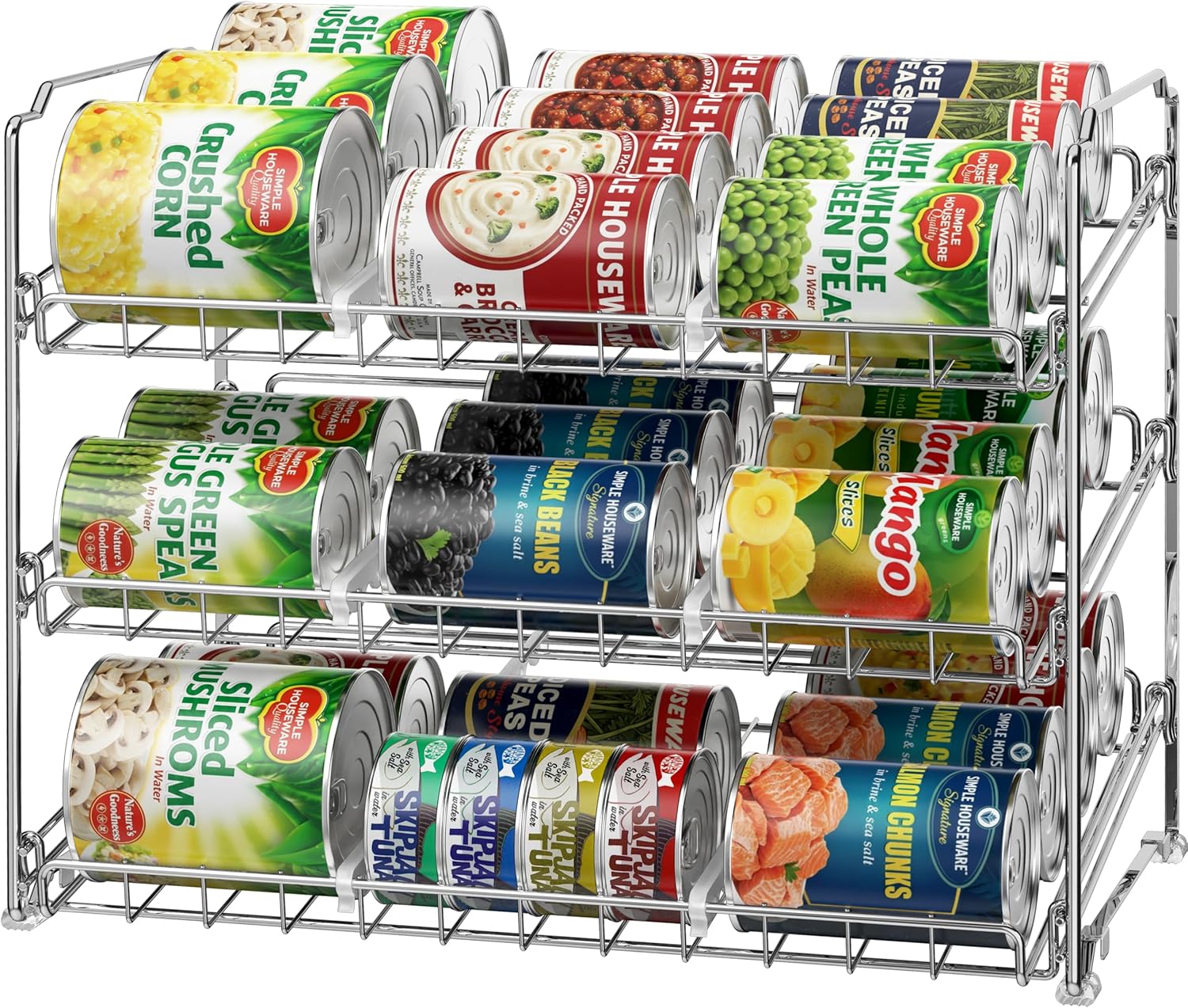
An Expandable Can Riser
A 3-tier can riser staggers your cans and jars so every single one is visible from the front; nothing is hiding at the back.
The expandable versions are worth the slight extra cost because fixed-width risers that are two inches shorter than your shelf are just frustrating.
This is the one that people in my community consistently say they wish they had bought earlier.
If You Have a Closet-Style Pantry
More space, but more opportunity for things to disappear, closet pantries almost always have wasted door space, dead corners, and shelves just deep enough to swallow things.
The products that help here are different from the cabinet setup.

An Over-the-Door Organizer
The back of a pantry door is completely wasted in most homes, an over-door wire basket organizer hangs on the door in five minutes with no drilling and gives you six tiers of storage.
Snack bags, oatmeal packets, spice packets, foil pouches.
Things that are small enough to disappear on a shelf but used often enough to need to be findable.
fdvv
Clear Bins for Category Zones
The zone system is simple: all baking stuff in one bin, all breakfast things in another, all snacks in a third.
You can pull the bin, not dig through the shelf.
Clear bins matter because you can see what is inside without pulling them out.
Opaque baskets look nice, but you end up opening every single one. Get medium rectangular clear bins, label the front, and the closet pantry starts working instead of just storing.

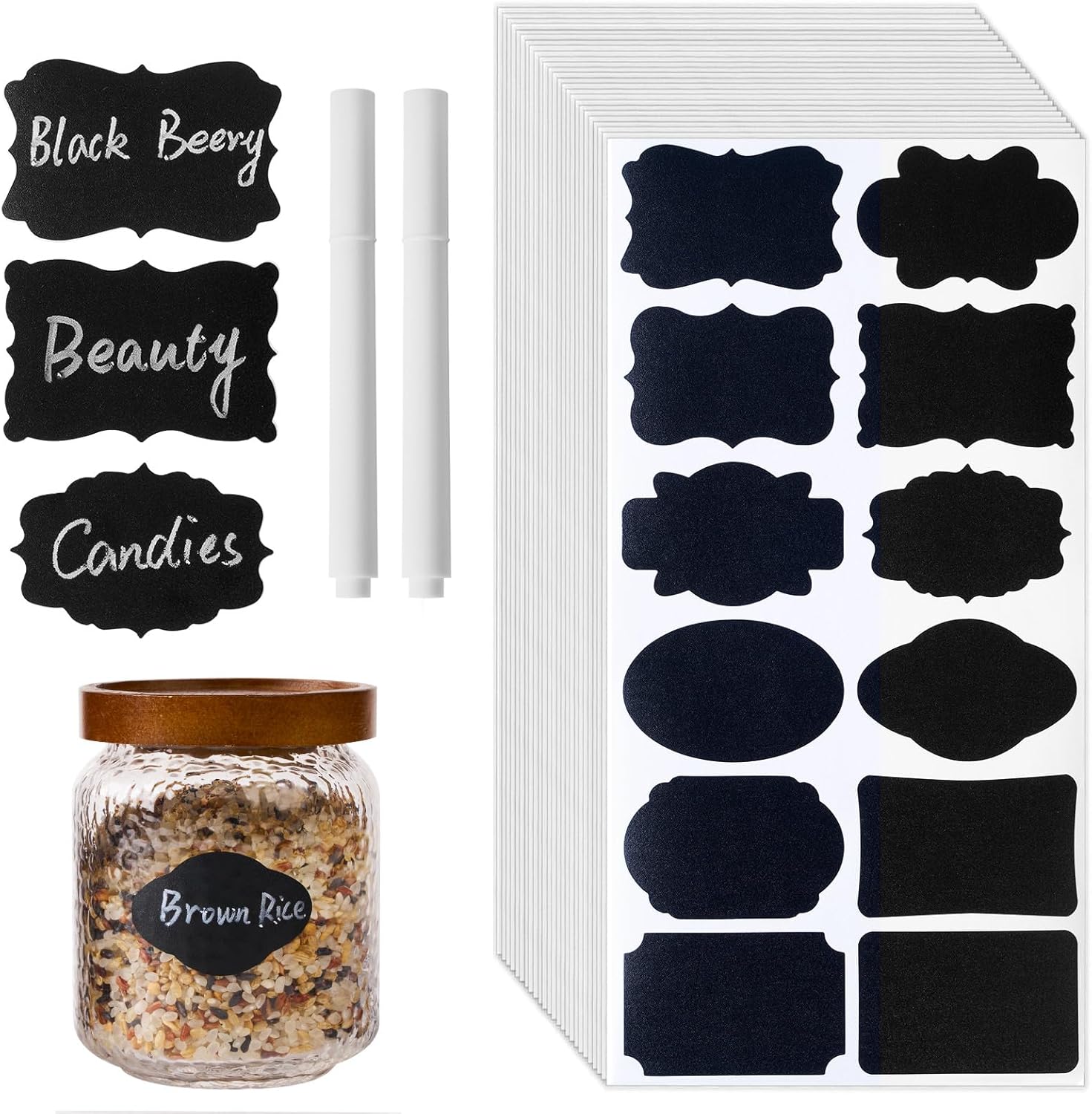
Chalkboard Labels
Labeled containers make people put things back in the right place; unlabeled ones do not.
That is the whole argument: chalkboard labels are reusable, so when you change what is in a container, you just wipe and rewrite.
A set with a chalk pen costs about $8 and covers an entire pantry.
Genuinely worth it even if it sounds like a minor detail.
If You Have No Pantry at All
No pantry forces creative thinking; storage has to be created.
These three things do that without taking up counter space you cannot spare.
The Slim Rolling Cart That Hides Between the Fridge and the Wall
That three-to-six inch gap between your refrigerator and the wall or cabinet, most kitchens have it.
Nobody uses it, a slim rolling cart on wheels fills it and gives you five or six open shelves for spices, oils, small jars, anything.

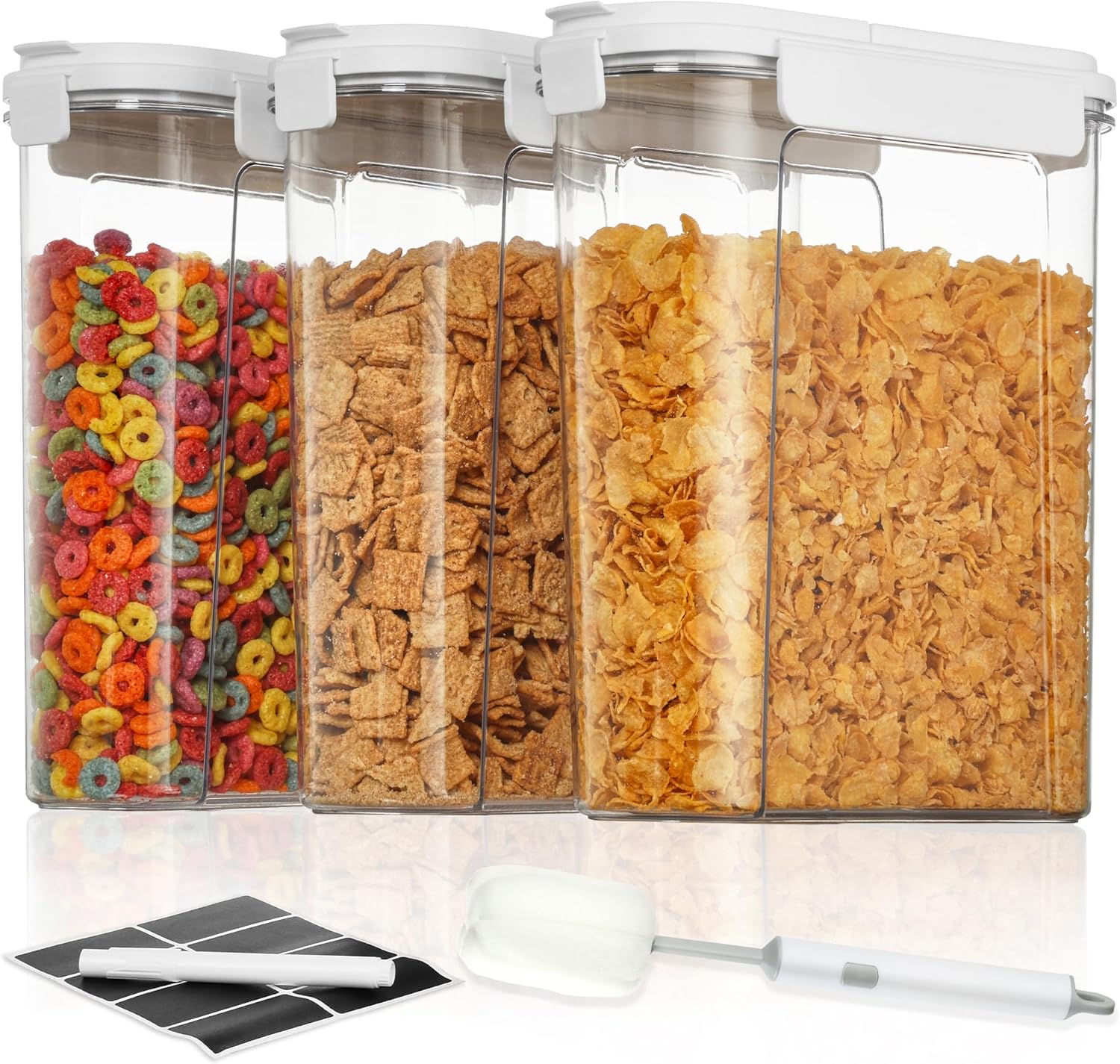
Cereal Dispensers
This is the one people do not expect to love as much as they do.
Pour cereal from the box into a flip-top dispenser, and suddenly you have a stacking, airtight, good-looking container that takes up a third of the shelf space the box did.
They work for rice, nuts, granola, pasta, coffee beans, and anything dry.
A set of three or four matching dispensers lined up on a counter looks so deliberate that people assume you spent a lot of time in the kitchen.
A Magnetic Spice Rack on the Fridge Side
When there is no shelf, no cabinet, and no counter space left, the side of the refrigerator is storage that most people leave completely blank.
A magnetic spice strip mounts on the fridge side with adhesive and holds ten to sixteen labeled spice jars in a vertical strip.
Everything is visible, nothing is on the counter, and it takes maybe ten minutes to set up.
It also works on the inside of a cabinet door if you prefer keeping it hidden.

The Actual $47 Breakdown
If you are starting from zero with a cabinet pantry and want the highest return on the smallest spend:
- Non-slip Lazy Susan 2-pack: $12 to $14
- Airtight container set (6-piece): $18 to $22
- Chalkboard label set with chalk pen: $7 to $9
- Expandable can riser: $9 to $13
Total lands between $46 and $58, depending on what is on sale.
The containers and labels are often cheaper as a bundle search, and a lazy susan and riser together usually come in around $22.
For a door-closet pantry, you can swap the can riser for an over-door organizer.
For a no-pantry kitchen, the rolling cart at $22 to $28 replaces two other items by giving you dedicated, accessible storage in dead space.
Final Thought
A pantry that looks like it belongs on Pinterest is not complicated. It is just a few products that each solve a specific problem. A lazy susan for depth. Airtight containers for dry goods. A riser so that cans stop hiding. Labels so the system holds when life gets busy.
You do not have to do all of it at once. Pick the one thing that bothers you most right now in your kitchen, fix that, and the rest will follow. The $47 does not have to be one order.
An organized kitchen is not about having more space. It is about knowing where everything is.
FAQs
Do I actually need matching containers, or is that just for looks?
Both, actually. Uniform square containers stack better and use shelf space more efficiently than mismatched bags and boxes.
The visual benefit is real, but the practical benefit is also real.
Start with just four matching containers for your most-used dry goods before committing to a full set.
My pantry is really small. Is it even worth organizing?
Small pantries benefit more from organization, not less. When space is tight, every item needs a defined place, or the whole thing collapses fast.
A single lazy susan in a small deep cabinet makes a bigger difference than ten products in a large pantry.
How do I keep it looking organized once I set it up?
Labels, they are the only thing that makes a system hold when more than one person uses the kitchen.
If something has a visible label, it gets put back correctly. Also, do not try to organize everything at once.
Start with one shelf, get it working, then do the next, doing it all in one afternoon is how you end up with everything on the floor.
Are all these products renter-friendly?
Yes, everything here is freestanding, hook-based, or adhesive-free.
The over-door organizer hooks without drilling, and the rolling cart rolls out when you move.
The containers go wherever you go; nothing on this list requires a landlord conversation.

Abraham is the creator of Mountain Bike Insider. He is a writer and researcher who enjoys mountain biking, working on DIY projects, organizing spaces, and testing ideas in real life. He focuses on clear and honest explanations based on experience and research, without pretending to be a professional expert.