
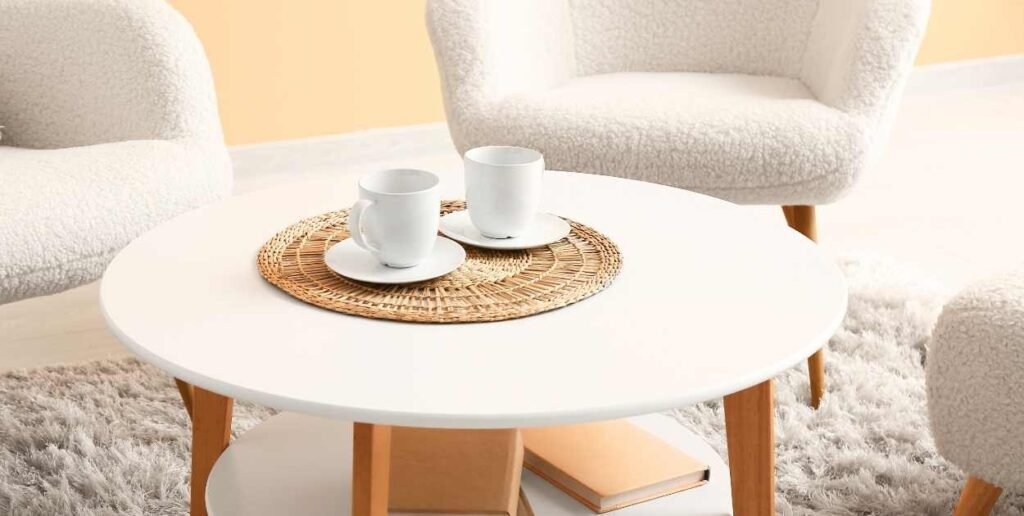
Our coffee table has random stuff on it most of the time, like a TV remote, phone charger, and a glass someone left there.
Maybe a book that was meant to be put away three days ago.
That’s the honest version of what most people’s coffee tables actually look like, not the styled version from the Pinterest photo that made them want to do something about it.
The thing is, the coffee table is one of the first surfaces your eye lands on when you walk into a living room.
It sits right in the middle of your main seating area, so it’s impossible to ignore.
Which means an unstyled coffee table, or one that just holds clutter, actively pulls the room down, no matter how well the rest of it is put together.
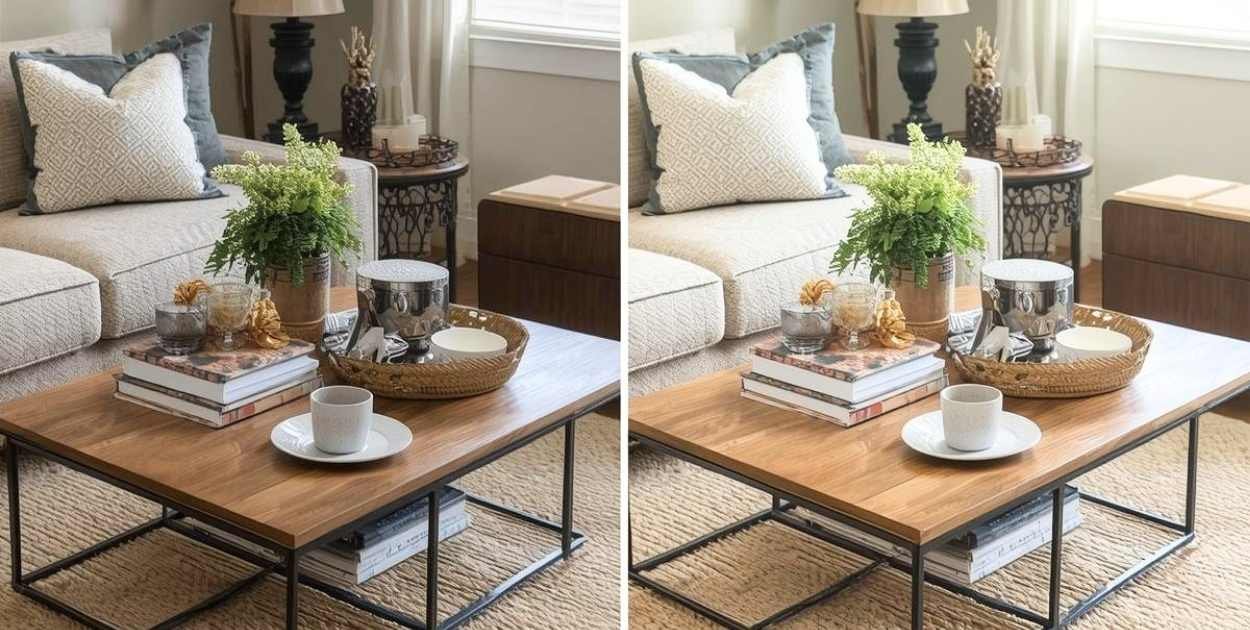
A coffee table that looks expensive requires a specific approach:
- One anchor piece that the eye goes to first
- A few supporting objects with some height variation between them
- A container that groups everything together, and the discipline to leave some empty space.
That’s the formula designers use, and it works on any table, on any budget.
Here’s how to actually do it, what to buy, what to avoid, and how to handle the real-life problem of a table that needs to function as well as look good.

The Centerpiece: Plant or Flowers Works Better

When I think about the coffee tables that actually made me stop and look, the ones that made the room feel like someone with real taste lived there, there was almost always something living on them.
- A small plant.
- Single stem in a thin vase.
- A few cut flowers in something simple.
That living centerpiece is what made the table feel like more than a surface.
Plants and flowers have a quality no manufactured object can replicate.
They introduce organic shape, real color, and a softness that comes from nature rather than design.
A perfect sphere candle or a polished stone on a tray looks styled.
A small plant or a single stem in a bud vase looks like someone who actually cares about their space, put it there.
For a coffee table specifically, you want something compact that doesn’t block sightlines across the seating area.
- A small succulent or a low-growing plant in a nice ceramic pot.
- A trailing pothos trimmed to stay close to the table.
- A single stem, a sprig of eucalyptus, or a few dried botanicals in a narrow bud vase.
The plant doesn’t need to be large or dramatic. It just needs to be real and placed with intention.
If you already grow herbs or have small plants around the house, you can rotate one onto the coffee table without spending anything.

You don’t need to buy flowers every week. A single stem of dried pampas grass or a sprig of dried eucalyptus in a bud vase lasts months and looks genuinely good.
Books as Decor: How Stacking Them Right Changes the Whole Look

A stack of books on a coffee table is one of the most classic styling moves in interior design, and it works because books have inherent visual weight.
- A stack of two or three books with something placed on top creates height variation, adds color through the spines or covers, and signals that someone in this house has interests.
That combination of height, texture, and personality is hard to replicate with any single object.
The way most people do it, though, doesn’t work.
Stacking books with their spines facing out so the titles are visible looks like a bookshelf that ended up on the coffee table.
- It reads as storage, not decor.
What looks expensive is stacking books with the pages facing out, and the spine turned inward or down, so you see the raw paper edge.
It creates a clean, neutral block of height that acts as a platform rather than a statement.

Use Candle

A candle on a coffee table is one of the most quietly effective decor moves there is, and it works for reasons beyond the obvious.
- Visually, a candle adds warmth even when it’s not lit.
- A thick pillar candle or a candle in a vessel has physical weight and presence.
It introduces a vertical element when it’s taller, or a grounding element when it’s wide and low.
And a good-quality candle in a nice holder reads as a considered choice in a way that a lot of objects simply don’t.

The Practical Problem: Remotes, Phones, and Daily Life
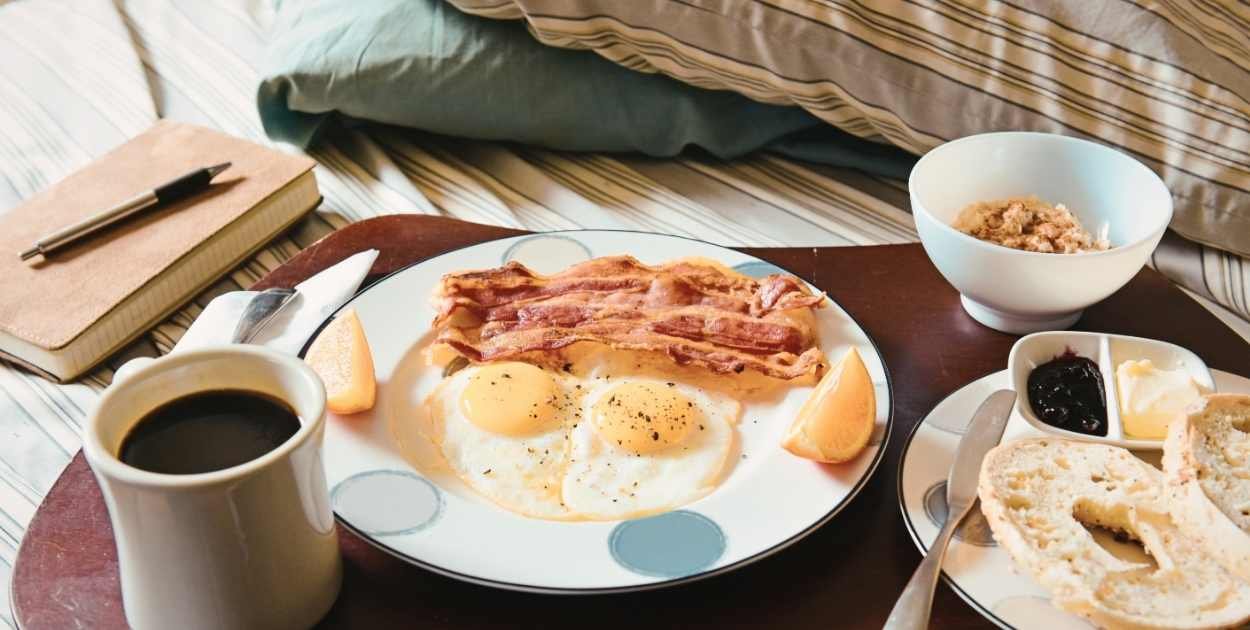
All of this is fine on a weekend when the room is clean, and you’ve had time to think about it.
The real challenge is keeping the coffee table looking good when daily life is happening around it.
A styled coffee table and a fully functional coffee table are in tension with each other, and you have to decide how much of each you want.
Most people land somewhere in the middle, and there’s a practical approach that works reasonably well.
First, the tray: Keep the tray styled as your non-negotiable zone, the objects inside the tray stay, and daily stuff doesn’t go in the tray. Remotes, phones, and glasses go on the table surface outside the tray.
Second, a small decorative bowl or basket on the table surface outside the tray can hold the remotes in a way that looks intentional rather than scattered.
One bowl holding two remotes looks fine. Two remotes just sitting on the table next to the tray look like they were left there.
Third, and this is the most practical thing: make it easy to restore.
If restyling the tray takes five minutes, you’ll do it; if it takes twenty, you won’t.
Keep the tray simple enough that you can clear it and reset it quickly after the table gets used.

Final Thoughts
A coffee table that looks expensive isn’t about the price of the objects on it. It’s about how they’re arranged. One tray is the container.
A living element as the centerpiece. Some height variation through a book stack. A candle or a small weighted object to balance it. Empty space left intentionally around and inside the tray.
Our own coffee table is a work in progress, and that’s fine. The point isn’t to have it perfect all the time. The point is to have a starting arrangement that’s easy enough to restore when daily life scatters it, and good enough that the room feels pulled together most of the time.
Start with the tray. Add one thing at a time. Leave space. That’s really all it takes.
FAQs
How many objects should be on a coffee table?
Inside the tray: three to five objects maximum, with at least 30% of the tray surface visible.
On the table outside the tray: one to two items, ideally contained in a bowl or kept to one side.
Beyond that, the table starts to read as cluttered, regardless of how nice the individual objects are.
My coffee table is very small. Can I still style it?
Yes, but simplify everything. A small table might only fit a single small tray with two objects inside it: a bud vase and one candle, or a small plant and a flat stone. The principles are the same. The number of objects is just smaller. A small table that’s cleanly styled with two or three things looks much better than a small table crowded with five.
What if I have kids or pets? Can I keep a styled coffee table?
To an extent. The most practical approach with kids or pets is removing anything breakable or small from the table and keeping the styling to one durable, low-profile object.
A low wooden tray with a battery-operated LED candle and one flat book, nothing that can break, tip over, or become a hazard. It’s a lighter version of the full arrangement, but it still looks considered.
Do the objects need to match or coordinate in color?
They don’t need to match, but they should share at least one visual thread.
Similar material tones (all natural and earthy, or all white and ceramic), similar levels of visual weight, or a repeating color from elsewhere in the room.
Complete randomness in color and material is usually what makes a table look “too empty” or mismatched, even when it has enough objects on it.
What’s the one thing to buy first if I have nothing on my coffee table right now?
A tray. Without it, anything you put on the table will look like it was left there.
The tray creates structure and makes every other object you add to it look intentional. Get the tray first, then add objects to it one at a time.

Abraham is the creator of Mountain Bike Insider. He is a writer and researcher who enjoys mountain biking, working on DIY projects, organizing spaces, and testing ideas in real life. He focuses on clear and honest explanations based on experience and research, without pretending to be a professional expert.