Disclosure: This post may contain affiliate links. As an Amazon Associate I earn from qualifying purchases.
I will be talking about the best Trek Marlin 5 upgrades. However, first of all, you need to know which generation you have, Gen 1, Gen 2, or Gen 3, because the rear hub, seatpost diameter, and brake setup differ depending on the model year of your bike.
In this article, I will focus on Gen 1, including the early models from 2016 to 2018 and the later models from 2019 to 2021, as well as Gen 2 from 2022 to 2024.
Besides this, I have written a separate article about the Marlin 5 Gen 3, so you can read that if you have that model. I will not be focusing too much on Gen 3 here.
Figure Out Which Marlin 5 You Have Before Ordering Anything
To identify which generation your Marlin 5 belongs to, you can simply check the chainrings. If it has three chainrings, it’s a 2016 to 2021 bike, also known as Generation 1. If it has two chainrings, it’s Generation 2, and if it has one chainring, it’s Generation 3.
Besides this, check the table below and match the components with the ones on your bike. This will help you identify which generation your Marlin 5 belongs to.
The Generation Compatibility Matrix
| Generation | Years | Rear Hub | Seatpost | Brakes | Tire Clearance | Dropper Routing |
|---|---|---|---|---|---|---|
| Gen 1 early | 2016 to 2018 | DC27 7-speed freehub (2017); 2016 unconfirmed | 27.2mm | Mechanical 2016 to 2017, Hydraulic 2018 | 2.2″ | External only |
| Gen 1 late | 2019 to 2021 | DC31 freewheel (2019, some 2020); DC27 7-speed freehub (2021) | 31.6mm | Hydraulic | 2.2″ | External only |
| Gen 2 | 2022 to 2024 | DC-22 HG 8/9/10 freehub | 31.6mm | Hydraulic | 2.2″ | External only |
| Gen 3 | 2024 onward | DC-22 HG freehub | 31.6mm | Hydraulic | 2.4″ | Internal |
Pedals, Grips and Saddle Work on Every Marlin 5
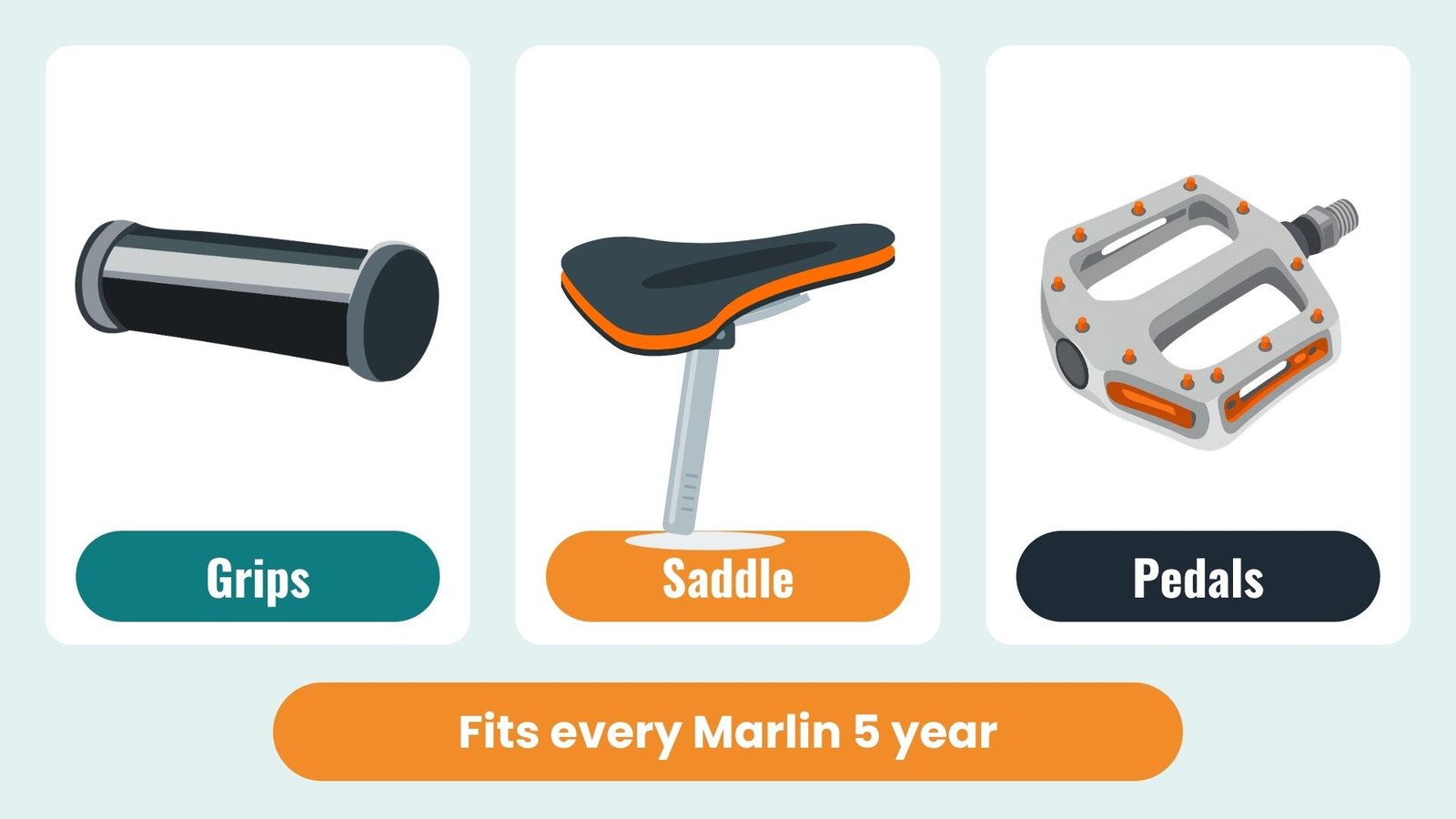
From 2016 to the present, the Marlin 5 has used 9/16-inch pedal threads, a 31.8 mm handlebar clamp, standard saddle rails, and so on. These are three upgrades you can make across all three generations.
These bikes come with nylon VP-536 pedals. They are good, but the only problem is that when your shoes or pedals get wet, or when you’re riding in muddy areas, you don’t get enough grip. So I would recommend going for pedals that offer better grip.
Here is what I want you to focus on:
- More grip pins across a wider platform, so you can keep your foot locked in on slippery roots
- Composite body that doesn’t rust or crack like cheap alloy alternatives
- Stiffer platform underfoot, so less energy is lost to flex when you’re pushing through technical sections
My two recommendations are OneUp Components Composite Pedals and Ergon GA3 grips. If you have just these two things, your hands and feet will stay secure no matter where you ride, whether in muddy areas or during hot weather.
OneUp Components Composite Pedals (Black)
Large platform with metal pins to keep your feet planted on rough trails.
Ergon GA3 Grips (Black)
Small palm wing that reduces hand pressure on longer rides.
Upgrade Stock Suntour Fork
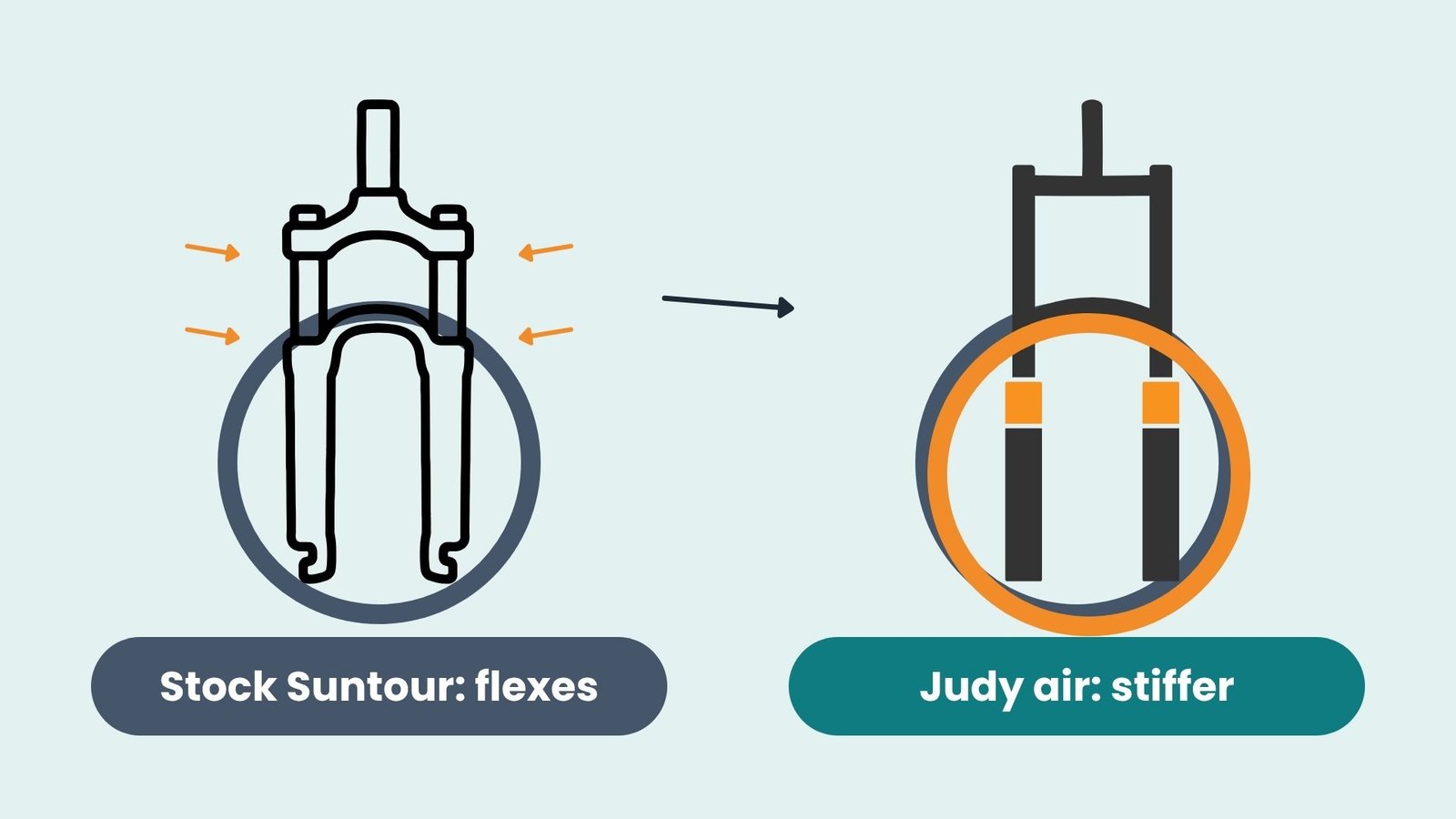
Every generation of the Marlin 5 before Gen 3 came with an SR Suntour coil fork. And for such an affordable bike, that’s not a bad thing because a coil spring is simple, low-maintenance, and works well even in cold weather.
But the problem is that it has no rebound adjustment or air spring. So, you have limited options to adjust it according to your body weight and the type of terrain you’re riding on.
If you have Generation 1 or Generation 2, you can upgrade to the RockShox Judy Silver TK Solo Air. Here is what makes it special and what you’ll get over the stock Suntour fork that already comes with your bike:
- Air spring you can tune with a shock pump to match your exact body weight
- Solo air design, which means one air chamber to manage instead of two
- Rebound adjustment dial so you can control how fast the fork returns after a hit
- 32mm stanchions that flex less than the stock Suntour under hard braking or on technical sections
If you’re a heavier rider and you’re pushing into rougher trail conditions, you can choose the RockShox Recon Silver RL because it has better damping than the Judy and handles impacts better. So you can ride on rougher trails with more confidence.
But one thing I want you to know is that most aftermarket forks in this spec come with a 51 mm offset, while the Marlin 5 fork runs a 46 mm offset.
Therefore, the steering may feel slightly different after the swap. I’m telling you this so you don’t get surprised if you’re choosing this option for the first time.
RockShox Judy Silver TK Solo Air 29 100mm Fork
Air-spring 29er fork with 30mm stanchions. Needs a straight steerer and 9×100 axle.
RockShox Recon Silver RL 29 100mm Fork
32mm stanchions, straight steerer, 9×100 mm quick release, 51 mm offset.
Drivetrain Upgrades Depend on Your Hub, and 2019 to 2020 Bikes Have a Problem
The stock drivetrain on Gen 1 Marlin 5 models is a Shimano Tourney 3×7 setup, which is good for moderate trails and roads. So I wouldn’t recommend replacing it if you’re already happy with it.
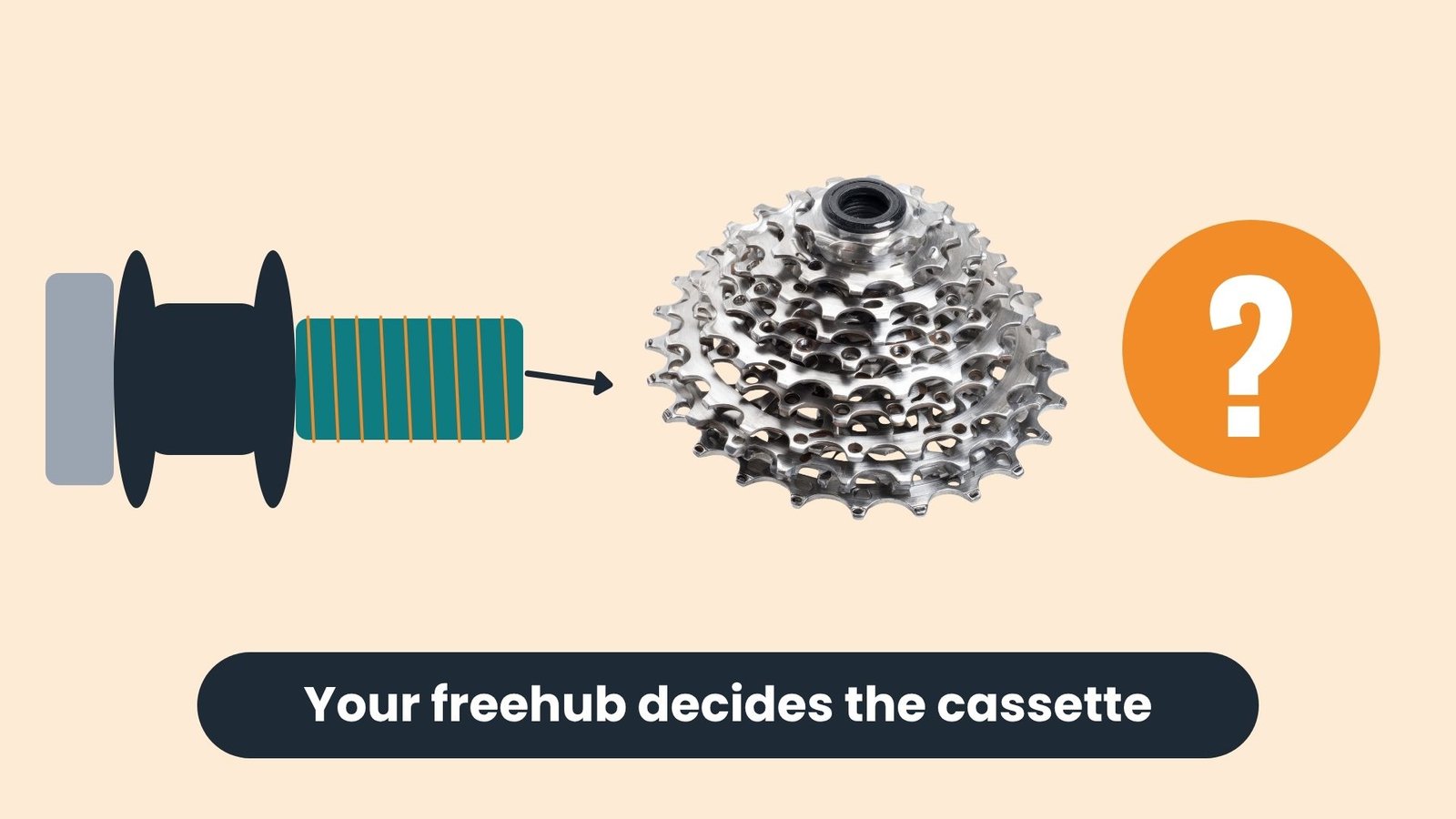
But you can change it if you want to switch to a 1x drivetrain, with one front chainring instead of three, or install a cassette with a wider gear range. Your options depend on the rear hub fitted to your bike. That’s important because Trek uses different types of rear hubs across the Marlin 5 generations, so not all of them will accept the same cassette.
Now, let’s talk about those options as well.
Gen 1 (2016–2021)
If you have a Gen 1 Marlin 5 from 2019 to 2020, it comes with a DC31 freewheel. A freewheel is different from a cassette because the gears and ratchet mechanism are built into one unit. So you can’t simply remove it and install a cassette to upgrade to a newer drivetrain.
To upgrade these models to a cassette-based drivetrain, you’ll need a new rear wheel with a compatible HG freehub body and 135 mm quick-release spacing.
The 2021 model comes with a DC27 7-speed freehub. Although this hub accepts a cassette, its freehub body is too short for standard 8-, 9-or 10-speed HG cassettes.
So it will limit your drivetrain choices if you want to use more than seven speeds. You’ll need to upgrade the rear wheel before installing a different drivetrain.
Gen 2 (2022–2024)
Trek has fitted the Generation 2 Marlin 5 with a DC-22 freehub on a wide rim. So, unlike the freewheel hubs found on some older models, this freehub accepts 8-, 9-and 10-speed HG cassettes.
This makes Generation 2 a much easier platform for a 1x conversion because you can keep the original rear wheel.
So, my two options are as follows:
- Shimano Deore 10-speed 1x: It is a reliable drivetrain with a simple shifting setup.
- MicroSHIFT Advent X 10-speed: Another practical option for riders who want a straightforward 1x drivetrain.
If you switch from the stock 3×7 setup to 1x, you will get these benefits:
- Simpler shifting: You can remove the front derailleur and extra chainrings, so there’s only one shifter to worry about.
- Easier gear selection: You don’t have to think about which front chainring to use while riding technical trails.
- A cleaner cockpit: Removing the front shifter will give you more space on the handlebar.
- Less maintenance: You have fewer drivetrain components to adjust and maintain.
By the way, don’t assume that every 1x drivetrain will offer the same gear range as your original 3×7 setup. The actual range depends on the cassette and chainring combination you choose.
If you want to move to 12-speed compatibility, things will become more complicated. Shimano Deore 12-speed generally requires a Micro Spline freehub, while higher-tier SRAM Eagle cassettes may require an XD driver. On the other hand, some SRAM Eagle options, such as NX Eagle, use a standard HG freehub instead.
So, if you are a Gen 2 Marlin 5 owners who want to keep their original rear wheel, a 1×10-speed drivetrain is a good upgrade choice.
Gen 3
In Generation 3 of the Marlin 5, you already get a 1×9 Shimano CUES LinkGlide drivetrain from the factory. So there’s no need to convert it from 3x to 1x because Trek has already made that change for you.
And if you want a complete guide to upgrading the Marlin 5 Gen 3, you can check out my other guide.
Replace the Stock Seatpost With a Dropper
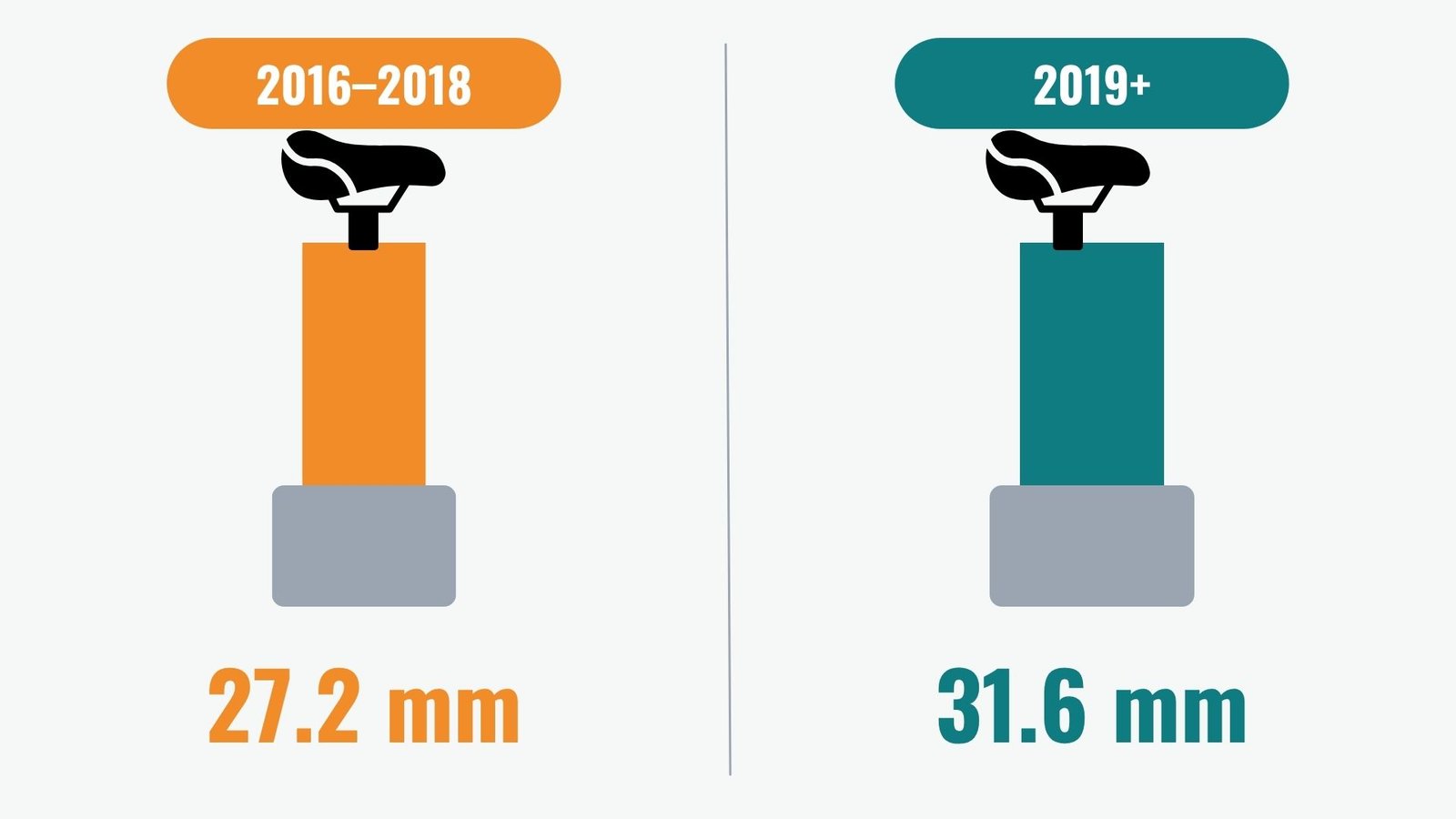
You won’t find a dropper post on any Marlin 5 model. So, if you have a model from 2016 to 2024, you can add a dropper post.
But make sure you check your seatpost diameter before ordering one because different Marlin 5 models come with different sizes. If you accidentally order the wrong size, it won’t fit.
2016–2018: You Need a 27.2mm Dropper
The 2016 to 2018 Marlin 5 models come with a 27.2 mm seatpost. If you have one of these bikes, don’t order a 31.6 mm dropper post because it won’t fit, and you’ll just end up wasting your money or having to return it.
So, please check the diameter. It’s usually printed on your existing seatpost near the seat clamp.
2019–Gen 2: You Need a 31.6mm Dropper
You won’t find a dropper post on any Marlin 5 model. So, if you have a model from 2016 to 2024, you can add a dropper post. But make sure you check your seatpost diameter before ordering one because different Marlin 5 models come with different sizes. If you accidentally order the wrong size, it won’t fit.
The 2016 to 2018 Marlin 5 models come with a 27.2 mm seatpost. If you have one of these bikes, don’t order a 31.6 mm dropper post because it won’t fit, and you’ll just end up wasting your money or having to return it. So, please check the diameter. It’s usually printed on your existing seatpost near the seat clamp.
If you have a Marlin 5 from 2019 onwards, you’ll get a 31.6 mm seatpost. In fact, Trek has specifically mentioned dropper post routing, but later model specifications also highlight internal routing as a Gen 3 feature.
Besides this, I was reading Trek’s dealer guide, and it also indicated that the Generation 2 frame doesn’t have internal dropper routing.
Therefore, to avoid compatibility issues, I would recommend an externally routed 31.6 mm dropper post for 2019 to 2024 Gen 2 models as well.
That way, you won’t have to rely on internal routing being available.
Which Dropper Post Should You Buy?
Here are two options, depending on your budget:
- TranzX JD-YSI34 (around $80–$100): It is a budget-friendly option that gives you the main benefit of a dropper post without spending too much. Its remote operation is basic, and servicing may be less convenient for home mechanics.
- PNW Coast (around $130–$160): A more premium option with a better remote. It’s designed to be serviceable at home without special tools.
If you own a 2016–2018 Marlin 5, look at the PNW Cascade in 27.2mm. It’s a suitable option to consider for these older frames, although you should still check the available travel and insertion depth for your particular frame size.
TranzX JD-YSI34 Dropper Post 31.6mm
Budget dropper post with basic remote operation.
PNW Coast Dropper Post 31.6mm (120mm, External)
Premium dropper with a better remote, serviceable at home. External routing.
PNW Cascade Dropper Post 27.2mm
Dropper option for older 27.2mm frames.
Upgrade the 2016 to 2017 Brakes to Hydraulic
You’ll find Tektro mechanical disc brakes on the 2016 and 2017 Trek Marlin 5 models. The brake lever uses a cable connected to the caliper, and the feel at the lever is kind of spongy compared to hydraulic brakes.
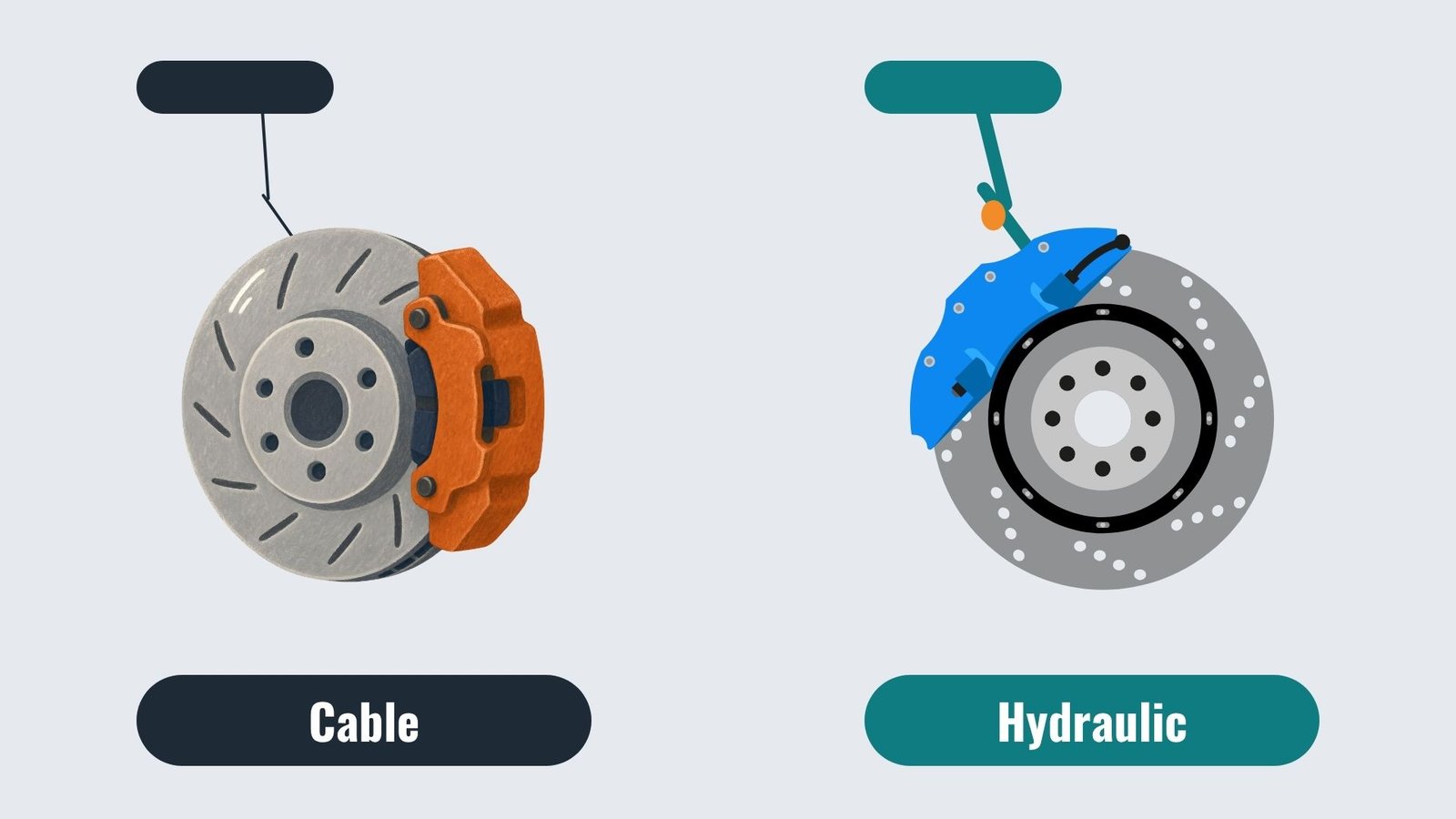
They’re okay for casual riding, but the problem you’ll face is on longer descents.
My two favorite choices to avoid this problem are Shimano MT200 and Tektro HD-M275. Here’s what you’ll notice if you consider upgrading your brakes to hydraulic ones:
- Lever pull feels lighter and more consistent because there’s no cable stretch absorbing force
- Better modulation, so you can trail-brake and control speed with finer pressure
- Self-adjusting pad clearance as pads wear, so the feel will stay consistent over time
- Easier one-finger braking, which frees your other fingers to maintain grip on rough terrain
On 2016 bikes, the shifter and brake lever are a combined unit. So if you upgrade, you will have a new standalone seven-speed shifter at the same time. So you will do two upgrades. For 2018 and onward, the truck uses hydraulic brakes as standard.
Shimano MT200 Hydraulic Brake Set (Front and Rear)
Complete set with levers, calipers and pre-bled hoses.
Shimano SM-RT66 180mm Rotor (6-Bolt)
SLX 6-bolt 180mm disc rotor.
Replace the Wire-Bead Stock Tires With Folding-Bead
Actually, the Marlin 5 Gen 3 comes with wired, heavy tires, but it features a 2.4-inch clearance limit, unlike the 2.2-inch limit found on older generations.
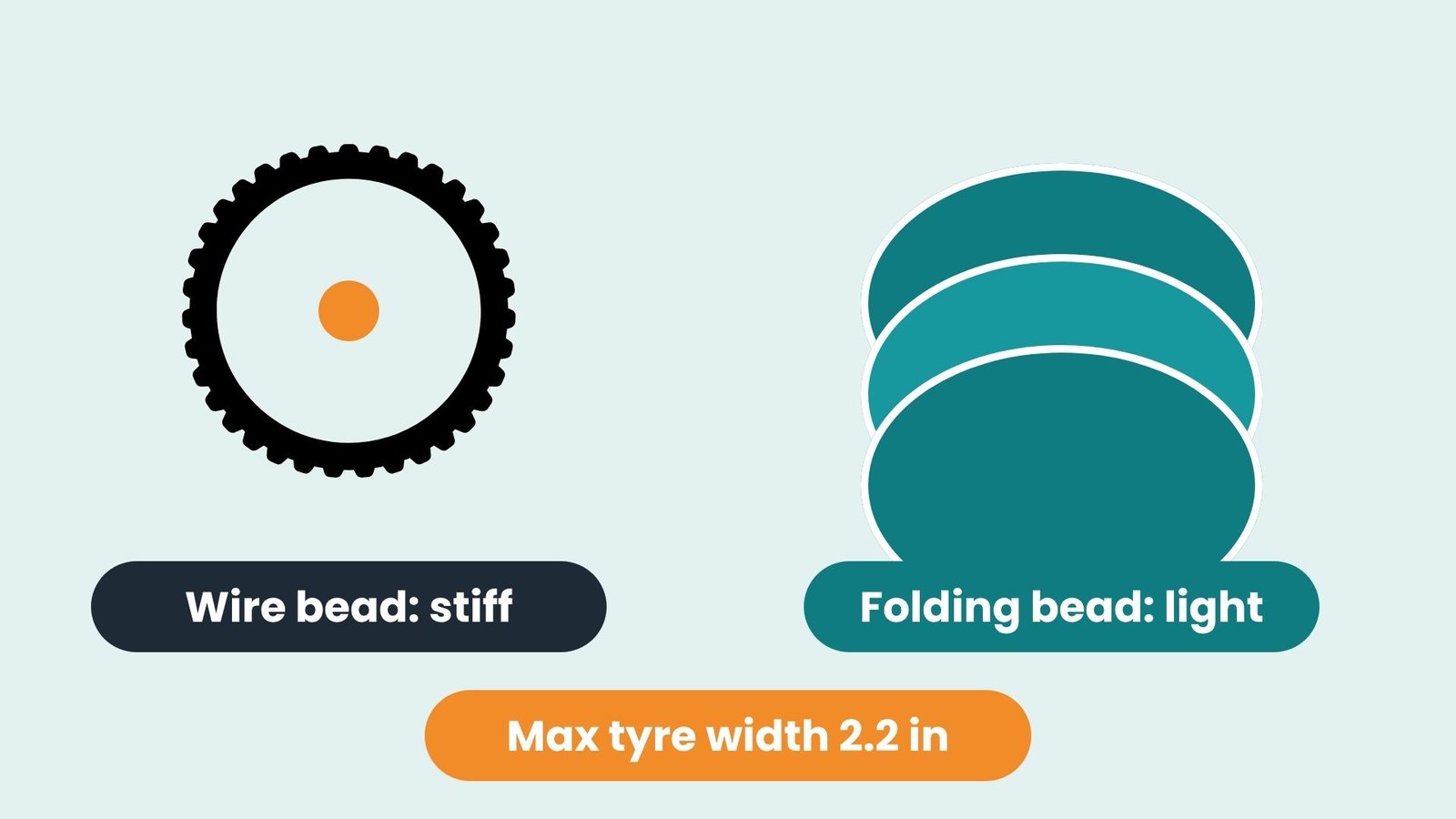
They use lower-quality rubber compounds, and folding tires are a better option because they’re lighter and easier to transport.
So, you can upgrade the tires, but you can’t go wider on Gen 1 or Gen 2 frames.
And one more thing: no Marlin 5 from any generation comes with tubeless-ready rims. Therefore, you’ll have to upgrade the rims as well if you want to go tubeless.
So, within the 2.2-inch limit on Gen 1 and Gen 2, I would start with the front tire because it’s the most important for grip. And here are my two choices:
- Maxxis Ardent EXO 2.2: EXO sidewall protection means you can run lower pressure for better grip without risking a sidewall tear.
- WTB Ranger 2.2 TCS: More aggressive shoulder knobs for better cornering grip on loose terrain. Plus, TCS casing adds puncture protection on the sidewall.
Maxxis Ardent EXO 2.2 Folding Tire
Fast-rolling trail tire with EXO sidewall protection.
WTB Ranger 29 x 2.25 TCS Tire
Light, fast-rolling tubeless folding tire with SG2 puncture protection.
FAQ
What generation is my Trek Marlin 5?
If your bike has three front chainrings, it’s a 2016 to 2021 model. If it has two, it’s a 2022 to 2024 model, and if it has one, it’s the latest version.
What size seatpost does a Trek Marlin 5 use?
It depends on the year. In 2016 to 2018 models, you’ll find a 27.2 mm seatpost, while 2019 and newer models come with a 31.6 mm seatpost.
However, you can check this yourself by looking for the diameter printed on the seatpost near the clamp. You should especially do this before ordering a dropper post.
Can I convert a Trek Marlin 5 to 1x?
If you have a Generation 2 model from 2022 to 2024, then yes, you can absolutely do this without buying a new rear wheel because it has a DC-22 freehub that accepts 8-, 9-and 10-speed HG cassettes.
For 2016 to 2021 models, the hub is either a freewheel on the 2019 and some 2020 models, or a 7-speed-only freehub on the 2017 and 2021 models. Both require a new rear wheel before you can switch to a 1x setup.
Does the Trek Marlin 5 have hydraulic brakes?
If you bought your bike after 2018, yes, you’ll get hydraulic brakes. But on 2016 and 2017 bikes, you’ll find Tektro mechanical disc brakes with a cable running to the lever. Those are mechanical brakes.
If you see a sealed hose coming out of the lever body, they are hydraulic. That’s how you can check.
Can you put a dropper post on a Trek Marlin 5?
Yes, you can do that, but remember that the diameter changes depending on the generation.
For 2016 to 2018 models, you need a 27.2 mm dropper post with external routing. For bikes from 2019 onwards, a 31.6 mm dropper post is suitable.
Is it worth upgrading a 2017 or 2018 Marlin 5?
Yes, you can definitely upgrade the front fork. But for a drivetrain upgrade on an older frame, you’ll need a new rear wheel, which can be a little costly.
However, before committing to that combination on an older frame, I want you to compare the total cost with that of a used Gen 2 Marlin 5, which has a proper HG 8/9/10-speed freehub and doesn’t need a wheel swap for a 1x conversion.
Can the Trek Marlin 5 go tubeless?
Actually, you can’t do that with the stock wheels from any generation because the rims used on these bikes are not tubeless-compatible. For a tubeless setup, you’ll need wheels with tubeless-ready rims.
What tire size fits a Trek Marlin 5?
The Generation 1 and Generation 2 frames have a 2.2-inch tire clearance limit, while Generation 3 allows up to 2.4 inches. These are the tire sizes that we can fit on the Marlin 5.