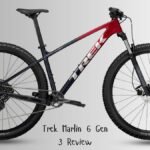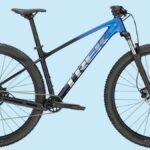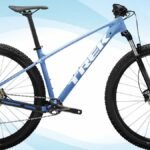
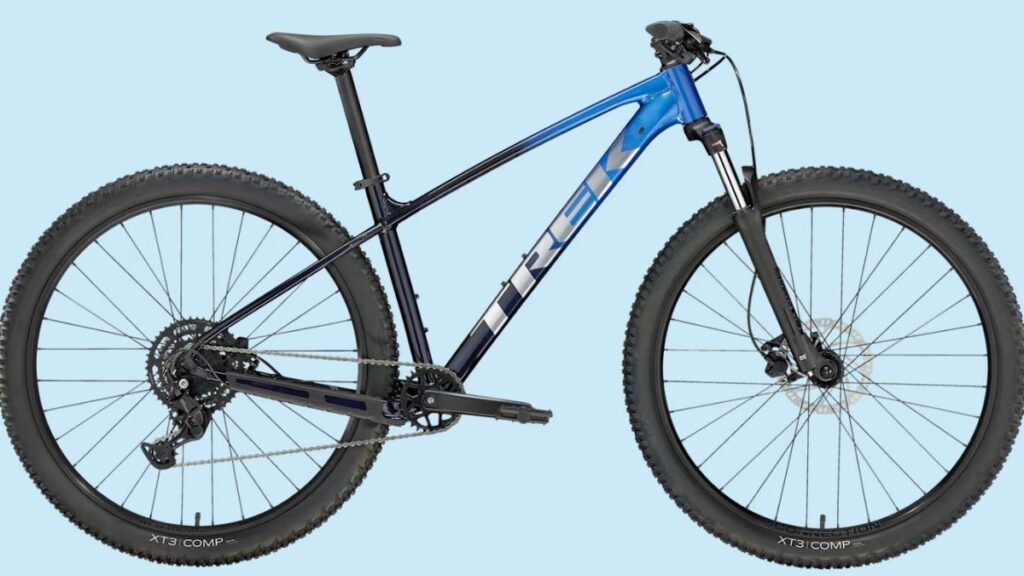
Trek updated the Marlin 5 for 2026, the old one had 2×8 Shimano Altus drivetrain before, which is now replaced by a 1×9 Shimano CUES setup with a LINKGLIDE cassette. And Tektro brakes are replaced by Shimano MT200, and the fork gained a hydraulic lockout that the old model didn’t have.
At $849.99, the Marlin 5 Gen 3 sits at a price where a lot of riders make their first serious mountain bike purchase.
For a bike at this price point, the Gen 3 update made some good improvements, which are important for long-term durability and trail confidence, and in this review, I will covers all of them.
Key Takeaway:
- The Marlin 5 Gen 3 is a worth buying for a new trail rider who wants a durable, low-maintenance hardtail under $900.
- It comes with Shimano CUES LINKGLIDE drivetrain, the MT200 brakes have confident lever feel, and the frame comes in 7 sizes that fit a wide range of riders.
- But 100mm fork is the limitation, and if you progress into technical terrain quickly, you will have to spend $200 to $350 to upgrade fork upgrade.
Trek Marlin 5 Gen 3 Specifications
| Component | Spec |
|---|---|
| Frame | Alpha Silver Aluminum, internal routing, rack and kickstand mount, 135x5mm ThruSkew |
| Fork | SR Suntour XCT 30, coil spring, preload, hydraulic lockout, 100mm travel (80mm on XS) |
| Drivetrain | Shimano CUES U4000, 9-speed, 1x |
| Crankset | Shimano CUES U4001, 32T chainring |
| Cassette | Shimano LINKGLIDE LG300, 11-46T, 9-speed |
| Chain | Shimano LG500 LINKGLIDE |
| Brakes | Shimano MT200 hydraulic disc |
| Tires | Bontrager Montrose Comp, 29×2.4″ (M and larger), 27.5×2.4″ (XS, S) |
| Rims | Bontrager Connection, double-wall, 32-hole, 20mm internal width |
| Saddle | Bontrager Verse Short, stainless rails |
| Pedals | VP-536 nylon platform |
| Sizes | XS (27.5″), S (27.5″), M, ML, L, XL, XXL (all 29″) |
| Price | $849.99 MSRP |
A 32T chainring with an 11-46T cassette puts your low gear at around 19 gear inches and the top end around 78 gear inches.
For beginner and intermediate XC terrain, that range covers steep fireroad climbing without stalling and flat trail without spinning out.
The step-by-step spacing across 9 gears is wider than what a 10 or 12-speed setup gives you, but for a first season of trail riding, the range is fully adequate.
What Changed from the Trek Marlin 5 Gen 2 to the Gen 3
1×9 Shimano CUES drivetrain replaces the 2×8 Altus
Going from 2×8 Altus to 1×9 CUES sounds like trading 16 gears for 9 and losing half the range, but after riding both setups, the 1×9 is the stronger trail drivetrain at this price.
On the Gen 2, you technically had 16 gear combinations, but maybe 10 were usable in practice.
Running the small chainring with the small cassette cogs, or the big ring with the big cogs, creates cross-chain angle that shifts rough and wears components faster, and you have to learn to avoid those combinations, which takes a few rides.
On climbs, the switch to 1x simplifies everything, there’s no front derailleur to rub, no front-shifting decision when the gradient steepens, and chain retention is better by default than any 2x setup at this price.
On variable climbs where the grade changes every few seconds, you just have to shift the rear and ride.
Shimano LINKGLIDE technology
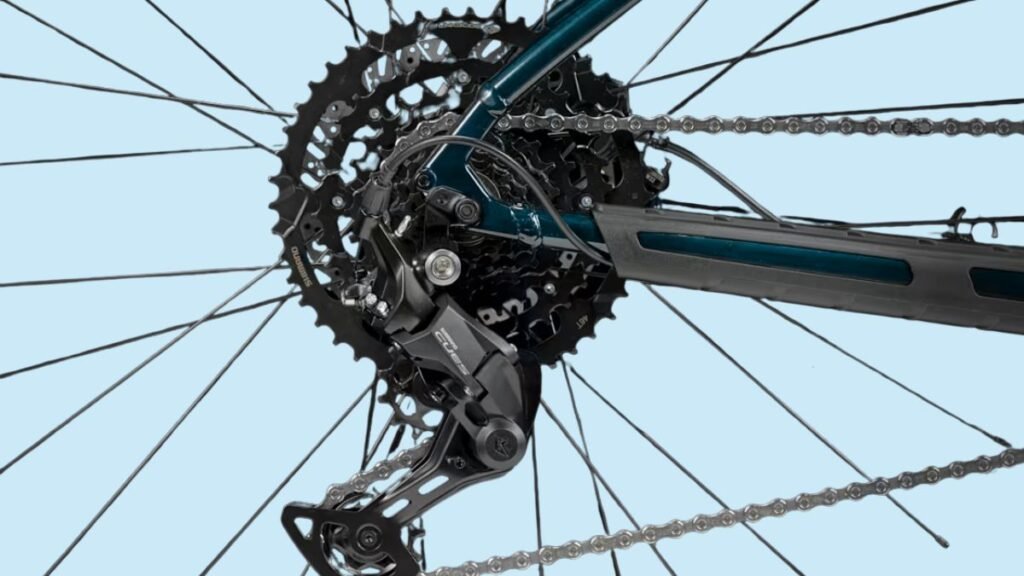
LINKGLIDE is the part of this drivetrain most buyers don’t pay attention to attention.
Shimano designed it specifically for longevity under load, which means the chain and cassette are engineered to wear much more slowly than a standard 9-speed setup under the same riding conditions.
So If you won’t do deep-cleaning of your drivetrain after every muddy ride, that difference pays back in parts cost over time.
One thing to know: when a chain wears out, replace it with a LINKGLIDE-compatible chain, specifically the Shimano LG500 at around $30 to $45. A standard 9-speed chain will fit physically but accelerates cassette wear and defeats the whole system.
Better brakes and a new hydraulic fork lockout
The brake upgrade from Tektro HD-M275 to Shimano MT200 is a good thing to pay attention.
The Tektros that shipped on Gen 2 Marlins were functional, but lever feel was mushy and modulation used to get inconsistent on longer descents or in wet conditions.
MT200 brakes have crisper initial bite and much cleaner feedback through the lever, and if you’ve ridden the old Tektros, you’ll feel the difference within your first few rides.
The fork also gained a hydraulic lockout for 2026, which the Gen 2 didn’t have.
You can lock it out for fireroad climbs or gravel sections and open it for trail without stopping to adjust anything, which is a feature you’ll use on every mixed-terrain ride.
How the 1×9 Shimano CUES Drivetrain Performs on Trail
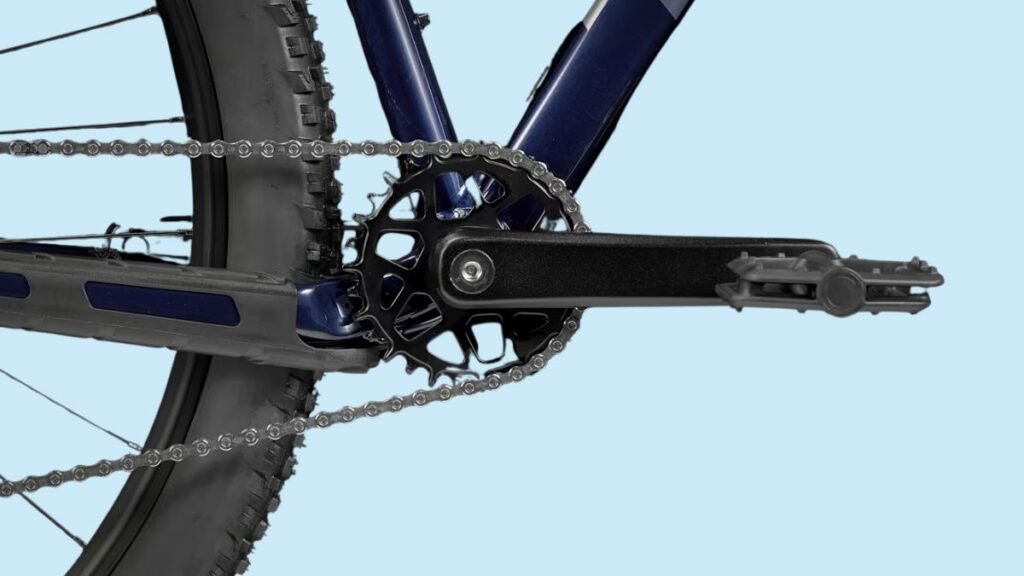
On flat XC and rolling singletrack, the CUES setup shifts cleanly and reliably, the LINKGLIDE cassette engages smoothly even when you’re shifting under load, the system doesn’t punish it the way older entry-level drivetrains did.
Chain retention is also better on a 1x setup than a 2x by default, with no chain-drop risk on the front ring.
The 9-speed gear spacing is the main thing you will notice when the trail starts throwing variable gradients at you.
On terrain where the grade changes every few seconds, the larger gaps between cogs on a 9-speed setup mean you sometimes end up in a gear that’s a little too hard or too easy for the pitch you’re on.
It’s a comfort issue and not something that stops you from riding the trail, but it’s a real sensation that more gears would smooth out.
For maintenance, the most important thing to protect is system integrity, so when the chain wears out, replace it with a Shimano LG500 or LINKGLIDE-compatible chain specifically.
Using a standard 9-speed chain accelerates cassette wear and negates the durability advantage LINKGLIDE was engineered for.
SR Suntour XCT 30 Fork: Performance and Limits
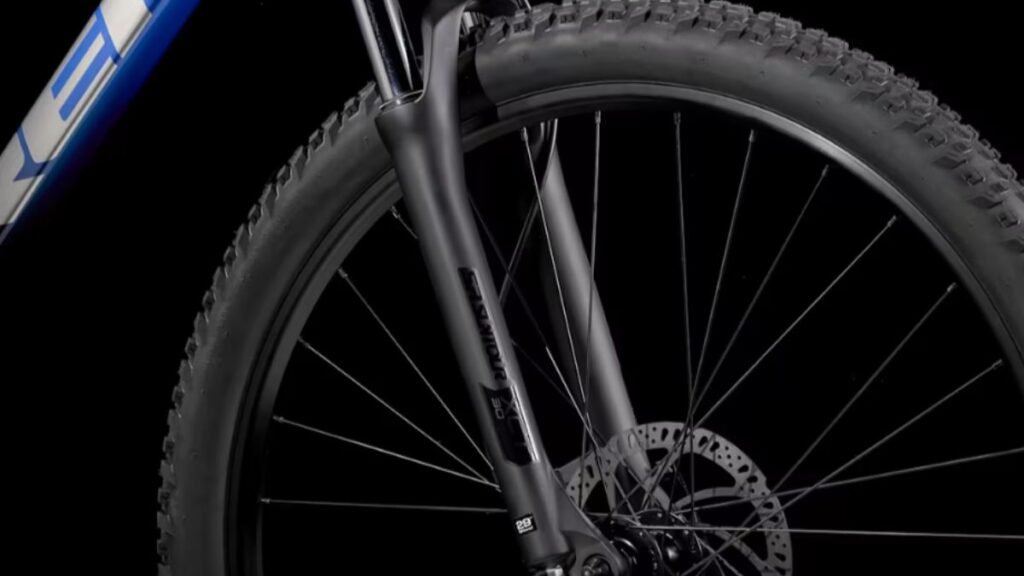
What the XCT 30 handles well
The SR Suntour XCT 30 with 100mm of coil travel is honest about what this bike is designed for, and it handles it without drama. Here’s where the fork performs reliably:
- Hardpack XC singletrack and smooth forest trail at moderate speed
- Rolling roots and small drops, where the coil spring absorbs the hit without bucking
- Fireroad climbs locked out, where it transfers power cleanly and the front end stays stiff
- Gravel and mixed-surface riding, where the fork takes the edge off rough pavement
For beginner trail riding and XC loops, the fork earns its place on the bike, THE hydraulic lockout is a useful upgrade over the Gen 2’s preload-only adjustment, and you will use it regularly.
Where the XCT 30 starts to reach its limits
Push it somewhere chunkier and the fork’s limitations show up fast.
A coil spring with preload adjustment has no rebound damping and no compression tuning, which means you get one suspension response for every kind of terrain.
On rock gardens, sustained rooty descents, or anywhere that asks for real front-wheel control and rebound management, that shows up as a harsh, bouncy feel that makes the front end hard to trust and tiring to ride through.
I’ve ridden this type of fork on blue-rated trail and you can manage it, but you’re working against the front end more than the trail should make you.
The front wheel bouncing back at you instead of tracking through rough sections is the signal that the fork is the bottleneck, not your riding.
The XS frame gets less travel than the rest of the lineup
The XS frame ships with 80mm of travel on 27.5″ wheels, not the 100mm that every larger size gets.
On any trail with meaningful roughness, that additional 20mm of missing travel does show up in how the bike handles.
If you’re buying an XS, factor that in before assuming it rides identically to a Medium or Large.
Fork upgrade path for the Marlin 5 Gen 3
When the time comes, the frame takes a tapered headtube (1-1/8″ to 1.5″) with QR100mm axle spacing, which is a common standard.
A Rockshox Judy, Manitou Markhor, or X-Fusion Sweep in 100mm to 120mm bolts straight in without modification.
Budget $200 to $350 depending on the fork, going to 120mm slackens the head angle slightly and raises the front end, and it make the bike feel more trail-oriented.
Marlin 5 Gen 3 Pros and Cons
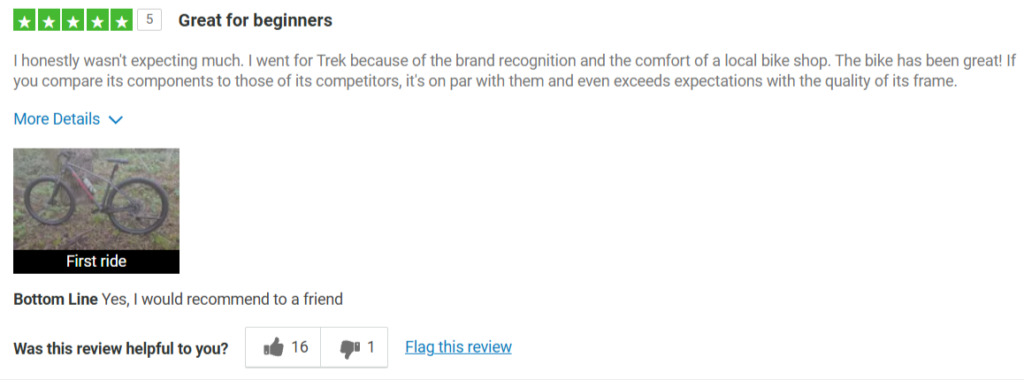
Pros :
- Shimano MT200 hydraulic disc brakes deliver consistent lever feel and resist fade on moderate descents, which is a step above what most bikes at this price ship with
- CUES LINKGLIDE drivetrain holds up longer under grit and irregular maintenance than a standard 9-speed setup, which matters for riders who won’t clean the drivetrain obsessively
- 7 frame sizes with Trek’s Smart Wheel Size means XS and S riders get 27.5″ wheels and appropriate standover height, not an oversized 29er crammed into a small frame
- Internal cable and brake hose routing protects lines from trail debris and gives the bike a cleaner look than externally routed competitors at the same price
- Hydraulic fork lockout lets you firm up the front end on climbs or gravel without stopping, a feature the Gen 2 didn’t have
- Rack and kickstand mounts make the bike functional as a commuter alongside its trail duties
Cons:
- 100mm of SR Suntour coil fork travel is the terrain ceiling on this bike, and riders who progress into technical trail quickly will feel limited within a season
- 20mm internal rim width is narrow for 2.4″ tires and limits how effective a tubeless conversion will be
- VP-536 nylon platform pedals ship stock and should be replaced before your first trail ride, since they have poor grip on wet or rooty terrain
- No tubeless-ready setup out of the box, so converting means adding valves, sealant, and possibly rim tape at around $30 to $60 extra
- Bontrager Montrose Comp tires are 30 tpi wire bead, heavier and less compliant than tubeless-ready alternatives at a similar price from Maxxis or WTB
Who the Trek Marlin 5 Gen 3 is for
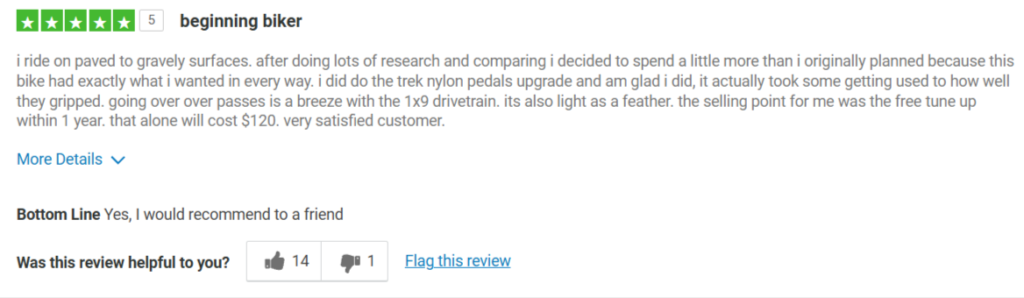
The Marlin 5 Gen 3 is built for new riders who want a capable, durable starting point without a four-figure price tag.
For green-rated trail riding, XC loops, gravel, and casual singletrack, it handles the terrain well and the CUES LINKGLIDE drivetrain will hold up well with moderate maintenance.
If you pick up skills fast or already have some trail experience and know you’ll be pushing into blue-rated terrain within your first season, the fork will become the limiting factor before anything else on the bike does.
The frame is good, the drivetrain is durable, and the brakes are a step above what this price range ships with, but the 100mm coil fork caps the terrain, and riders who progress quickly may want a fork upgrade within a season or two.
For someone who isn’t sure yet how serious they’ll get about the sport, the Marlin 5 Gen 3 is a low-stakes starting point.
Common Questions About the Trek Marlin 5 Gen 3
Is the Gen 3 Marlin 5 a big change from the Gen 2?
The Gen 2 ran a 2×8 Shimano Altus drivetrain with Tektro HD-M275 brakes.
2026 Gen 3 switches to 1×9 Shimano CUES LINKGLIDE with Shimano MT200 brakes, and the fork gained a hydraulic lockout.
Those changes affect how the bike shifts, how long the drivetrain lasts, and how the brakes feel under sustained use.
If a review you’re reading mentions Altus, Tektro, or 2×8, it’s describing a previous generation of this bike.
Can you upgrade the fork on the Marlin 5 Gen 3?
Yes, and it’s the upgrade that opens up the most terrain when you’re ready, the frame takes a tapered headtube (1-1/8″ to 1.5″) with QR100mm axle spacing, which is a common standard.
A 100mm or 120mm Rockshox Judy, Manitou Markhor, or X-Fusion Sweep bolts in without modification, and budget $200 to $350 depending on the fork.
Going to 120mm slackens the head angle slightly and makes the bike feel more trail-oriented, which suits the reason most riders make this upgrade.
What should you upgrade first on the Marlin 5 Gen 3?
Replace the pedals before your first ride, the VP-536 nylon platforms that ship on the bike have poor grip, especially on wet terrain, and a small platform that reduces confidence on anything technical.
Flat pedals with metal pins start around $30 to $40 from OneUp, Deity, or Crankbrothers Stamp.
After a full season on trail, the fork is the component that opens up the most terrain.
If you want a cheaper interim step, swapping the Montrose Comp tires for a Maxxis Ardent Race or Bontrager XR4 costs $60 to $90 and improves cornering and braking grip without touching anything mechanical.
Can you run tubeless tires on the Marlin 5 Gen 3?
Technically yes, but the 20mm internal rim width limits how effective the setup will be.
You can add tubeless valves and sealant, and some riders make it work, but the narrow rim prevents you from dropping pressure far enough to get the full traction and flat-protection benefits of tubeless before the tire starts deforming in corners.
If tubeless is a priority from day one, it’s worth looking at bikes with wider rims as a starting point.
Is the Trek Marlin 5 Gen 3 worth the price?
For a beginner buying their first real trail bike, yes, the Gen 3 update brought improvements in the components that fail first on cheaper bikes: the drivetrain durability, the brakes, and the fork lockout.
At $849.99, it’s not the cheapest entry point into mountain biking, but the CUES LINKGLIDE drivetrain and MT200 brakes are components that hold up better over time than what this price range usually ships with.
The fork is the one thing that will cap where you can ride, but for a first season of XC and easy trail riding, it handles the terrain this bike is built for.

Muhammad Abraham is the founder of Mountain Bike Insider and has been riding mountain bikes for over 15 years. He started writing professionally in 2017 and launched this site in 2024 to share practical MTB gear reviews, bike comparisons, trail guides, and riding advice based on real-world experience. When he has not used a product directly, he clearly says so and supplements his research with input from other riders and the mountain biking community.