
Real quartz countertops run anywhere from $50 to $120 per square foot installed. A countertop cover film costs about $2 to $4 per square foot, arrives as a roll, and you put it on yourself in an afternoon.
And depending on the pattern you pick, some people cannot tell the difference at a glance.
That sounds like an exaggeration, but it is not.
A landlord once could not tell until someone pointed to the seam.
Someone selling their house used it to refresh the kitchen before listing, and sold without anyone asking.
People in my home decor Facebook community have tried it, and some are still talking about how good it looks.
Some had a rough time with bubbles and peeling edges and removed them.
What This Film Actually Is
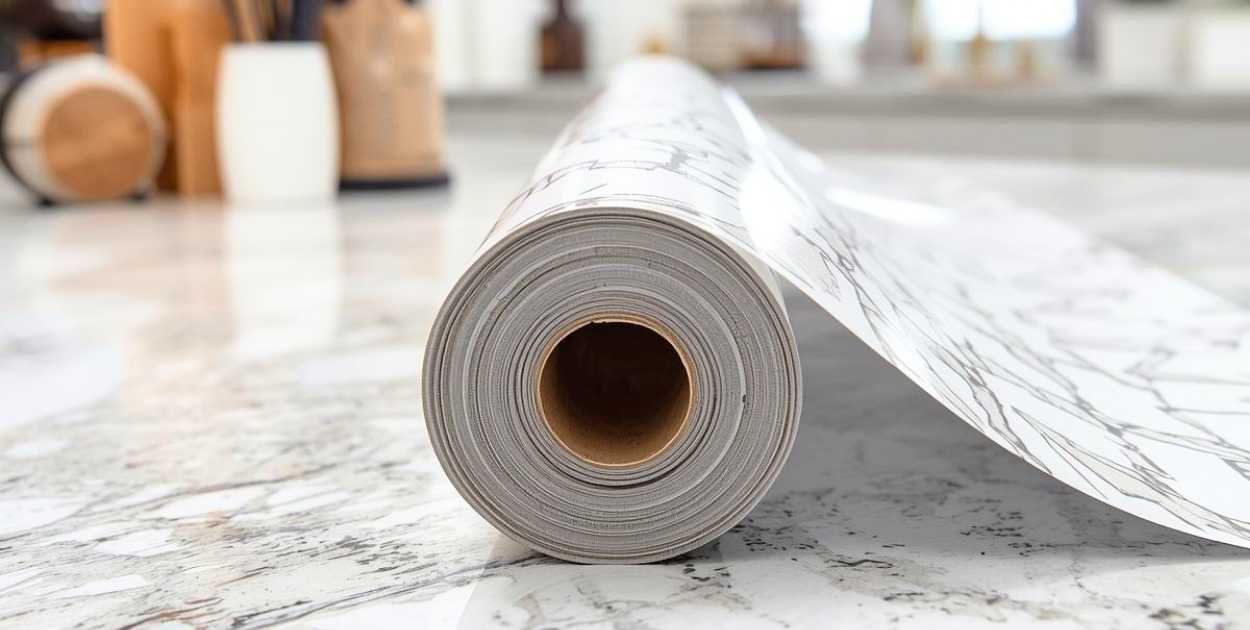
Countertop cover film goes by several names: contact paper, vinyl wrap, peel-and-stick countertop film.
The cheap version is what you remember lining kitchen shelves with in the 1990s.
The good version used today is a different product entirely.
Modern countertop films are thick vinyl, waterproof, oil-resistant, and printed with high-resolution stone or quartz patterns.
The better ones have an air-release adhesive layer, which means tiny channels built into the glue that let trapped air escape, so bubbles are less likely to form and stick permanently.
They come in rolls, usually 15 to 32 inches wide and anywhere from 10 to 30 feet long.
At roughly $2 to $4 per square foot, covering a standard 30-square-foot kitchen counter costs about $60 to $120 in materials.
That is it, no installer, no demolition, no waiting weeks for a slab.
The finish options have gotten good.
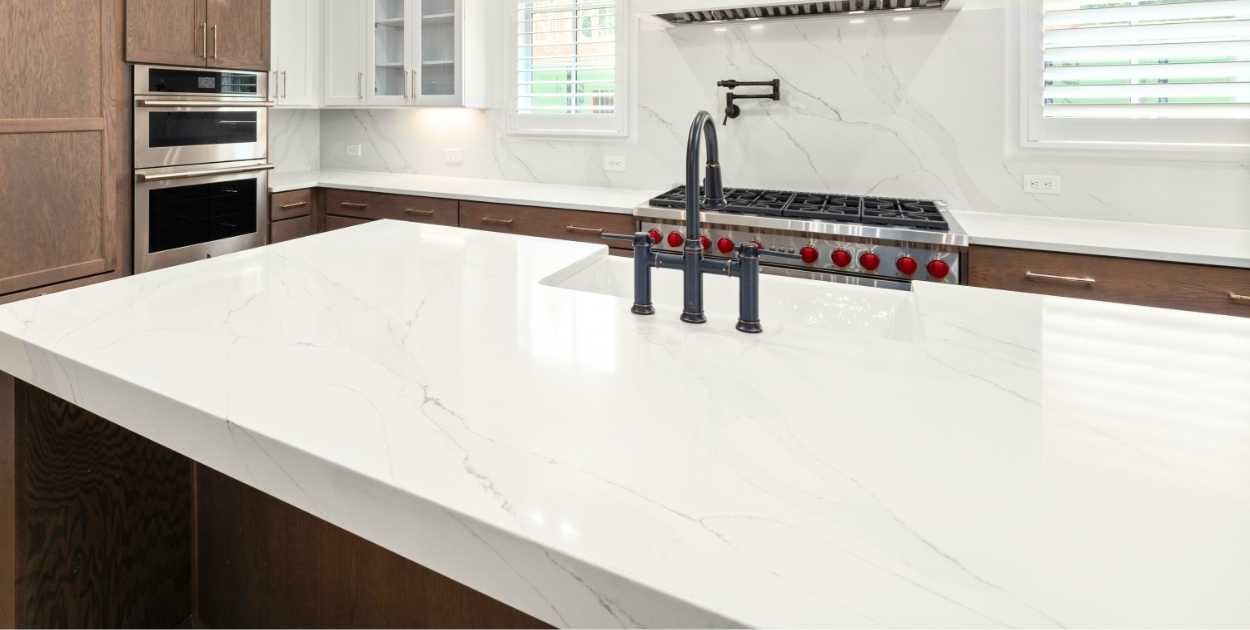
- White and grey Carrara marble patterns fool people up close.
- Calacatta veining, concrete grey, black with gold veining, and even warm quartz patterns with subtle speckling.
The matte finishes tend to look more convincing than glossy because real quartz is usually honed or matte, not shiny.
Who This Makes Sense For
There are three situations where this film is genuinely useful and not just a shortcut:
- Renters who cannot replace anything. This is where the film is most logical. You cannot sand, refinish, or replace a countertop you do not own. If your rental has scratched laminate or dated tile counters and you want it to look nicer for the next one to three years, film is the right call. It removes cleanly with heat and leaves no residue if you use a quality brand.
- Homeowners are refreshing before a sale. A tired-looking kitchen is one of the things buyers notice fast. Cover film on counters, new hardware on cabinets, and fresh paint can shift a kitchen from “needs work” to “looks updated” without high cost. You are not fooling a home inspector, but you are creating a better first impression at an open house.
- Budget home updates where a real replacement is planned later. Some people are saving for proper quartz but want the kitchen to look better in the meantime. Film buys you one to two years without the space feeling neglected.
Where it does not make sense: if you cook intensively, have kids who drag things across the counter, or are expecting real quartz durability, this is not that.
It is a cosmetic cover, not a surface replacement.
Bubble and Peeling Problem (and Why It Happens)
This is the part people in my community were most vocal about. Bubbles and peeling edges.
Both happened, and in almost every case, the reason was one of the same two things.
Bubbles almost always come from rushing the application. The backing gets peeled too fast, the film gets laid down flat all at once, and air gets trapped underneath with nowhere to go.
Once the adhesive grabs, those bubbles are hard to push out.
The fix is not a better squeegee. It is peeling the backing a few inches at a time while smoothing as you go, never letting a large unsupported section of film flop down onto the counter.
Peeling edges come from two things: moisture seeping under the edge near the sink, and high-traffic corners where hands constantly brush the film edge.
The fix for moisture is caulking the back edge where the film meets the wall and around the sink cutout.
And for high-traffic corners, pressing the edge down with a hair dryer on warm reactivates the adhesive and creates a stronger bond.
Most people skip both of these steps and then blame the film.
There is a third problem people do not talk about as much: SCRATCHES.
This film scratches with metal, dragging a pot or pan across it, leaving marks, not deep gouges, but visible scratches in the pattern surface.
A cutting board and some awareness of what you slide across the counter handles this.
But it is worth knowing before you decide that this is a zero-maintenance surface.
What About Heat
This did not come up as a big complaint in my community, and based on what I have read, here is why: most people are not placing hot pans directly on countertops anyway.
If you use a trivet, which you should regardless of what your counter is made of, the film handles normal kitchen heat without a problem.
Direct contact with a hot pan is a different story.
The adhesive can soften, and the film surface can mark.
But this is a common-sense thing more than a product failure; keep a trivet near the stove.
Do not use the counter as a pan landing pad; the film will be fine.
How to Apply It Without Making the Common Mistakes
The actual application is not complicated; the mistakes are mostly avoidable if you know what they are before you start.
Small bubbles that are left after application can be popped with a pin, then pressed flat.
Bubbles in a marble or quartz pattern almost disappear visually because the patterning breaks up the light.
In a solid color film, every bubble shows. Patterned films are more forgiving.

Two Tools That Make the Whole Job Easier
You do not need much: a squeegee and a sharp utility knife handle 90 percent of the job.
But two things come up consistently in communities as worth having:
A plastic squeegee or smoothing tool
Not a credit card, not your hand, just a proper flat-edge squeegee gives you even pressure across a wider area and does not leave the finger-push marks you get from pressing by hand.
Some film rolls come with one; if yours does not, they are inexpensive and sold on Amazon in the contact paper and wallpaper section.

A hair dryer or small heat gun
This is what makes edges and corners actually work.
Run it on medium heat over any edge you are trying to press down, hold for a few seconds, then press firmly with your finger or the squeegee.
It also helps if you end up with a stubborn bubble that will not press out cold.
How Long Does It Realistically Last
One to three years is the honest range, depending on how much the counter gets used and whether the edges were sealed properly.
People who sealed the edges and use cutting boards report surfaces that still look good at eighteen months and beyond.
People who did neither are usually dealing with corner peeling by month four or five.
The pattern matters too; a busy marble or granite pattern with lots of movement and variation in the print hides seams, minor scratches, and small imperfections far better than a solid color or a very regular pattern.
If your goal is maximum longevity in appearance, choose a busy quartz or granite pattern over a solid white or concrete grey.
IMAGE PLACEHOLDER Squeegee tool being used to apply vinyl film to a flat surface | Suggested search (Unsplash/Pexels, free): “squeegee vinyl wrap application” or “contact paper application tool kitchen.”
Final Thought
Three dollars per square foot for something that looks like quartz from across the room is a genuinely good deal for the right situation.
Renters, budget-conscious homeowners, and people refreshing before a sale, this film earns its place.
Just go in knowing what it is: it is a cosmetic cover that needs proper installation, sealed edges, and a bit of care in daily use.
Do those things, and it holds up well. Skip them, and you will be peeling corners off in a few months and writing a bad review.
The application takes an afternoon, and the result lasts one to three years.
For under $100 in materials on a standard kitchen, that math works.
FAQs
Will this actually fool people who come over to my house?
In most cases, yes, from a normal viewing distance, someone who gets close and runs their hand across it will know it is not stone.
The seams are also visible if you look for them, choose a busy marble pattern, and keep seams along the back edge near the wall where they are least visible.
Can I use this on tile countertops or just laminate?
Flat tile works if the grout lines are shallow. Deep grout lines mean the film bridges across them, and the texture shows through, or the film lifts at the grout edges.
Laminate and solid surface counters give the cleanest result. Textured or heavily patterned tile is not a good surface for this.
What width roll should I buy?
A 32-inch-wide roll covers most standard counter depths in one strip with no seam along the depth.
That is worth paying a little more for because a seam running front to back across the counter is harder to hide than a seam at the far back edge.
For most kitchens, one 32-inch roll at 10 feet long covers the main run.
My rental has really dark laminate counters. Will a lighter marble film cover it?
Yes, the film is opaque, and it covers completely; the dark base does not affect the finished color.
The only case where the base shows is if the film tears or a seam separates, which is why edge sealing matters.
Can I apply new film over old contact paper that is already on the counter?
It is possible, but not ideal, then adhesion will not be as strong, and any imperfections in the old layer will telegraph through.
Better to remove the old film first with a hair dryer and a clean alcohol wipe before applying fresh.

Abraham is the creator of Mountain Bike Insider. He is a writer and researcher who enjoys mountain biking, working on DIY projects, organizing spaces, and testing ideas in real life. He focuses on clear and honest explanations based on experience and research, without pretending to be a professional expert.