Disclosure: This post may contain affiliate links. As an Amazon Associate I earn from qualifying purchases.
The TMAC is quite expensive. You can buy three Deity Deftraps for that money. The TMAC costs around $179.99, whereas the Deftrap costs around $54.99.
And the fact is that this cheaper Deftrap was designed with inspiration from the TMAC pedal. Both have large concave platforms, replaceable steel traction pins, serviceable internals, and other features.
So, what is the actual difference between them? We will find this out, along with many other things, as we compare these two pedals, the Deity Deftrap and TMAC. And by the end, you will have a clear idea of which one you should buy and why.
The Deftrap Is Based on the TMAC
The TMAC is Deity’s premium aluminum flat pedal, developed with freeride mountain biker Tyler McCaul, and the Deftrap was built later with inspiration from this premium model.
So, the Deftrap is more affordable and offers a nylon glass-fiber composite alternative. However, they didn’t just replace the aluminum with plastic. They made some other changes as well.
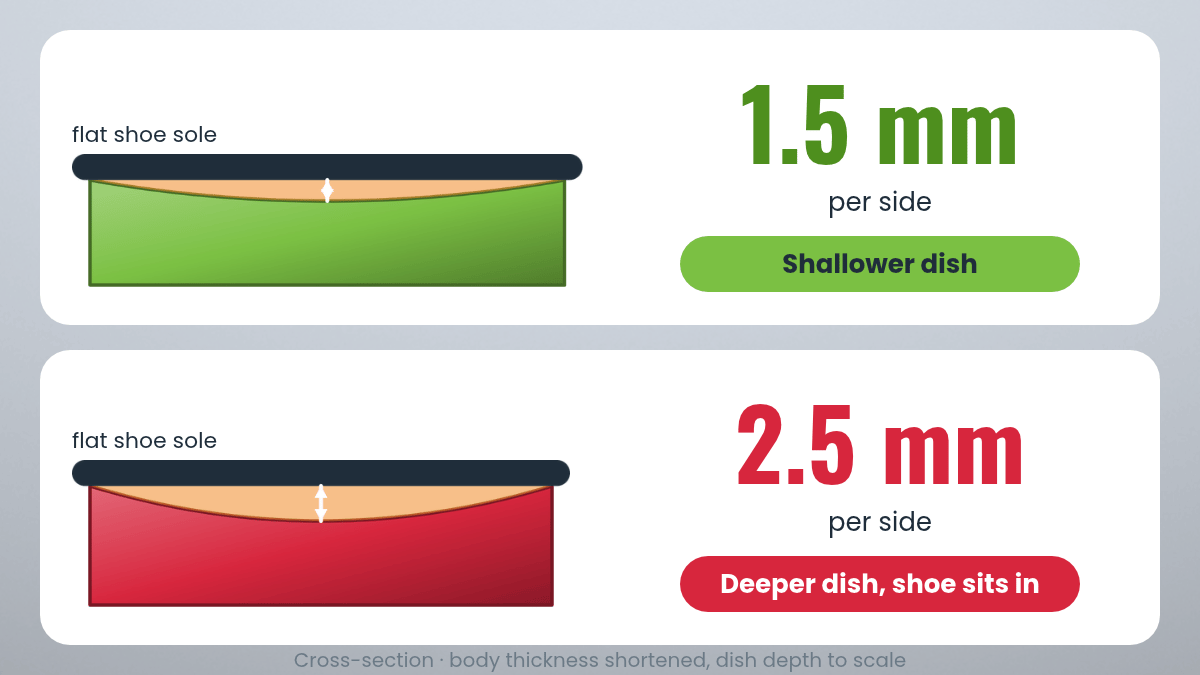
With the Deftrap, you get a 113 x 103 mm platform with 1.5 mm of concavity per side. On the other hand, the TMAC measures 110 x 105 mm and has a deeper 2.5 mm concave profile.
However, both are symmetrical, and their platforms are designed to support your feet across their length.
What Are You Getting for the Extra $125?
Now, before getting into the details, let’s compare their specifications first.
| Specification | Deity Deftrap | Deity TMAC |
|---|---|---|
| Price (US MSRP) | $54.99 | $179.99 |
| Body material | Nylon-glass composite | 6061-T6 aluminum |
| Platform size | 113 × 103 mm | 110 × 105 mm |
| Concavity per side | 1.5 mm | 2.5 mm |
| Center thickness | 18 mm | 14 mm |
| Pins per side | 8 steel + 2 molded nylon | 14 steel |
| Claimed weight per pair | 391 g | 439 g |
| Internals | 2 sealed bearings + DU bushing | Multiple micro-sealed bearings + DU bushing |
| Rebuildable | Yes | Yes |
So, the TMAC is not dramatically larger than the Deftrap. In fact, the Deftrap is 3 mm longer, while the TMAC is 2 mm wider. So, the TMAC is good for riders who want maximum traction on demanding descents.
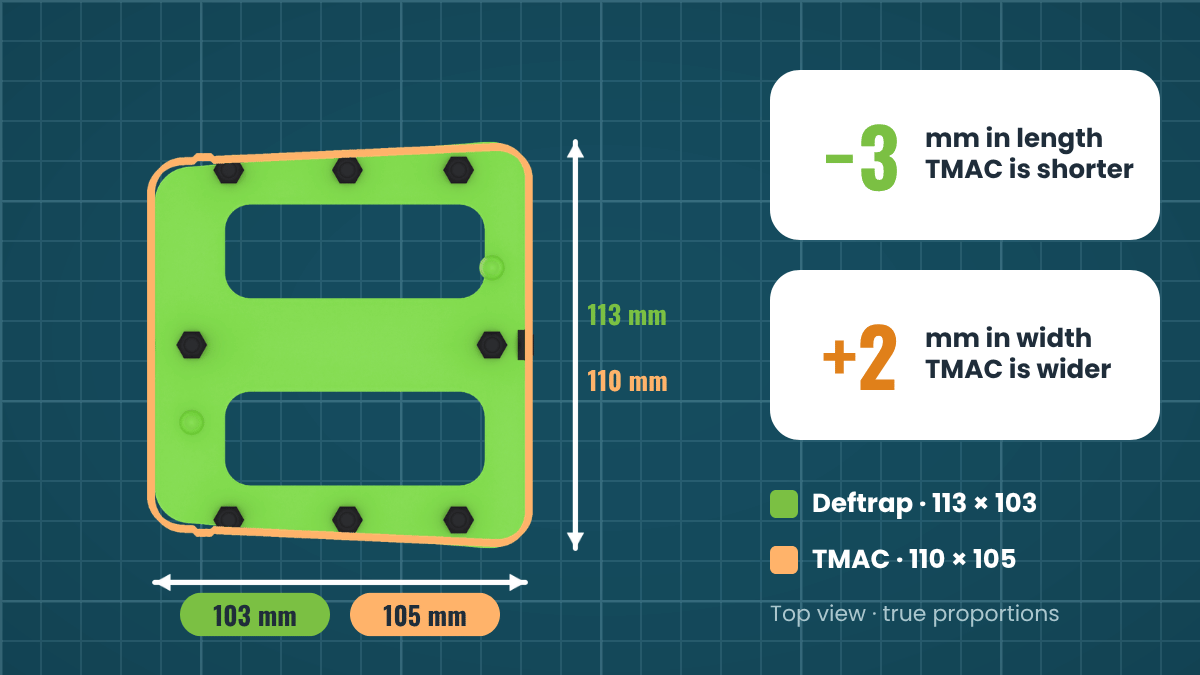
The TMAC also has a more elaborate machined construction and comes with 20 spare pins in the package.
Deity Deftrap Pedals
Concave composite platform, 113 × 103 mm
Deity TMAC Pedals
Machined aluminum platform, 14 pins per side
Does the TMAC Have $125 Worth of Extra Grip?
Actually, this is one of the main reasons why someone would consider upgrading from the Deftrap to the TMAC, because the TMAC has 14 steel pins per side and 2.5 mm of concavity.
On the other hand, with the Deftrap, you get 10 pins per side, out of which only eight are replaceable, as the other two are fixed nylon pins. Plus, the Deftrap has 1.5 mm of concavity.
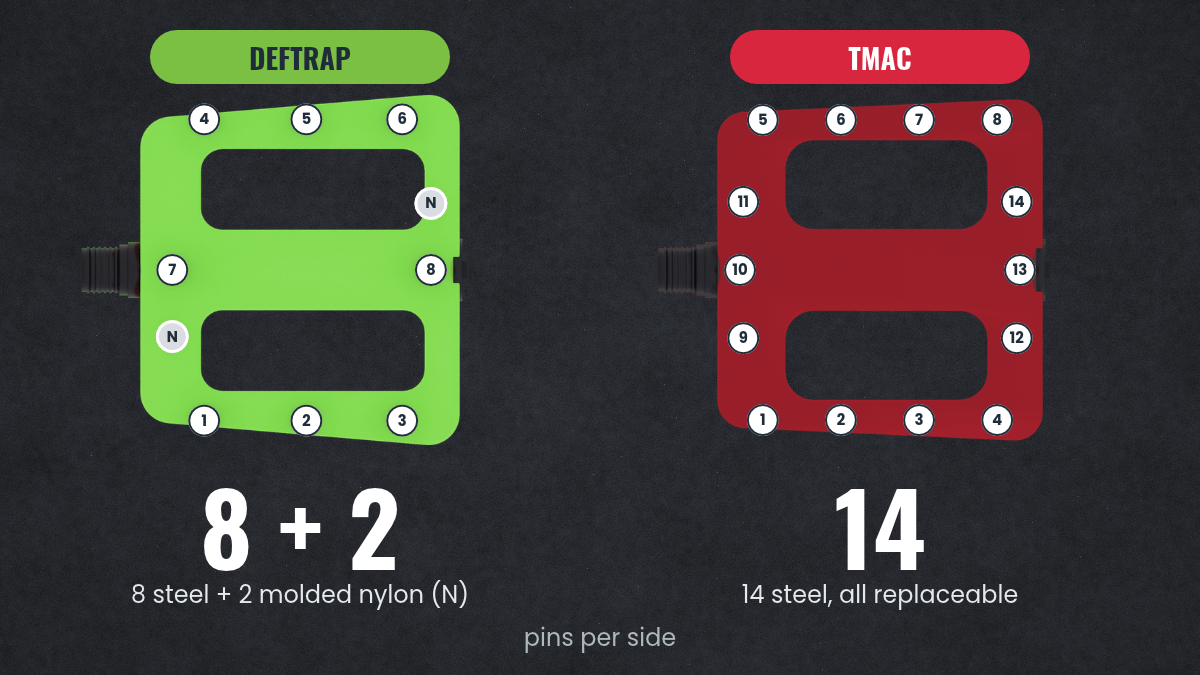
Therefore, the TMAC has more contact points and a deeper center section, so your shoes can settle into the platform more easily. These features make the TMAC a strong choice for grip and stability on rough, challenging terrain.
Yes, I also like the cheaper Deftrap because it works well, especially when we compare its features with the TMAC. But we should also look at the price.
One thing I would like to point out is that if you wear shoes with soft rubber soles, you may get a better connection between your shoes and both pedals compared to shoes with harder soles.
The TMAC Is Thinner, but the Deftrap Is Lighter
You might expect the more expensive aluminum pedal to be lighter. That’s not the case here.
The Deftrap weighs a claimed 391 g per pair, compared with 439 g for the TMAC.
So the Deftrap saves 48 g while costing $125 less.
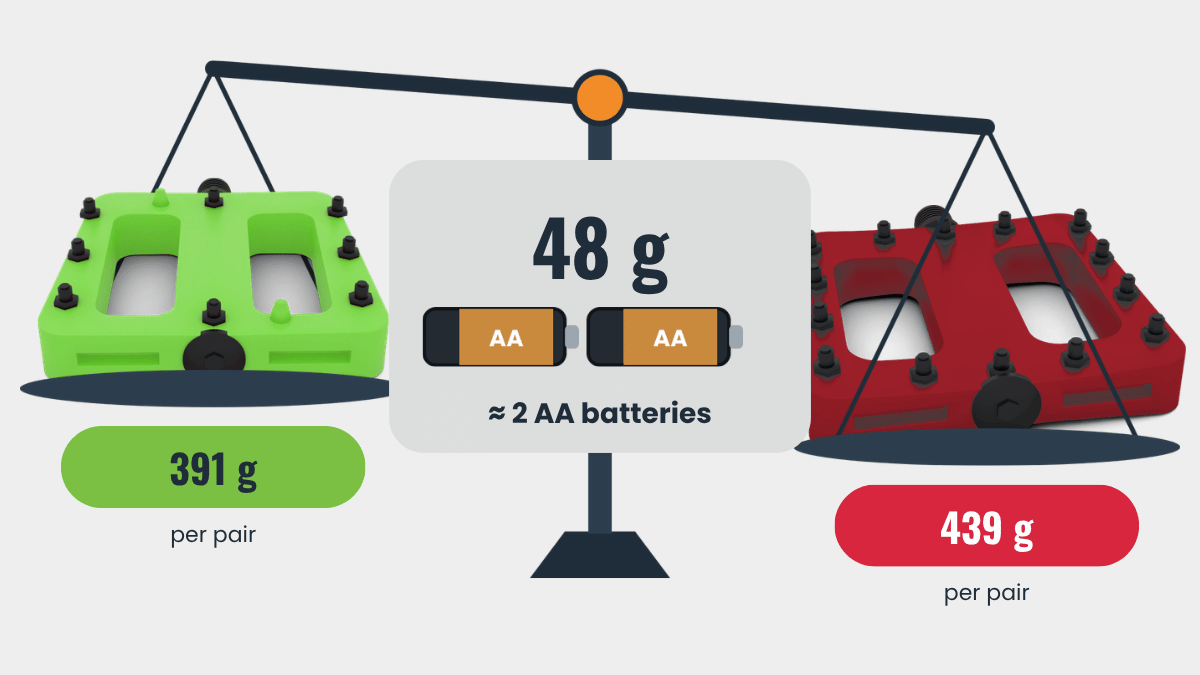
I wouldn’t choose between them based on that difference alone, though. Forty-eight grams is unlikely to transform how your mountain bike climbs or handles.
Platform thickness is a more useful consideration.
The TMAC measures 14 mm at the center, while the Deftrap is 18 mm. That’s a 4 mm difference.
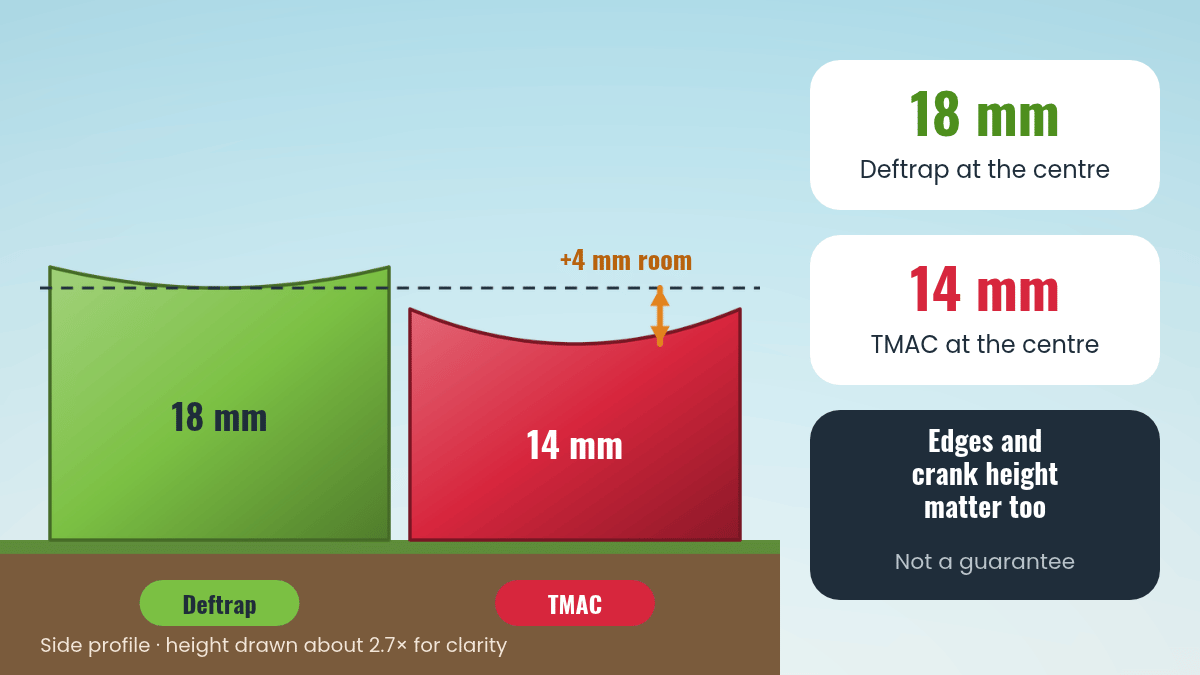
A thinner pedal can help with ground clearance, particularly on technical trails where rocks and roots are close to your crank’s path.
However, the center measurement doesn’t tell us everything.
The leading and trailing edges, platform width, crank length, bottom bracket height, and your position on the bike all affect pedal strikes.
Neither pedal is immune to them, and both have relatively substantial platforms.
The Deftrap’s nylon composite can also slide across certain obstacles differently from aluminum, so the TMAC’s thinner center doesn’t automatically make it superior in every rocky situation.
I’d give the TMAC an advantage for its thinner central platform, but not assume it will eliminate pedal strikes.
Aluminum vs Composite: Which Makes More Sense After a Rock Strike?
One reason the TMAC costs more is its machined 6061-T6 aluminum body, which allows Deity to produce a thin, rigid platform with precise machining and an anodized finish,
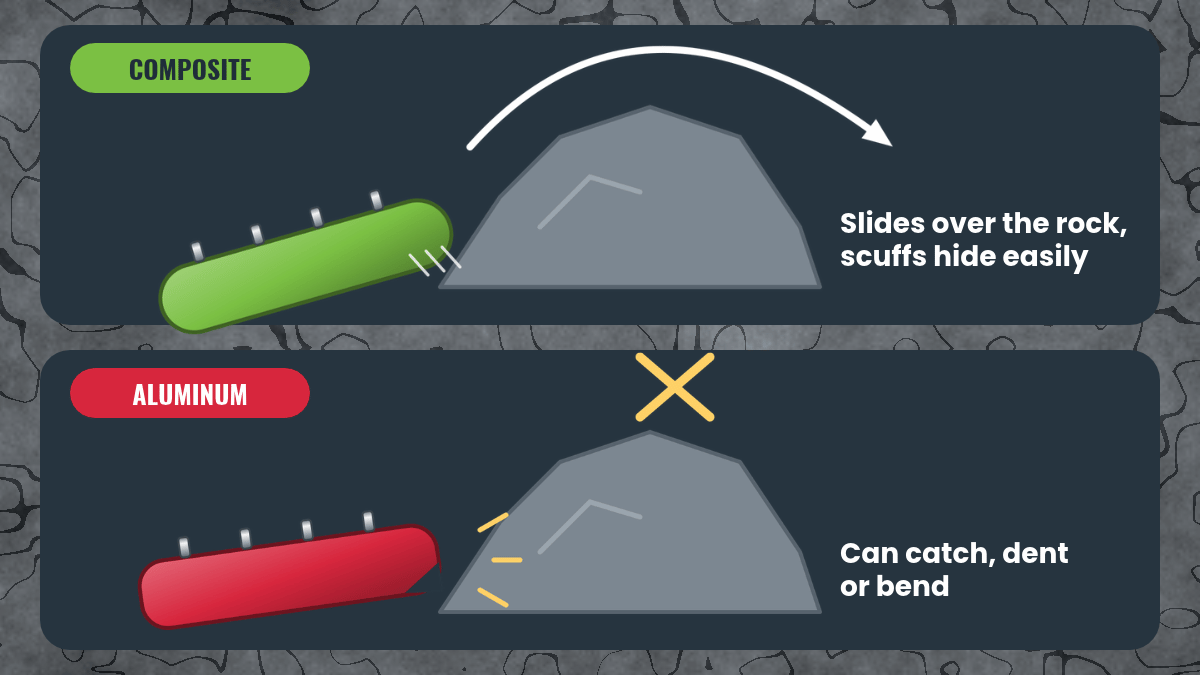
But composite makes more sense because when the pedal strikes a rock, this material can slide over the obstacle and hide the scratches. On the other hand, aluminum may bend, dent, or even catch on the rock.
| Feature | Aluminum (e.g., Deity TMAC) | Composite (e.g., Deity Deftrap) |
|---|---|---|
| Impact Reaction | It will absorbs energy but can dent, bend, or deform. | It may flex slightly or gets gouged but will retain its original shape. |
| Obstacle Behavior | Metal can “bite” or catch on a rock, and will slow you down or throw you off balance. | Nylon-fiber blend tends to slide or deflect off the rock smoothly. |
| Aesthetic Damage | Scratches will expose the raw silver aluminum underneath, and the wear will be visible. | The material color goes all the way through, so deep scratches and gouges blend in. |
| Structural Integrity | Severe strikes can bend the platform or strip out the threaded pins. | Threads can still strip, but the flexible body will not easily deform the axle interface. |
- You should choose composite if you are going to ride in extremely rocky terrain where you will face frequent hard pedal strikes. Plus they are also cheaper to replace and slide off easier.
- Choose Aluminum if you prioritize ultimate platform rigidity, a premium metal feel, and precise machining, and you don’t mind the cosmetic “battle scars” and higher replacement cost.
What Will Each Pedal Cost to Maintain?
They are similar in many ways, and one more similarity is that both are easy to maintain because the company has designed them to be rebuildable.
The Deftrap has two sealed bearings and a DU bushing, while the TMAC has multiple micro-sealed bearings and Deity’s DU bushing system. You can also replace the pins on both pedals.
However, the TMAC’s higher initial price doesn’t mean its maintenance will be cheaper, as it has more steel pins to maintain. Its replacement internal parts may also cost more.
Also, the Deftrap’s replaceable steel pins are rear-loaded, while the TMAC has top-loading pins. If a top-loading pin becomes badly damaged, removing it can be frustrating. On the other hand, rear-loaded pins are easier to remove.
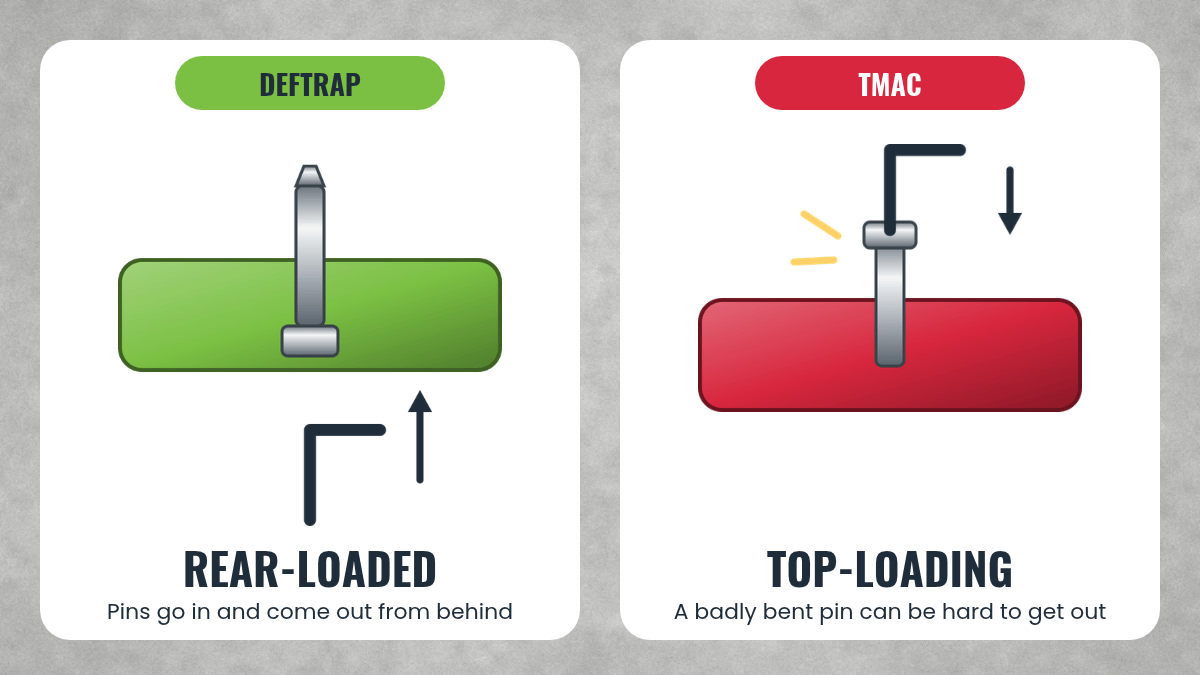
But after doing it a few times, you will develop the habit with either pedal. So, I don’t see it as a big problem.
Already Riding Deftraps? Here’s When I’d Keep Them
Suppose you already have the Deity Deftrap and are just thinking about upgrading to the TMAC. If I put myself in that situation, would I spend $179.99 on the TMAC while my Deftrap is still spinning smoothly, the pins are in good condition, and I’m already happy with it?
My answer would be absolutely not. I’m not going to replace it.
Yes, the TMAC is more aggressive and better in some ways, but you won’t notice a huge improvement. If you’re thinking that you will get significantly more benefits and features, you should remember that you already have many of them in the Deftrap.
You already have a large, supportive platform with good traction and serviceable internals.
I would consider keeping the Deftraps if:
- My feet stay securely positioned on rough descents.
- I don’t regularly experience clearance problems.
- The platform fits my riding shoes comfortably.
- The bearings and pins are still in good condition.
But if the problem is slipping, I recommend checking whether you have suitable outsoles, damaged pins, or other issues. Because instead of changing the pedal, it is more important to pay attention to your shoes.
A dedicated flat pedal mountain bike shoe will give you better grip. If they have a good, soft, sticky rubber sole, you can keep your feet in one place very easily.
On the other hand, upgrading also makes sense if you identify a specific limitation with the Deftrap. For example, maybe you want a deeper concave platform because your feet move around on demanding descents, or perhaps you want a thinner aluminum pedal and are comfortable paying more for its construction.
These are reasonable reasons to consider the TMAC. But simply buying it because it is more expensive is not something I would encourage.
My Verdict: Who Should Spend $180, and Who Should Save $125?
If you are buying pedals for the first time, I recommend going with the Deity Deftrap. They are cheaper, and you get most of the features that you would otherwise get after paying around $180 for premium pedals.
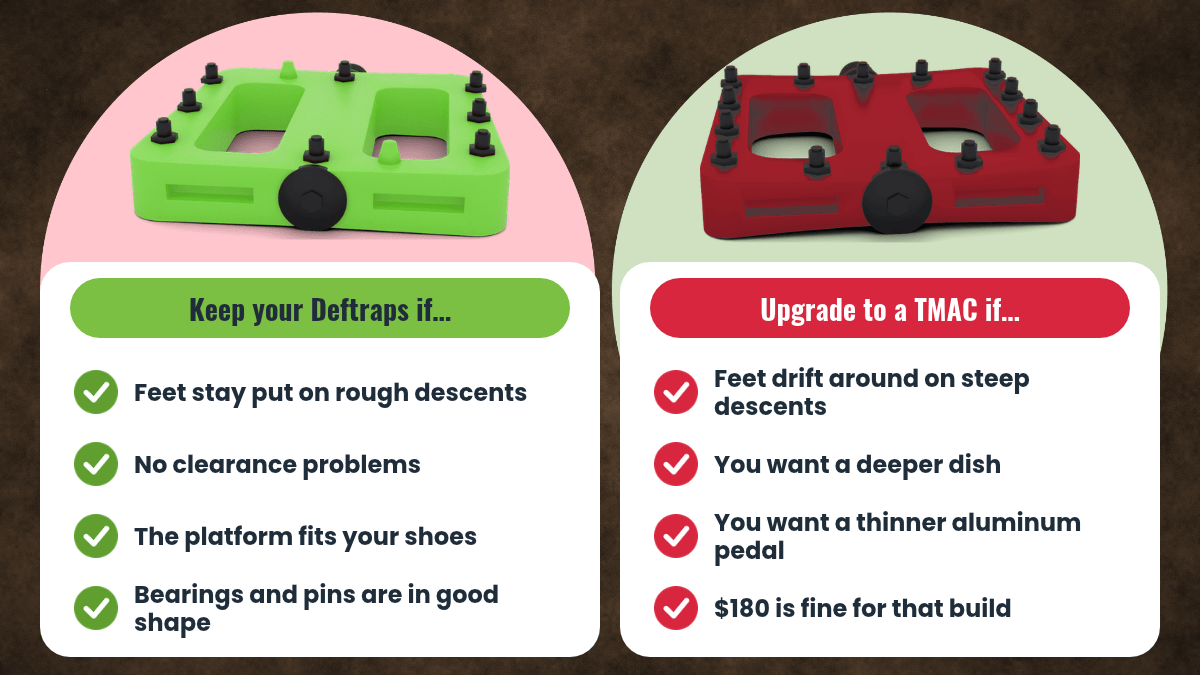
You should get the TMAC when you want maximum grip and it is your first priority because it has deeper concavity, 14 pins, and a machined aluminum body.
So, it is a good choice for riders who want a secure foot position on demanding descents.
Besides this, I would also consider how frequently you ride. If you ride demanding downhill terrain several times a week, then the TMAC is still a good choice for you.
Deity Deftrap Pedals
Concave composite platform, 113 × 103 mm
Deity TMAC Pedals
Machined aluminum platform, 14 pins per side
Frequently Asked Questions
Are Deity Deftrap pedals as grippy as TMACs?
The TMAC has an advantage over the Deftrap because it has 14 pins per side and deeper concavity, while the Deftrap has 10 pins per side, of which eight are replaceable.
However, your shoe sole will also play an important role. But yes, the Deftrap is not as strong as the TMAC when it comes to grip.
Are TMAC pedals bigger than Deftraps?
Not in every dimension. The Deftrap measures 113 x 103 mm, while the TMAC measures 110 x 105 mm. So, the Deftrap is a little longer, while the TMAC is wider.
Are Deity TMAC pedals worth upgrading to?
Yes, you can upgrade if you want a stronger foothold, better foot retention, deeper concavity, and a thinner aluminum platform.
But if you already have the Deftrap and it provides secure footing, and its pins and other components are in good condition, then you should avoid upgrading.
Are Deftrap pedals good enough for downhill riding?
Of course, the Deftrap is good for downhill, enduro, trail, and other demanding mountain biking trails. However, if you mainly ride downhill, then the TMAC is a better choice.
Do TMAC pedals have replaceable pins?
Yes, the TMAC has 14 metal pins per side, and you can replace all of them.
Can you rebuild Deity Deftrap and TMAC pedals?
Yes, because both have serviceable internals, and you can also get replacement components directly from Deity, as the company offers them.