Disclosure: This post may contain affiliate links. As an Amazon Associate I earn from qualifying purchases.
Pick the longest dropper post that fits your frame. Two things that decide dropper post size are your pedaling saddle height, which sets how much travel fits above the seat tube, and your frame’s maximum insertion depth, which sets how long the post can be inside it.
Most trail riders end up on 125 to 150 mm of travel.
In the guide, you’ll learn how to measure both things, a worked example, and what to do when the post you want won’t go in.
Your pedaling saddle height comes from your inseam, so if you haven’t set it yet, start with this mountain bike saddle height calculator.
Dropper post travel and diameter
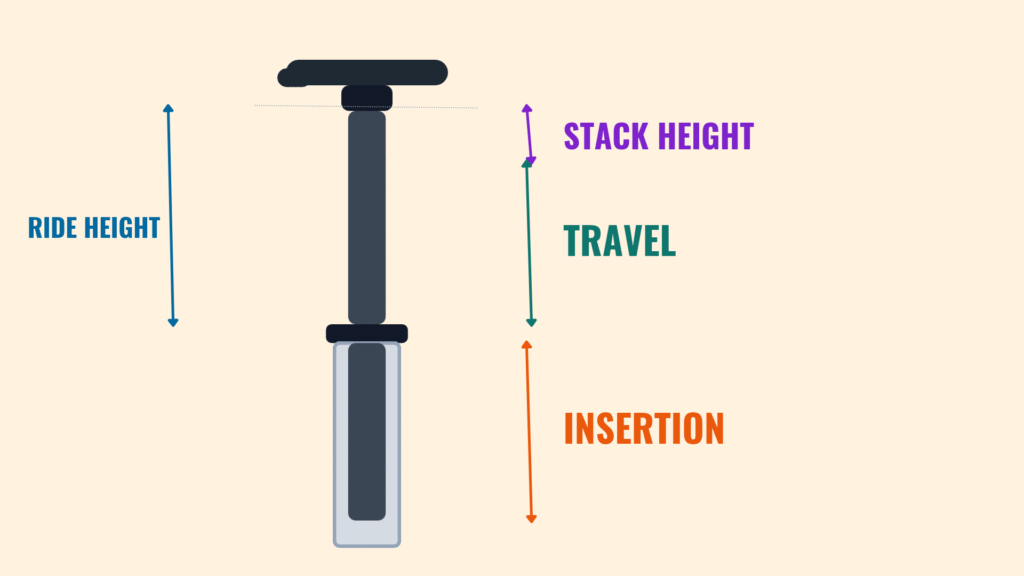
A dropper post is sized by three things: travel, diameter and insertion length. Travel is how far the saddle drops.
| Riding | Common travel |
|---|---|
| Cross-country | 60 – 100 mm |
| Trail | 125 – 150 mm |
| Enduro and park | 170 – 210 mm |
Diameter has to match your seat tube. The common sizes are 30.9, 31.6 and 34.9 mm, and the number is usually printed on your current seatpost or listed in the frame specs.
A 30.9 mm post can go into a 31.6 mm frame with a shim, but you can’t go the other way.
Travel is where people overspend. A longer post only helps if it fits, and on many frames it won’t.
Measure two numbers before you buy
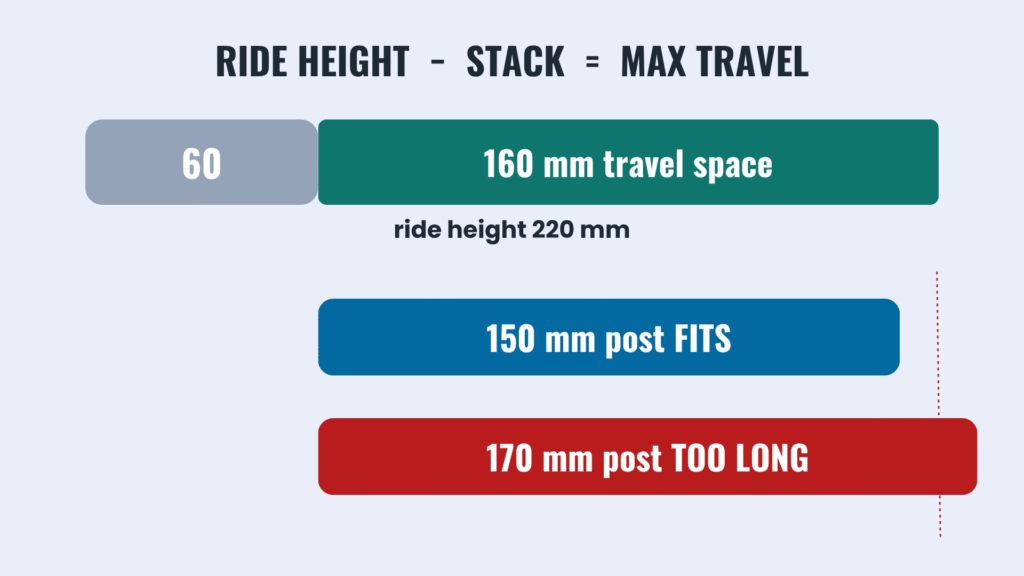
- Ride height: Set your saddle to your pedaling height, measure from the top of the seat clamp to the middle of the saddle rails. That’s the space your post has to fill.
- Max insertion: Take the seatpost out, slide a plain rigid post into the seat tube until it stops, mark it where it meets the clamp, pull it out, and measure from the bottom to your mark. That’s how much post can go inside your frame.
- Stack height: Find the stack height of the dropper you want. That’s the fixed part of the post, the collar and the saddle head up to the middle of the rails, without the travel. It varies by more than 30 mm between brands, so check each model’s spec.
The maximum travel you can run is ride height minus stack height. Here’s an example with typical numbers:
| Step | Number |
|---|---|
| Ride height | 220 mm |
| Stack height of the post | 60 mm |
| Maximum travel | 160 mm |
A 160 mm space means a 150 mm post fits, a 170 mm post doesn’t.
Then check that the post’s insertion length is no longer than your frame’s max insertion, and no shorter than the minimum line printed on the post.
Never ride with the post below that line.
Longer legs raise your pedaling saddle height, so a taller rider usually has more post sticking out to fill and can fit more travel.
A tall seat tube on the frame takes some of that back.
Why your frame size and your legs set the limit
A bigger frame has a longer seat tube and more room inside it, so it takes a longer post.
Smaller frames run out of room first. See this frame pattern:
| Size | S1 | S2 | S3 | S4 | S5 | S6 |
|---|---|---|---|---|---|---|
| Max insertion (mm) | 220 | 220 | 240 | 260 | 280 | 300 |
The S6 has 80 mm more room than the S1. The bike ships to match: the S1 comes with a 100 mm dropper and the S2 with a 125 mm one.
The frame requires at least 80 mm of post to stay inside, which limits how much post can stick out of a small frame.
Bends and suspension parts inside the frame cause the same problem.
A kink in the seat tube or a pivot can cut the insertion depth sharply, even on a tall frame.
Enduro MTB measured a medium Canyon Spectral: ON at 255 mm of insertion, and that cut the post it could take.
Rider height matters from the other side. A taller rider benefits from more drop because their hips have further to travel behind the saddle, and a shorter rider needs less.
A shorter rider also tends to be on a smaller frame, where the longer posts won’t fit anyway. So height, frame size and travel all rise together, and the frame is the one that has the final say.
What to do when the post you want won’t fit
You have three good options, and one move you should skip.
- Pick a post with a shorter insertion length: Newer designs like the OneUp V2 and the RockShox Reverb AXS are built to sit shallower in the frame, so they fit where older posts don’t.
- Check the maker’s tech drawing: Most brands publish one for each post, with its travel, total length and insertion depth, so you can compare it to your measurements.
- Settle for the next travel down: 125 mm on a frame that can’t take 150 mm is still a big upgrade over a fixed post.
- Don’t cut a dropper to make it fit: Cutting shortens the travel and can take away the minimum insertion the post needs, so ask a shop first.
OneUp also offers a dropper length selector on its site that does the same math as the steps above. Enter your seat tube diameter, your ride height and your insertion depth, and it lists which of its posts fit.
Three riders, three posts
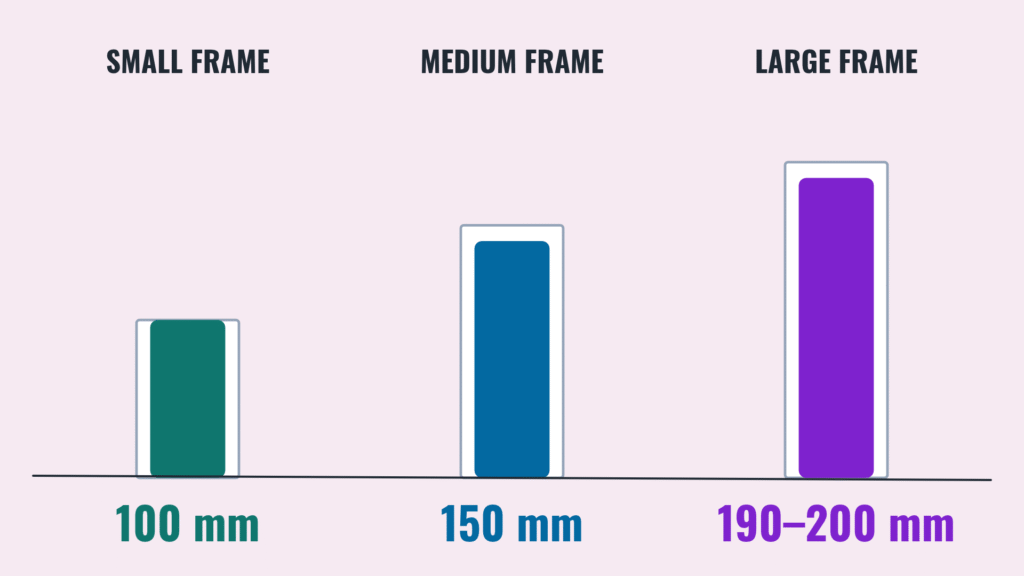
The formula is easier to trust when you run it on different people. Take a stack height of 60 mm for all three:
| Rider | Ride height | Stack height | Max travel | Post to buy |
|---|---|---|---|---|
| Short rider on a small frame | 160 mm | 60 mm | 100 mm | 100 mm |
| Average rider on a medium frame | 220 mm | 60 mm | 160 mm | 150 mm |
| Tall rider on a large frame | 260 mm | 60 mm | 200 mm | 190 or 200 mm |
The short rider’s frame has less room inside the seat tube too, so the 100 mm post is also the one the frame can swallow, and that matches the Stumpjumper S1, which ships with a 100 mm dropper.
The tall rider has the most room above the clamp and the most seat tube, so a longer post is available.
Always compare the result to the post you’re buying, because the stack height changes by brand.
Steep seat angles and tall seat tubes
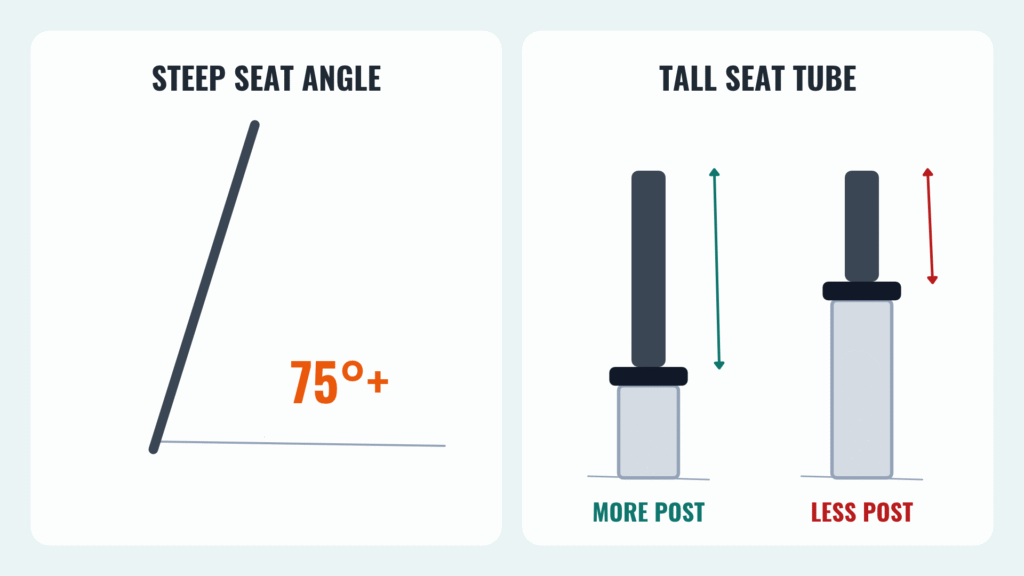
Two frame features can take away travel even when your legs are long.
The first is a very steep seat angle, 75 degrees or more.
Check the max insertion on your own bike with the rigid-post test above, and don’t rely on the size of the frame.
The second is a tall seat tube. A frame with a long seat tube leaves less post above the clamp, so you get less travel from the same ride height.
Riders on tall frames sometimes need a longer-stroke post with a shorter body, and the maker’s tech drawing tells you which one that is.
KS Suspension makes a point that fits what I’ve said: taller riders with longer legs usually want more drop, and smaller frames can’t take the long posts at all. You’ll feel that mismatch on a short rider with a long-travel post that won’t sit in the frame.
Lever, cable and remote: the parts around the post
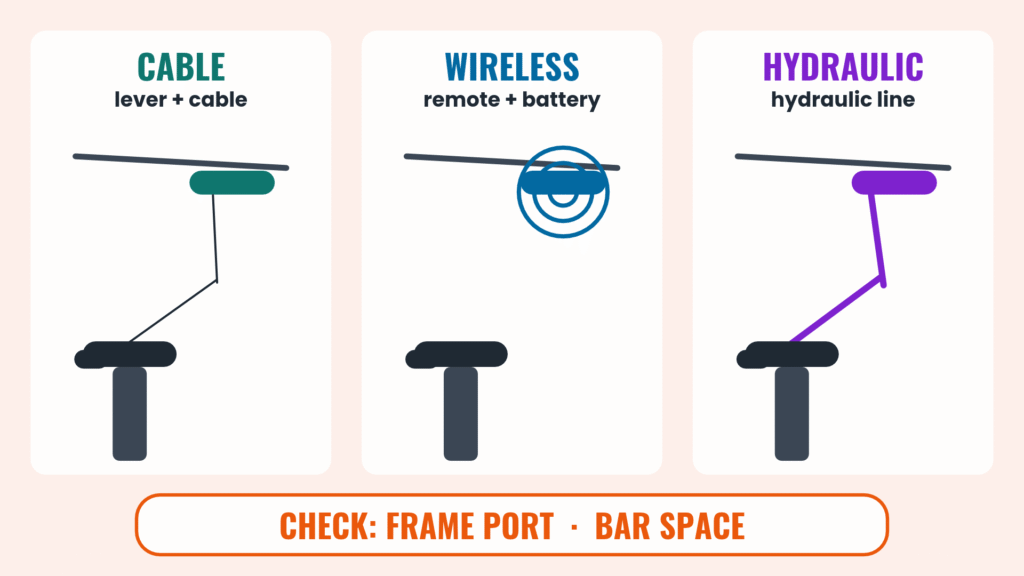
Travel and diameter get all the attention, but the post also needs a way to be actuated:
- Cable-actuated: a lever on the bar pulls a cable that releases the post. The cable can be routed internally through the frame or run outside it.
- Wireless: a remote on the bar signals the post with no cable. These cost more and need batteries.
- Hydraulic: some posts use a hydraulic line instead of a cable.
Check two things before you buy: first, the frame has to route the way the post needs, with a port on the seat tube if the post runs internally.
Second, the remote has to fit the bar, with room next to your brake and shifter.
Look at the cockpit before you commit to a post, and see my handlebar width and stem length guide for what else lives up there.
How often a dropper needs service
A dropper has moving seals and oil, and it wears faster than a fixed post. Most makers suggest a basic service after 50 to 100 hours of riding and a full service after 100 to 200 hours, or once a year if you ride less.
Wet, muddy rides push you toward the short end.
A post that is slow to rise, sags under your weight or has started to wobble is asking for a service.
Wipe the stanchion clean after dirty rides, and avoid lifting the bike by the saddle when the post is extended.
Dropper post size FAQ
How long should my dropper post be?
As long as your frame allows, subtract the post’s stack height from your ride height to get the most travel you can fit, then check that the post’s insertion is within your frame’s max insertion.
Is 170 mm too long for a short rider?
Often it simply won’t fit. Smaller frames have less room inside the seat tube, and the post needs a minimum amount of its length to stay inside the frame. Measure before you buy.
What diameter dropper post do I need?
Match your seat tube. Most frames use 30.9, 31.6 or 34.9 mm. A 30.9 mm post fits a 31.6 mm frame with a shim.
How much travel for trail riding?
125 to 150 mm covers most trail bikes.
Can I cut a dropper post to fit my frame?
No, cutting reduces travel and can leave less than the minimum insertion. Do ask a shop first.
How often should I service a dropper post?
You should have a basic service every 50 to 100 hours and a full service every 100 to 200 hours, or once a year. Check your post’s manual for the exact interval.
Is a longer dropper always better?
No, a longer post will help you only if it fits above the seat clamp and inside the frame. Fit comes first, and travel second.
Does a dropper post change my saddle height?
No, set the fully extended post to your pedaling height, then drop it for descents. My saddle height calculator guide shows how to set that height.