Disclosure: This post may contain affiliate links. As an Amazon Associate I earn from qualifying purchases.
Most trail riders run a handlebar between 760 and 800 mm wide with a stem between 35 and 50 mm long. Cross-country riders go narrower, at 680 to 740 mm, and downhill riders go wider, at 780 to 820 mm.
However, it might surprise you, but only your height doesn’t pick the number for you, but how you ride, the bike’s geometry and the trails you ride do most of the work.
I’ll give you widths by riding type, a starting width you can trim, how to cut a bar, and how stem length changes the way the bike steers.
If the whole bike feels too big or too small, fix that first with my mountain bike size calculator, because no stem will fix the wrong frame.
Mountain bike handlebar width by riding type
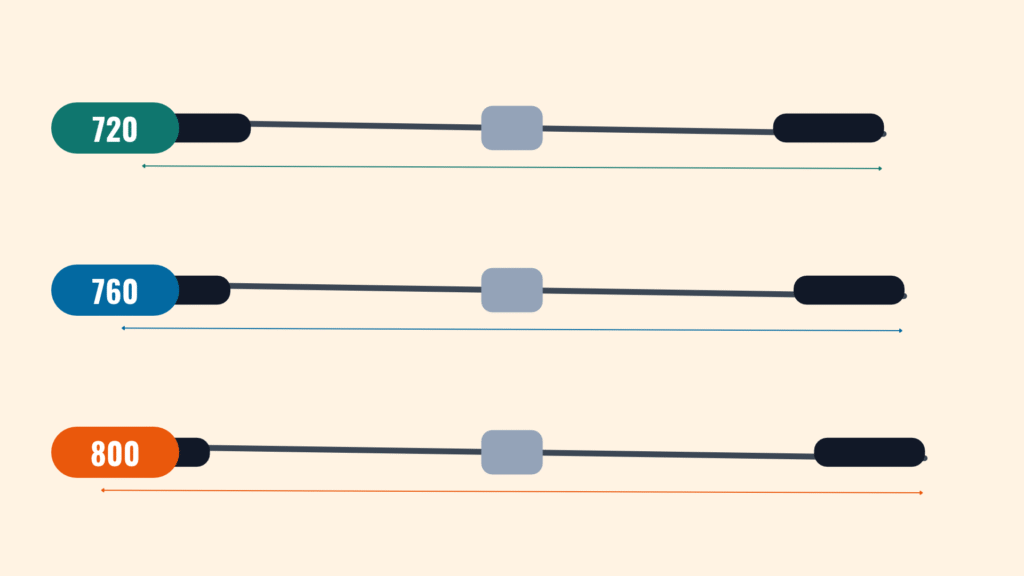
Pick your kind of riding, and then fine-tune from the next section.
| Riding | Bar width | Bar rise |
|---|---|---|
| Cross-country and marathon | 680 – 740 mm | 0 – 20 mm |
| Trail, all-mountain and enduro | 740 – 780 mm | 15 – 40 mm |
| Freeride and downhill | 780 – 820 mm | 35 – 65 mm or more |
Rise is how far the grips sit above the clamp. A higher rise lifts your hands, which suits taller front ends and steeper riding.
Wide bars give you more leverage on the front wheel. The cost is that they catch on trees and slow you down on narrow trails, which is why cross-country bikes stay narrower.
Your height doesn’t pick the width
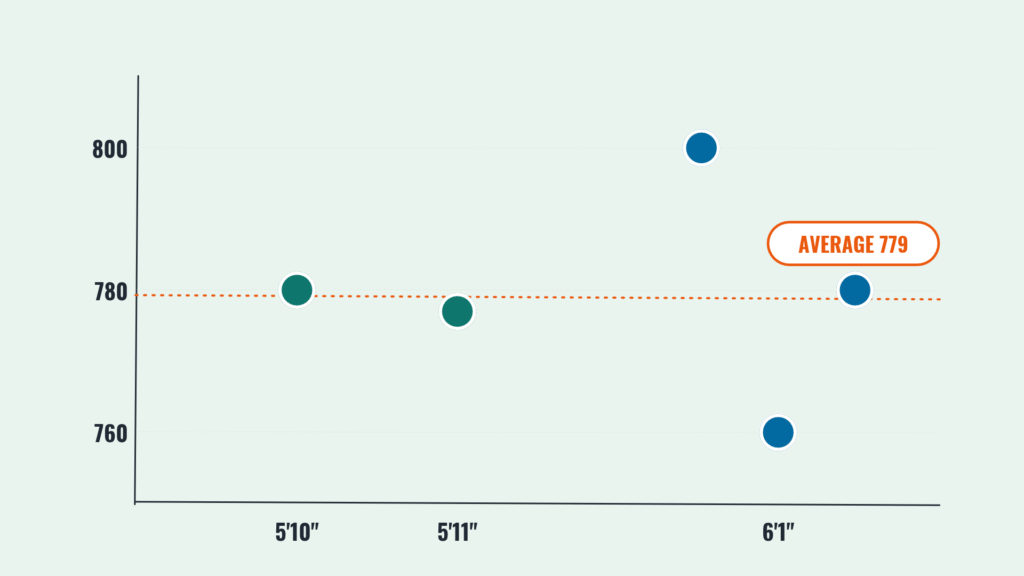
The riders at Mountain Bike Rider magazine (MBR) published the widths they run, and height tells you almost nothing:
| Rider | Height | Bar width |
|---|---|---|
| Danny | 5’10” | 780 mm |
| Alan | 5’11” | 777 mm |
| Jamie | 6’1″ | 800 mm |
| James | 6’1″ | 760 mm |
| Benji | 6’1″ | 780 mm |
The right width comes from the whole bike’s geometry and from how you ride, and its staff average is 779 mm.
So start at 780 mm. If the bars feel too wide on a tight trail, or you keep clipping trees, cut them down. You can always make a bar shorter, and you can never make it longer, so start wide.
Two things push the number up or down:
- Bike geometry: a longer, slacker bike steers more slowly, and wider bars will give you back some control.
- Your grips: thick grips add width at the ends, so you should check the final width, not just the bar.
How to trim a handlebar
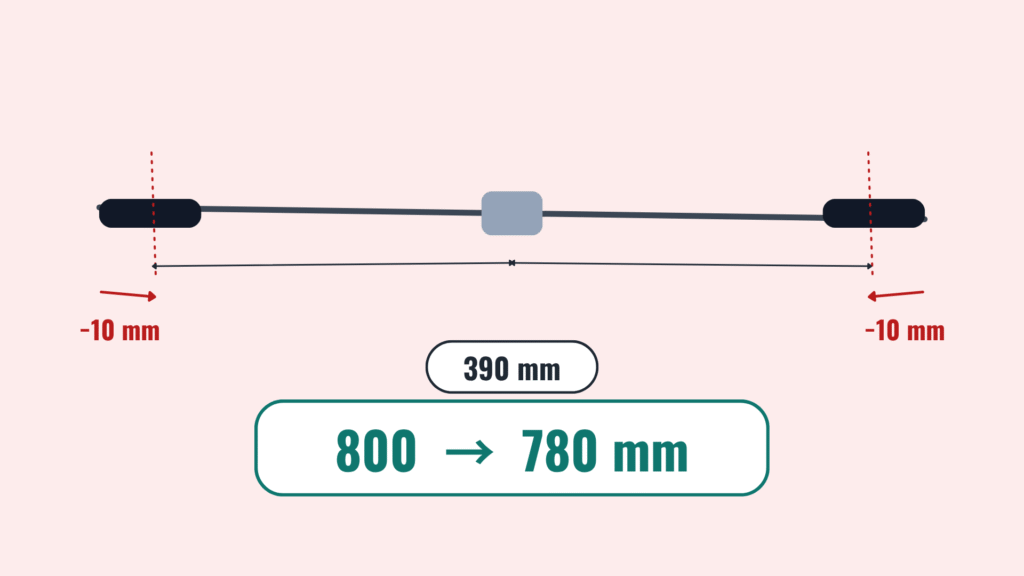
Cut the same amount from both sides. Take a bar from 800 mm to 780 mm, meaning 10 mm off each end, and not 20 mm off one.
- Slide the grips, brake levers and shifters inboard, or take them off.
- Measure from the center of the bar out to the cut line on each side, and mark both.
- Clamp the bar in a cutting guide and cut with a tubing cutter or a fine-tooth hacksaw.
- File the edge smooth so it doesn’t snag your grip.
- Refit everything and check that your brake levers and shifters still sit where your fingers fall.
Measure twice and cut once. Many bars have trim marks printed on them, so cut inside those marks and not past them.
Stem length and how it changes the way the bike steers
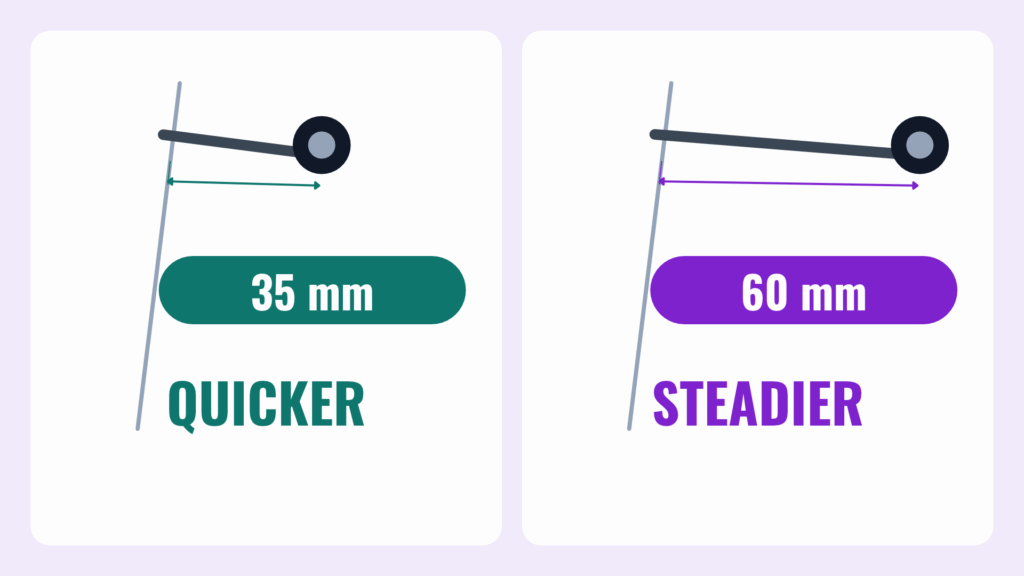
Most trail bikes come with a stem between 35 and 50 mm, and riders try anything from about 30 to 60 mm. Within that range, stem length changes how fast the front wheel reacts when you turn the bars.
- A shorter stem makes the steering quicker because your hands sit closer to the steering axis. If the bike feels slow to turn, try 5 to 10 mm shorter.
- A longer stem slows the steering down and steadies the front end. If the bike feels twitchy, try 5 to 10 mm longer.
Stem length also moves your hands forward or back by the same distance. That makes it a good tool for adjusting reach by a few millimeters, and a poor one for fixing a frame that’s the wrong size.
If you need a stem longer than 60 mm or shorter than 30 mm to feel comfortable, the frame is the problem. Go back to the size chart and check your reach.
Change one thing at a time. If you swap the stem and cut the bars on the same weekend, you won’t know which one fixed or broke the feel.
Rise, backsweep and upsweep
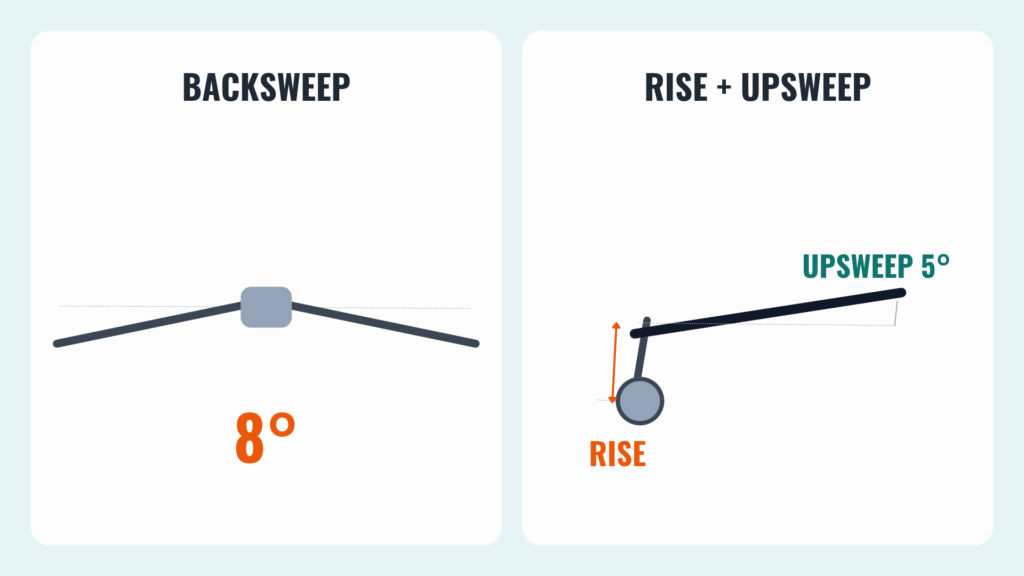
Width gets the attention, but three things will shape how a bar will feel in your hands. All three are printed in the spec sheet of any decent bar.
- Rise: how high the grips sit above the clamp, riders 20 to 30 mm for trail riding, taller riders and riders with a low front end often like more.
- Backsweep: the angle the grips bend back toward you. 7 to 10 degrees is common, with 8 degrees the usual standard. More sweep rotates your wrists in, less sweep leaves them straighter.
- Upsweep: the grips tilt upward as seen from the side. 5 degrees is a common number, and it helps keep your wrists neutral.
For example, a Specialized Chisel ships with an alloy mini-rise bar of 10 mm rise, 8 degrees of backsweep and 6 degrees of upsweep. That is a cross-country spec, and it sits at the low end of the rise range above.
Which one do I change first?
If your wrists hurt, look at backsweep and upsweep. If your hands feel too low or your back aches on long rides, look at rise.
Width comes last, because you can trim it later.
31.8 mm or 35 mm: will the bar fit your stem?
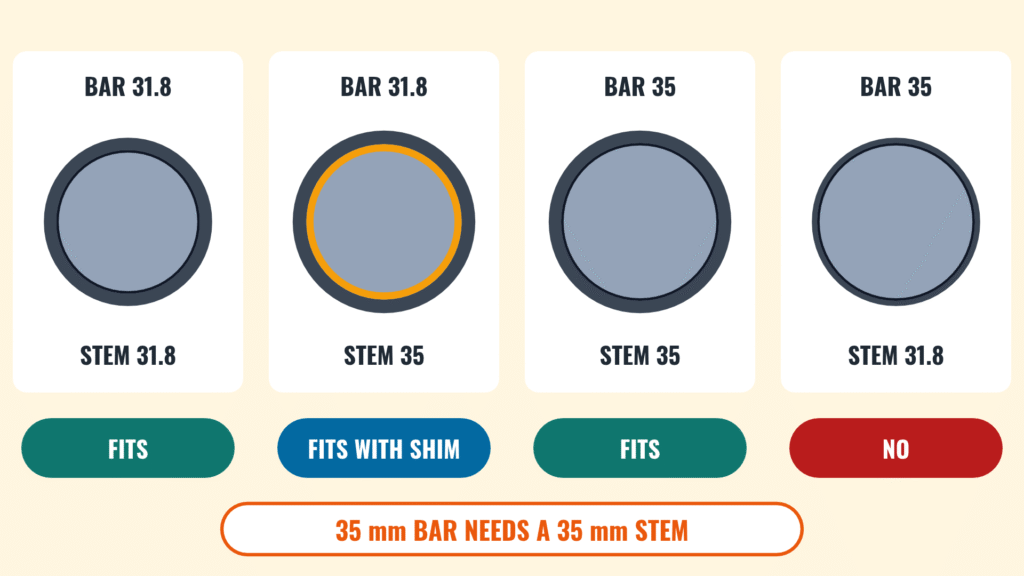
The clamp diameter is the one number that can stop you from fitting a new bar. Most bars use 31.8 mm in the middle, and many newer trail and enduro bars use 35 mm.
| Bar clamp | Stem clamp | Does it fit? |
|---|---|---|
| 31.8 mm | 31.8 mm | Yes |
| 31.8 mm | 35 mm | Yes, with a shim |
| 35 mm | 35 mm | Yes |
| 35 mm | 31.8 mm | No |
The rule that falls out of this is simple: a 35 mm bar needs a 35 mm stem.
If you want a 35 mm bar on a bike with a 31.8 mm stem, buy the stem at the same time, plus check the clamp size printed on your stem before you shop.
How brands scale the bar by frame size
Brands don’t agree on whether a small bike gets a narrower bar.
The Specialized Chisel has a 750 mm bar on all of its sizes from XS to XL. On the other hand, the Trek Marlin changes with the frame: 690 mm on the smallest sizes, 720 mm in the middle and 750 mm on the biggest.
It’s important because a 5’0″ rider on a Chisel XS gets the same bar as a 6’4″ rider on an XL. If the stock bar feels wide on a small frame, trim it, and make the cut even on both sides.
Check this list before you buy a bar or a stem
Run through this list before you click “buy”:
- Write down your current clamp diameter, 31.8 or 35 mm.
- Write down the width you want, and add up the width of your grips.
- Decide the rise, starting at the number you already have.
- Check the stem length and the steerer clamp, which has to match your fork.
- Make sure the brake and shifter clamps will slide over the bar. Some thick-walled bars are tight.
- Change one thing and ride before you change another.
Handlebar width and stem length FAQ
What handlebar width for a rider who is 5’10”?
780 mm is a good place to start. A rider who is 5’10” runs 780 mm, so you can trim from there if it feels wide.
Is an 800 mm handlebar too wide?
Not by itself, many riders run 800 mm on downhill and enduro bikes. It’s too wide when you keep hitting trees or your shoulders feel stretched. In that case, cut 10 mm off each side.
Should my handlebar width match my shoulder width?
Shoulder width is a comfort check, and it isn’t the deciding factor.
What stem length for trail riding?
35 to 50 mm, go shorter if the steering feels slow and longer if it feels twitchy.
How much can I cut off a handlebar?
Take 10 mm off each side at a time and ride before you cut again. Stay inside any trim marks on the bar.
Can I put a 35 mm bar on a 31.8 mm stem?
No, a 35 mm bar is too fat for a 31.8 mm clamp. A 31.8 mm bar fits a 35 mm stem with a shim, so you want to buy a 35 mm stem if you want the bigger bar.
How much rise do I need?
Start with 20 to 30 mm for trail riding, and go higher if your hands feel low or your back aches, and lower if the front end feels too tall.
Does a wider bar make the bike harder to climb?
It can on narrow trails, because the bar catches on trees and brush. On open climbs, the width makes little difference.
Trim 10 mm from each side if you keep clipping things.