Disclosure: This post may contain affiliate links. As an Amazon Associate I earn from qualifying purchases.
If we look at the Deity Deftrap and Race Face Chester, they are both good composite flat pedals with proper metal pins, large platforms, and serviceable internals. So you won’t have to spend extra money on that.
However, we can’t choose based on price or pin count alone. There are other things we need to understand as well.
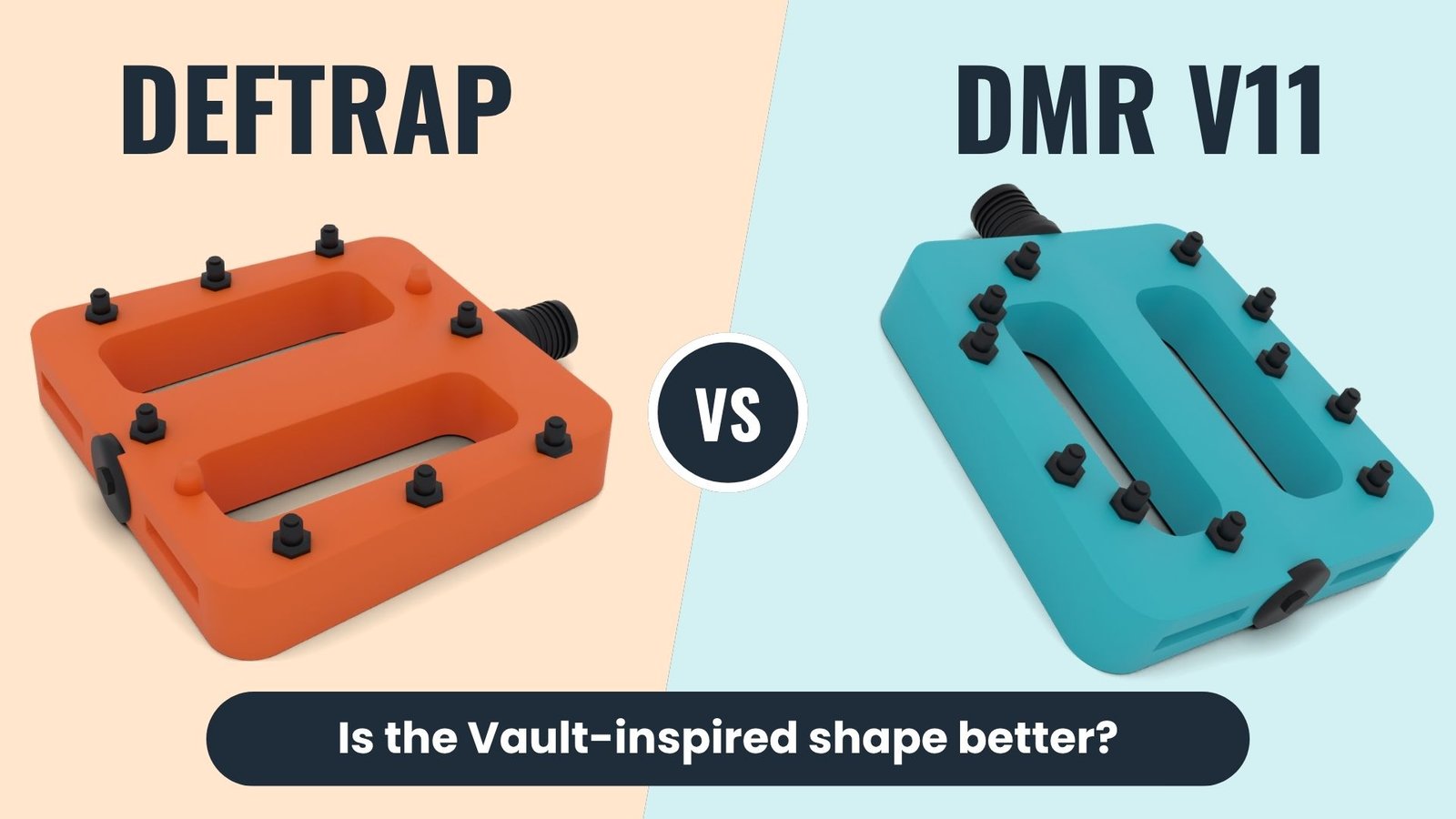
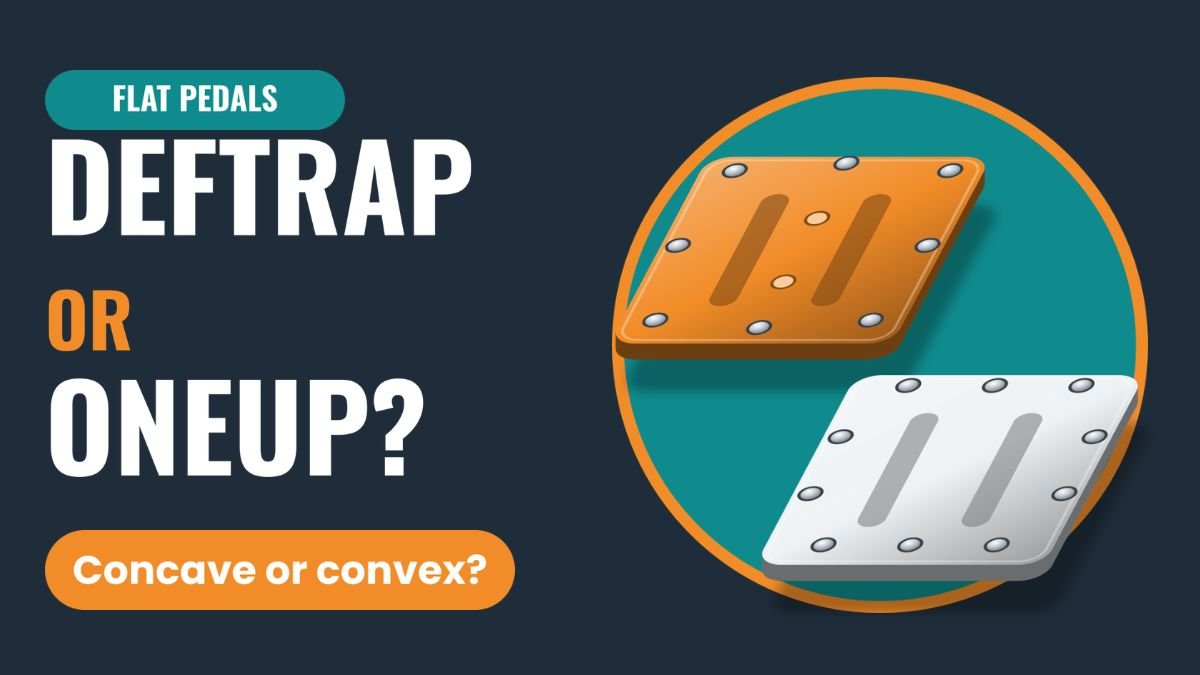
We will talk about them in detail, but for now, a few things you should know are that the Deftrap has a true concave body, whereas the Chester has a flatter platform with pins positioned around the edges.
Plus, the Chester comes in two sizes, while the Deftrap comes in only one.
Deity Deftrap vs Race Face Chester: Head-to-Head
| Specification | Deity Deftrap | Race Face Chester |
|---|---|---|
| Platform size | 113 × 103 mm | Small: 105 × 100 mm; Large: 115 × 110 mm |
| Platform design | True concave, symmetrical | Flat body with edge-focused pins |
| Thickness | 18 mm center, 19.5 mm edges | 16 mm |
| Pins per side | 8 metal + 2 molded nylon | 9 metal + 2 molded composite |
| Weight per pair | 391 g | Small: 345 g; Large: 355 g |
| Axle | Chromoly steel | Chromoly steel |
| Listed US price | $54.99 | $60.99 |
The Deftrap is built around a particular design, with a symmetrical body and genuine concavity. But yes, it does not offer the same level of adjustability as the Race Face Chester does.
Especially now in 2026, you can get the Chester in two sizes, and it has a flatter body without the raised center section found on the original model, along with a different pin arrangement.
Platform Geometry: A Cupped Platform Versus a More Adaptive Platform
With the Deity Deftrap, you get a 113 x 103 mm platform, which has 1.5 mm of concavity built directly into the pedal. In other words, the center sits a little lower than the surrounding area.
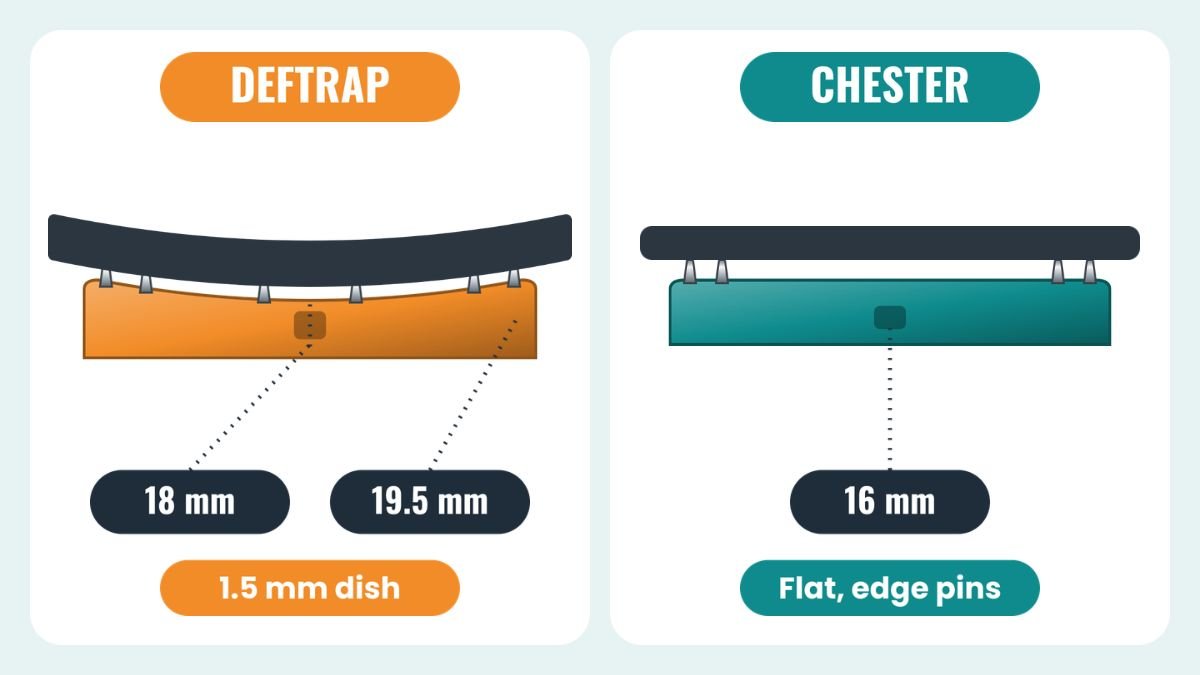
It was designed this way so that it can support your shoes and help keep your feet planted in the center, instead of depending only on the pins for grip.
Plus, it has a non-offset, symmetrical design, so the platform extends better around the spindle. Combined with its large footprint, this gives riders a broader area to distribute pressure across their feet.
It is also useful when standing for long periods on rough descents, where you want consistent support beneath your shoes.
If we talk about the Race Face Chester, it has a different body design.
They have removed the raised section around the spindle that was present in the older version of the Chester. Now, they have arranged the pins around the perimeter to create a concave gripping effect.
So, both pedals aim to provide you with a secure foot position, but they achieve it differently. The Deftrap relies more on its actual body shape.
On the other hand, the Chester tries to provide a similar advantage through its pin arrangement, creating a similar sense of security.
I would recommend the Deftrap if you like a concave platform and want your shoes to sit more securely. But if you prefer a flatter body, I would suggest going for the Chester.
Deity Deftrap Pedals
Concave composite platform, 113 × 103 mm
Grip Personality: Locked Down or Adjustable?
With the Deftrap, you get 10 pins per side, including two fixed nylon pins.
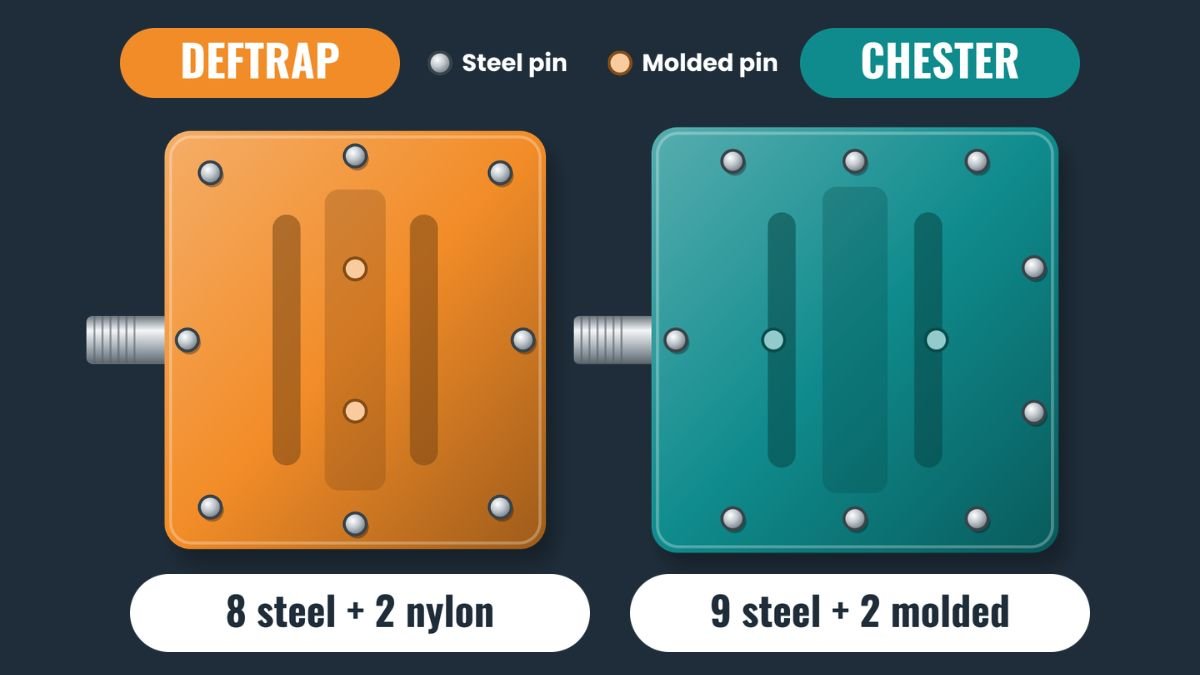
On the other hand, with the Chester, you get 11 pins per side, consisting of nine replaceable metal pins and two molded composite pins.
The Chester technically has more pins, but we can’t say which one is better because pin placement, height, shape, rubber compound, and your shoes will also influence your grip and help you decide which one you should choose.
With the Deftrap, the pins work together with its true concave platform. This combination is designed to resist unwanted shoe movement, which is good for riders who like riding on steep descents.
The Chester’s pins sit mainly around the outer edges and have smaller, longer threaded tips. This allows you to adjust your foot position more easily.
So, now it is totally up to you. If you are one of those riders who keep their feet in one position throughout the descent, or someone who keeps changing their foot position, you can choose based on that.
As I said, your shoes will also play a role in how the pedals feel in corners. A soft, sticky rubber outsole will grip the pins more than a harder sole. A stiffer shoe will distribute pressure across the platform differently.
That’s why I cannot tell you exactly which one you should choose. Now you know about both, so it’s up to you.
You can choose the Deftrap if you want more emphasis on a planted platform, or you can choose the Chester if you want a balance between secure grip and the freedom to adjust your feet.
Sizing Is the Hidden Decision
When it comes to size, the Race Face Chester has an advantage over the Deity Deftrap. Because Deity offers the one 113 × 103 mm size, whereas Race Face gives you two Chester options:
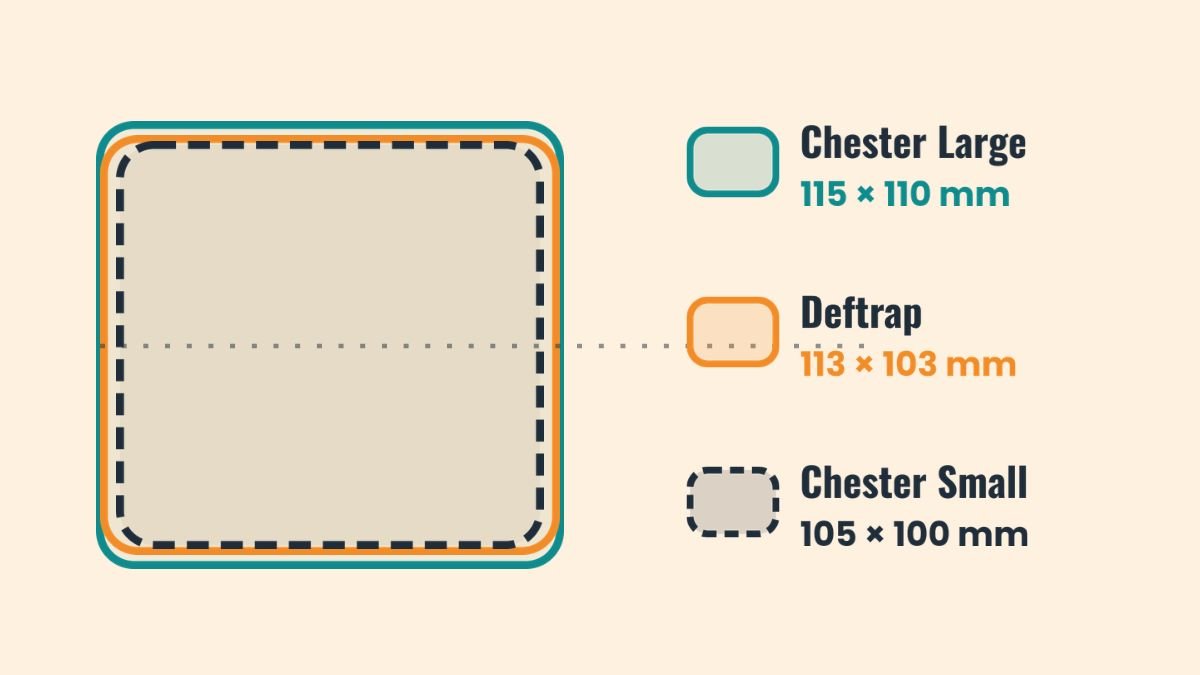
- Chester Small: 105 × 100 mm, made for smaller feet or riders who want a more compact platform.
- Chester Large: 115 × 110 mm, it offers more support area for larger shoes.
Race Face Chester Pedals, Small (Black)
105 × 100 mm platform for smaller feet
Race Face Chester Pedals, Large (Black)
115 × 110 mm platform, 11 pins per side
I know the difference doesn’t look very significant, but when you compare the pedals with your actual riding shoes, it can matter.
For example, if you are a smaller-footed rider, you may not benefit from a pedal that extends much further beyond your shoes. On the other hand, riders with wider shoes will like the extra surface area they get with the Chester.
However, instead of choosing based only on your regular shoe size, you should also look at the outsole dimensions because they can vary between brands and models.
One trick you can follow is to measure the length and width of the outsole of your regular mountain bike shoes.
Pay special attention to the area around the ball of your foot, since that’s where much of your pressure will normally be applied.
Once you have these measurements, compare them with the pedal platform.
Your entire shoe doesn’t have to fit inside the platform, but the important contact area should be properly supported.
Also, check whether your shoe sits comfortably within the pin perimeter rather than placing most of your weight beyond it.
There are two other things worth considering: your preferred foot position and pedal clearance.
Some riders naturally stand with their feet slightly farther outward, and some prefer a narrower stance. Pedal size alone doesn’t determine Q-factor or stance width, but the shape and usable area can influence where you’re comfortable placing your shoes.
Also, an unnecessarily large platform can increase the chance of catching obstacles.
Pedal Strikes and Trail Clearance
Actually, the Chester is thinner here. It has a 16 mm profile, while the Deftrap has an 18 mm center and 19.5 mm front and rear edges. However, thickness alone won’t give it an advantage.
But yes, if your bottom bracket height, suspension settings, and pedaling technique are good, then you will surely benefit from that extra clearance.
If you buy the Chester Small, it will occupy less area compared to the Deftrap or Chester Large, which is good when you want to navigate around obstacles. The Chester Large also extends farther outward across its platform.
The Deftrap, on the other hand, has a composite body designed to slide over obstacles, which may help prevent it from catching on them during an impact.
So, on rocky, root-covered trails where you want better clearance, you should go for the Chester Small. It will still provide support for your shoes on faster trails while reducing clearance issues.
The Deftrap offers a more planted platform, which is also good. And for bike park and enduro riding, both are suitable because they are designed for demanding use.
Now, you should look at a few other things as well before deciding which one you should go for.
Weight: Does 36 Grams Matter?
Even though Raceface Chester is lighter than Deity Deftrap, it won’t really make a huge difference.
It would impact if we were talking about tires, wheels, something where. But here it’s shoes. I will be more concerned about whether the platform keeps my shoes supported than whether they have 36 grams extra weight.
If you want to have a light bike, so you can get Raceface Chester pedals. They have around 355 grams weight, less than 36 grams, than Deftrap.
Durability, Bearings, and Long-Term Ownership
The Deity Deftrap has a nylon glass-fiber composite body, a chromoly steel spindle, two sealed bearings, and an oversized DU bushing. Plus, the plastic body includes open channels inside to help clear snow and mud easily.
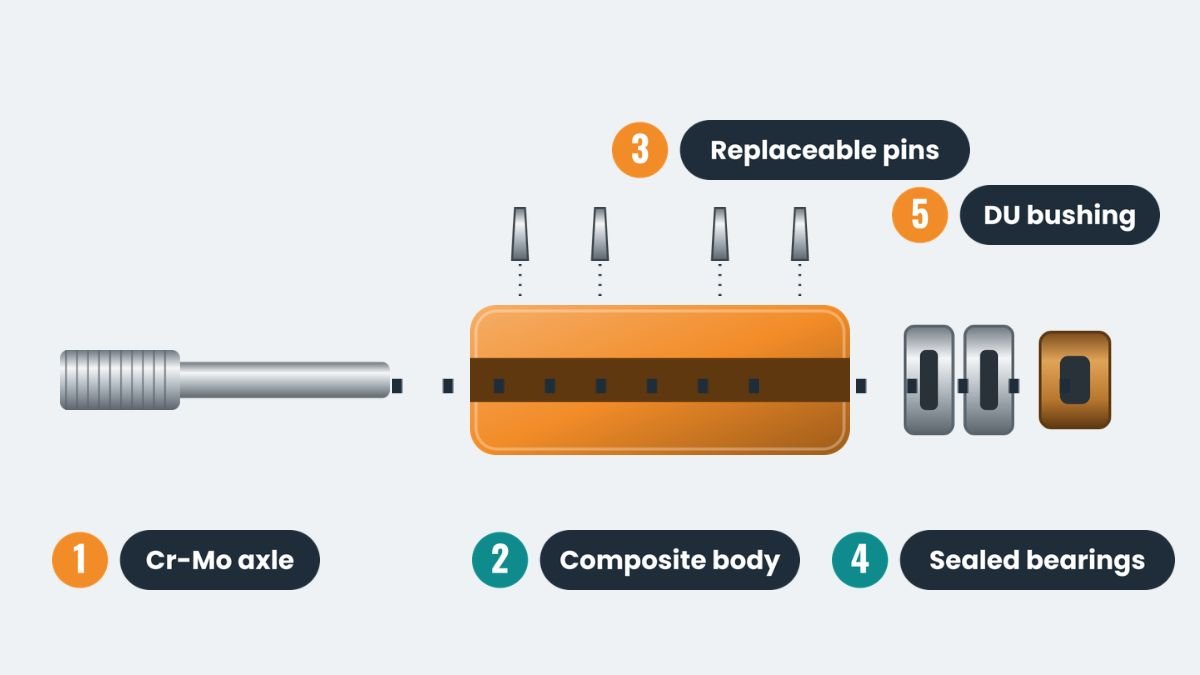
The Chester has a nylon composite body and a chromoly steel axle, along with fully serviceable internals.
So, both pedals allow you to replace damaged metal pins, which is important.
However, keep in mind that molded composite pins are integrated into the pedal body, so you cannot individually unscrew and replace them like metal pins.
If you ever need replacements in the future, you can buy replacement pin kits. Deity sells a Deftrap-specific repair kit.
Besides this, Race Face also supports servicing and repairing the Chester, and they offer a lifetime warranty that includes qualifying crash damage.
This warranty also makes the Chester interesting when it comes to long-term ownership and reliability.
Price, Value, and What You Are Actually Paying For
There is a very small price difference between them. The Deity Deftrap costs around $54.99, and the Race Face Chester costs around $60.99, which is just a $6 difference.
With the Deftrap, you are spending that money on a large, symmetrical platform, concave design, aggressive pins, and rebuildable internals.
With the Chester, you get a choice of two sizes, a lighter and thinner platform, a different pin arrangement, and most importantly, Race Face’s lifetime warranty.
So, if you are specifically buying for a concave platform, you should get the Deftrap. Or, if the Chester suits your shoes better, go with that one.
Both have their own advantages, which we have discussed throughout this post, and I don’t want to repeat them again.
Which Rider Should Buy Which?
- If you want to ride aggressive trails or you are an enduro rider, you should get the Deity Deftrap.
- If you frequently reposition your feet, you should get the Race Face Chester.
- For riders with smaller feet, the Chester Small is a better choice. If you have a larger shoe size, you can compare the Deftrap with the Chester Large, as the Chester Large offers a bigger platform.
- For riders upgrading from basic plastic pedals, both are good options. You can consider the other factors and choose one for yourself.
- If you are a rider who frequently experiences pedal strikes, the Chester Small is a good choice for you.
Deity Deftrap Pedals
Concave composite platform, 113 × 103 mm
Race Face Chester Pedals, Large (Black)
115 × 110 mm platform, 11 pins per side
So, in simple terms, you should look at multiple factors and choose the pedal that best matches your riding style.
Final Verdict
I recommend choosing the Deity Deftrap if you want a concave, symmetrical platform that provides a stable and centered foot position. You can also get a more planted feel with it.
If you want more flexibility and a flatter platform with pins that allow you to reposition your feet easily, then the Race Face Chester is a good choice. It’s also lightweight, has a thinner profile, and comes with a lifetime warranty.
And the price difference between them is only around $6.
Frequently Asked Questions
Are the Deity Deftrap and Race Face Chester both composite pedals?
Yes, both have nylon-based composite bodies with chromoly steel axles.
The Deftrap has a glass-fiber-reinforced nylon construction, while the Chester has a nylon composite body.
Which pedal feels more planted?
The Deftrap has true 1.5 mm concavity and a symmetrical platform, which are specifically designed to provide a planted, centered foot position.
On the other hand, the Chester is more about providing secure grip, but it creates its concave feel mainly through its pin arrangement.
Which Chester size should I buy?
You should compare the pedal dimensions with your riding shoe size and consider how much platform area you prefer.
Are the Deftrap’s pins replaceable?
Yes, you can replace the steel pins on each side, but you can’t replace the ones molded into the pedal body.
Can I rebuild either pedal?
Yes, you can do that. The Deftrap has sealed bearings and a bushing, with a dedicated rebuild kit available from Deity.
Race Face also says that the Chester is fully serviceable and can be rebuilt.
Which is better for technical descents?
The Deftrap is good for technical riding because it has a concave platform that helps keep your feet planted.
The Chester is also suitable for technical trails, especially if its size and pin arrangement work well for you.