Disclosure: This post may contain affiliate links. As an Amazon Associate I earn from qualifying purchases.
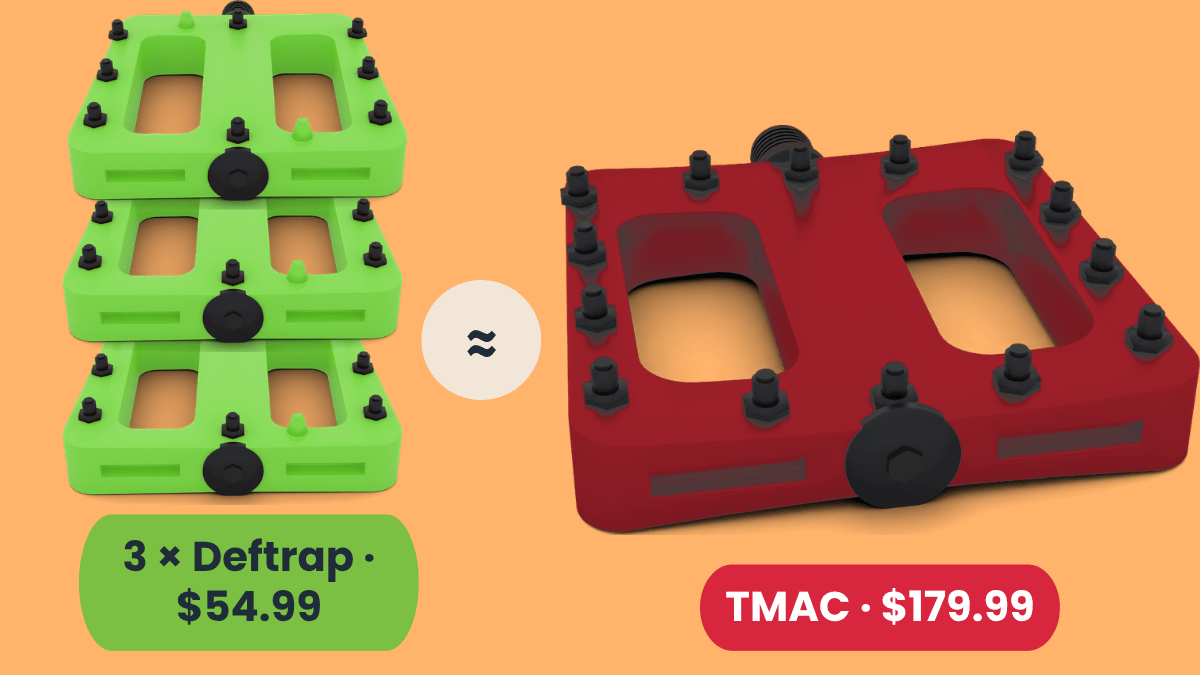
There is almost a $150 difference between the Deity Deftrap and Supervillain, although they are both flat pedals from the same company and are designed for serious mountain bikers.
And another interesting thing is that the Deftrap already has many features that you would get in expensive pedals, like a large platform, a concave shape, metal grip pins, rebuildable internals, etc.
So, why would buying the Supervillain make sense, or why might it not make sense? In this post, I will discuss these things, and in the end, you can decide whether you should get the Supervillain pedals or the Deity Deftrap.
Deity Deftrap vs Supervillain: Specifications Compared
We’re going to discuss everything in detail, but before that, let’s compare their specifications.
| Specification | Deity Deftrap | Deity Supervillain |
|---|---|---|
| Price (US MSRP) | $54.99 | $169.99 |
| Body material | Nylon-glass fiber composite | 6061-T6 aluminum |
| Platform size | 113 × 103 mm | 113 × 105 mm |
| Concave depth | 1.5 mm | 2.5 mm |
| Center thickness | 18 mm | 14 mm |
| Pins per side | 8 replaceable steel + 2 molded nylon | 14 replaceable metal |
| Claimed weight (pair) | 391 g | 420 g |
| Platform design | Non-offset, symmetrical | Non-offset, symmetrical |
| Rebuildable | Yes | Yes |
The Deftrap is around three times cheaper than the Supervillain, but the Supervillain is not three times better in every aspect. For example, its platform is just 2 mm wider, and both have a length of 113 mm. Plus, they also use Deity’s non-offset symmetrical design.
So, there is no huge difference when it comes to their approach to foot support. So, what is different? It’s the concavity, pin arrangement, material, and thickness.
Deity Deftrap Pedals
Concave composite platform, 113 × 103 mm
Deity Supervillain Pedals
Machined aluminum platform, 2.5 mm concavity
The Supervillain’s Biggest Advantage Is Its Grip
Both pedals have a concave platform, where the center is lower than the outer section. This helps your shoe settle into the pedal instead of pressing completely against a flat surface.
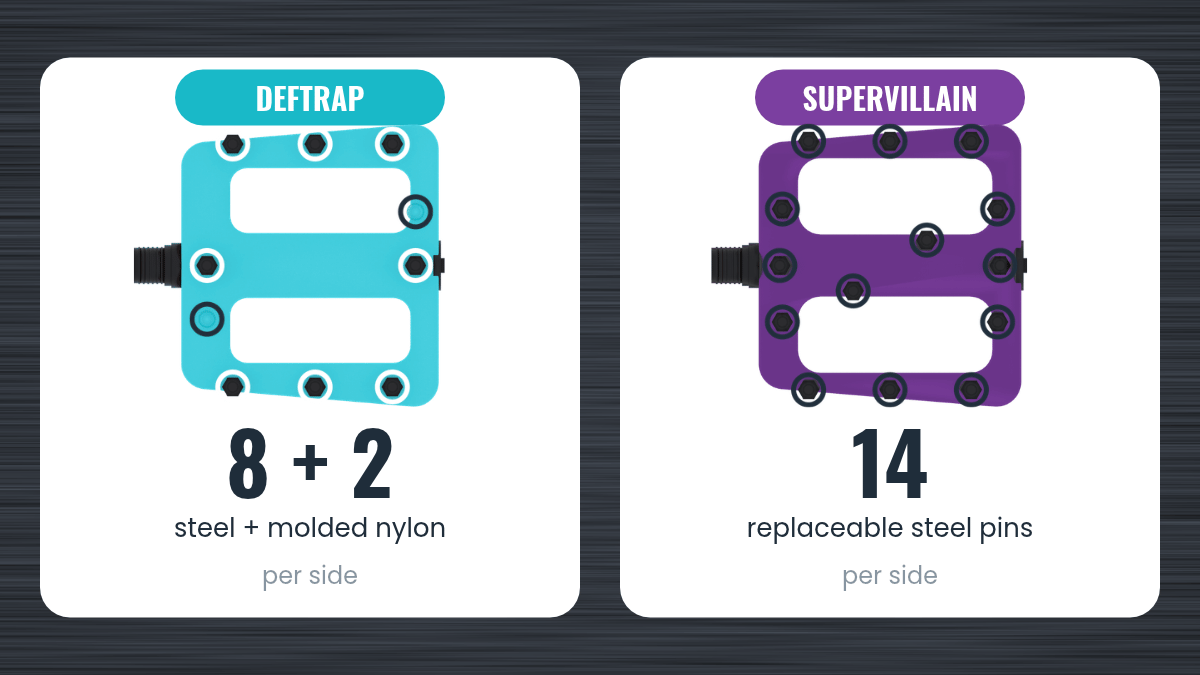
The Deftrap has 1.5 mm of concavity, which is useful, along with eight replaceable steel pins and two molded nylon pins on each side.
These nylon pins provide additional traction, especially when you’re using proper flat mountain bike shoes.
So, it will give you excellent grip on rough terrain with very little unwanted foot movement.
The Supervillain takes this basic idea further. It has 2.5 mm of concavity and 10 pins per side. So, it has more points of contact with your shoe’s rubber outsole.
And that extra 1 mm of concavity might not sound significant, but we are talking about the shape of the surface your foot rests on.
When you combine that with the additional pins, it helps keep your shoe more securely seated in the pedal.
This is good on downhill trails, especially when you have to absorb impacts or deal with sections where your feet are constantly being knocked around.
More grip can make it harder to reposition your feet.
However, on the Supervillain, if you want to change your foot position, you will have to lift your shoe away from the pins. You can’t easily slide it forward or backward.
Although the Deftrap can behave similarly, it has fewer pins, so you still need to lift your feet, but the difference is not that significant.
However, the Supervillain is designed for more aggressive riding and to keep your shoes more securely connected to the pedal.
The Platforms Are Almost the Same Size, So What’s Different?
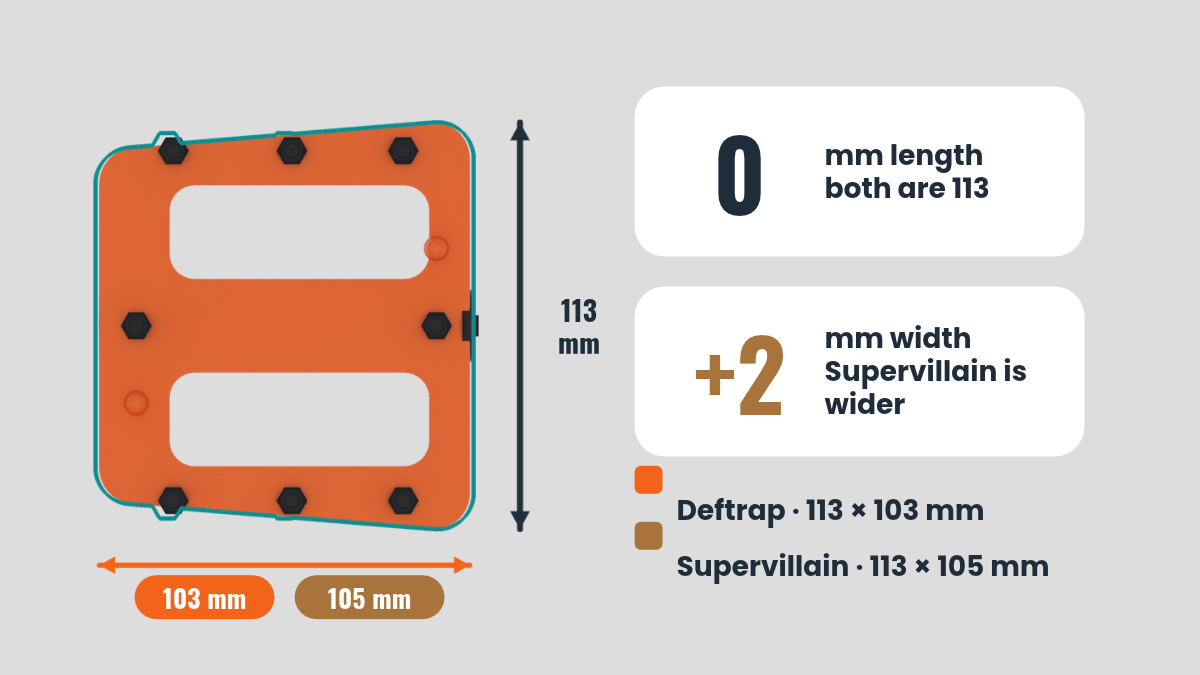
There is only 2 mm of additional width in the Supervillain. The Deftrap measures 113 x 103 mm, while the Supervillain measures 113 x 105 mm. So, both will provide enough support for your shoes, and you don’t need to worry about that.
So, what is the difference then?
Well, the Deftrap has an 18 mm center thickness, while the Supervillain has only 14 mm. So, it has a much thinner center profile.
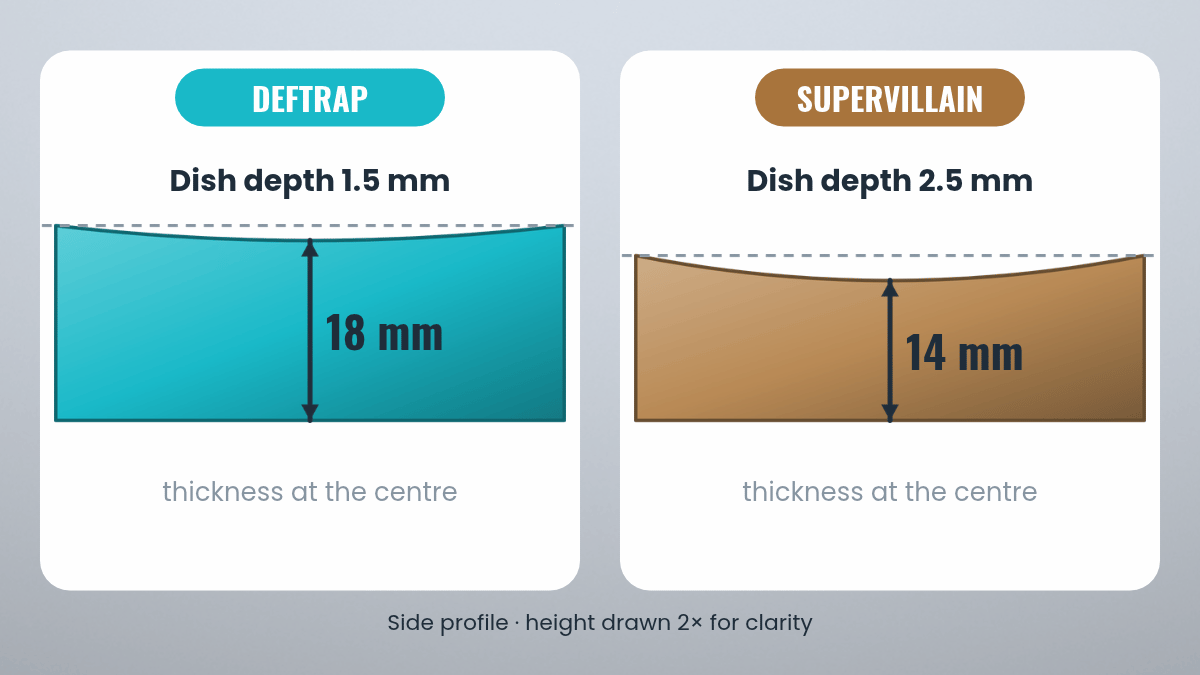
Plus, the Supervillain has deeper concavity and a machined body, which influences where your shoe contacts the pedal and how securely it sits on the platform.
If you use flexible flat pedal shoes, the relationship between the sole, pins, and platform will be more noticeable. On the other hand, if you wear stiffer shoes, they will distribute pressure differently and may also change how much of the pedal’s shape you feel.
The Supervillain’s thinner center is also useful if you frequently encounter rocks, roots, and other obstacles because it provides additional clearance in certain positions, though it won’t eliminate pedal strikes.
Composite vs Aluminum: Which One Handles Rock Strikes Better?
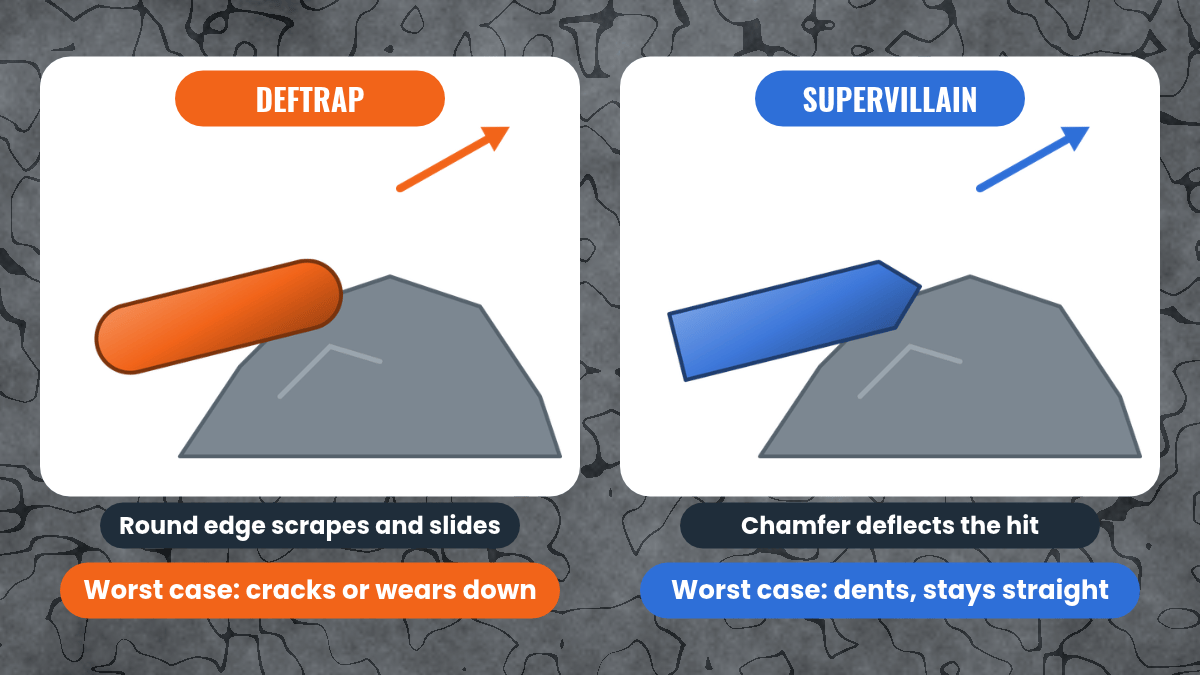
The Deity Deftrap has a glass-fiber-reinforced nylon composite body, which is not like cheap plastic pedals. It is a high-grade composite that can handle sliding or scraping over rocks. Its body is designed to slide over obstacles rather than catch on their edges.
On the other hand, the Deity Supervillain is machined from premium 6061-T6 aluminum. But its real advantage is its shape. Deity has designed it with chamfered, sloped edges that help deflect rock strikes instead of catching on obstacles.
In most cases, this pedal can take major impacts and develop dents and scratches, but it should remain straight and continue spinning smoothly.
| Feature | Deity Deftrap | Deity Supervillain |
|---|---|---|
| Material | Glass-fiber-reinforced nylon composite | Machined 6061-T6 aluminum |
| Rock Strike Behavior | Scrapes and slides over obstacles; blunt edges can take direct hits | Dents and scratches; chamfered edges deflect impacts |
| Worst-Case Risk | Body cracking or wearing down | Body denting or bending |
| Replacement Cost | Low and easy on the wallet | High |
In my opinion, you shouldn’t buy the Supervillain just because you think a composite pedal won’t handle aggressive trail riding, enduro, or other types of riding. The Deftrap is fully capable of handling that kind of riding, and for its price range, it is a very good option.
But if you have the money and want to spend it, then yes, you can go for the Supervillain.
Weight, Maintenance, and Replacement Parts
The Deity Supervillain is heavier than the Deftrap. Though it’s not a big difference that you will really notice.
And if we talk about maintenance, both are good. Both are serviceable because they have serviceable internals.
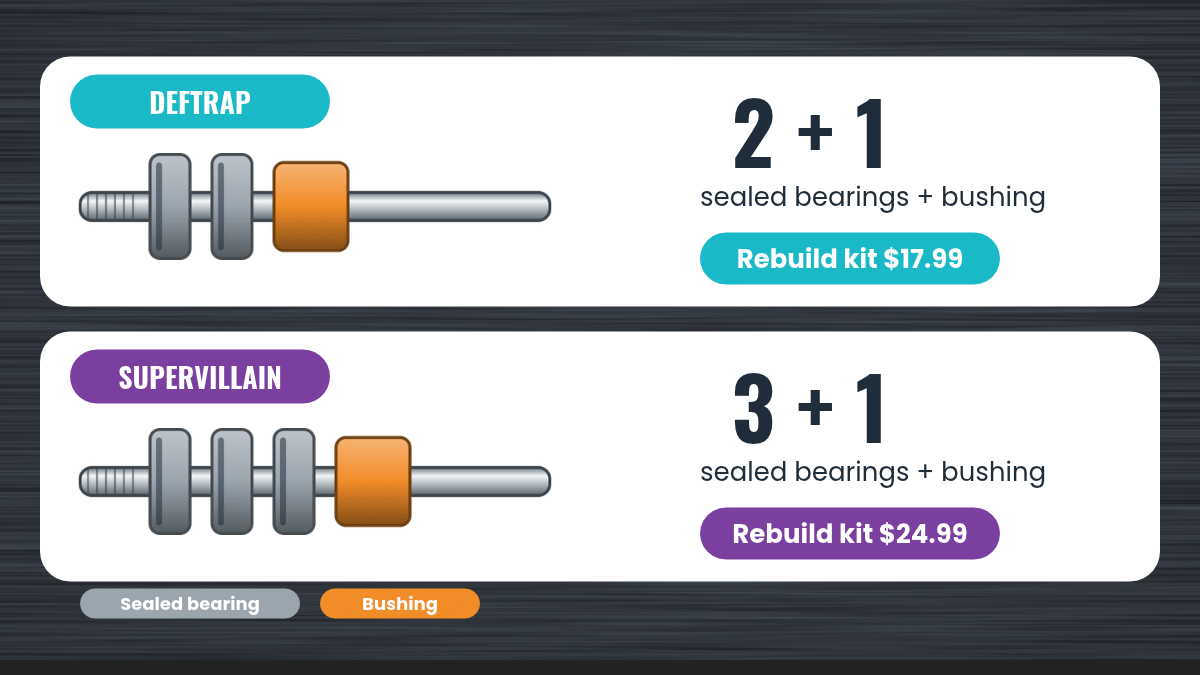
You can also get their rebuild kits directly from Deity. The Deftrap rebuild kit costs around $17.99, while the Supervillain rebuild kit will cost you $24.99.
Who Should Spend $169.99 on the Supervillain?
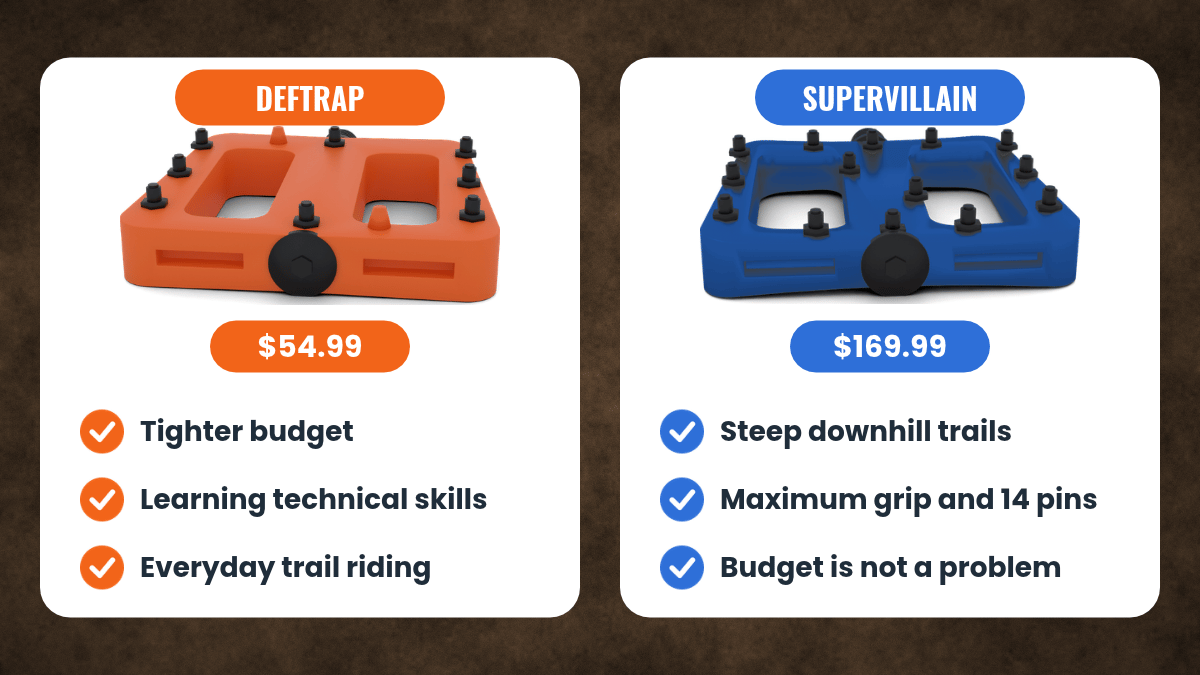
Number one, if you have a good budget and want more grip for steep downhill trails because you spend most of your time riding them or simply enjoy that type of mountain biking, then you should spend on the Supervillain.
It gives you better concavity and more metal pins. And on top of that, you are getting a machined aluminum body, chamfered edges, and replaceable metal pins.
However, I also recommend getting better shoes when buying these pedals because your shoes are going to influence grip a lot.
But for ordinary trails, learning technical skills, or if your current pedals are uncomfortable, you can buy the Deftrap.
Deity Deftrap vs Supervillain: Is the $115 Upgrade Worth It?
At this affordable price, the Deftrap offers better value for most riders because it has everything we need: a large platform, good grip, a proper concave shape, and serviceable internals.
These pedals can be used for serious mountain biking by everyone.
But the Supervillain has a more advanced design and is specifically designed to provide maximum grip and a more secure shoe-to-pedal connection.
So, if you want to stay within budget and get good pedals, I would recommend buying the Deftrap.
Deity Deftrap Pedals
Concave composite platform, 113 × 103 mm
But if you have already crossed the beginner level or simply want a more advanced riding experience, then you can consider the Supervillain.
Deity Supervillain Pedals
Machined aluminum platform, 2.5 mm concavity
For example, if your feet keep slipping on your current pedals and you now want a more secure, stickier fit, you should buy the Supervillain. And if you also like its appearance, that’s another reason to consider it.
They will cost more than double, but they are good pedals, especially when it comes to grip, appearance, and overall design.