Disclosure: This post may contain affiliate links. As an Amazon Associate I earn from qualifying purchases.
If you bought the Trek Marlin 7 Gen 3 in 2024 or 2025, it already comes with a RockShox Judy Silver Air fork, along with a TranzX dropper post and tubeless-ready Maxxis Rekon tires. So, I wouldn’t recommend spending $200 to $400 on upgrading the fork or other components.
We’ll still talk about Trek Marlin 7 Upgrades, but my main focus will be on the Generation 2 because it has several components and features, like rebound damping, non-tubeless-ready wheels, and internal dropper routing, that we can upgrade to make the bike perform better.
By the way, even if you have Generation 2, make sure you read the Generation 3 section as well.
Figure Out Which Marlin 7 You Have Before Spending
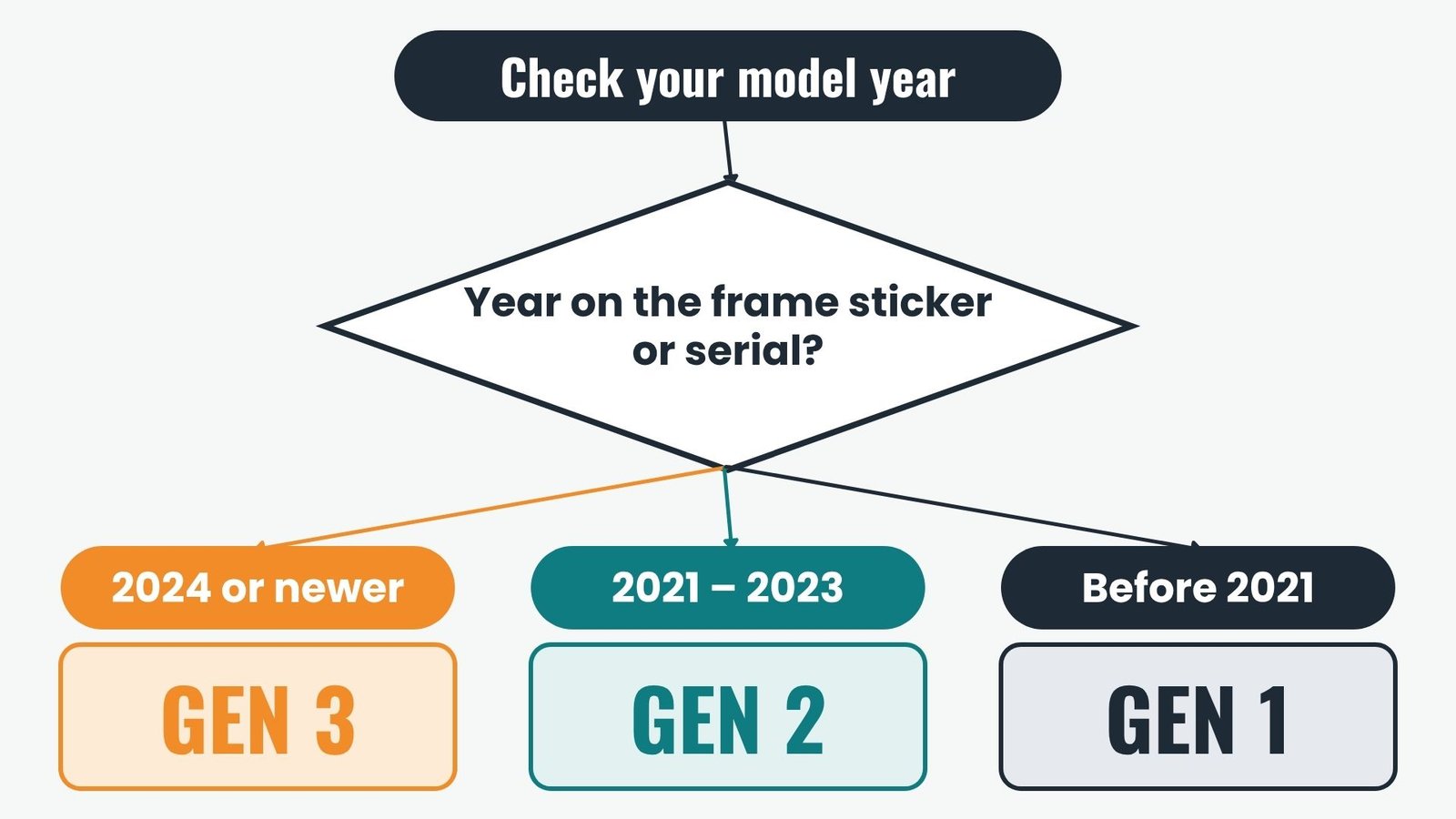
I’ll discuss several things there, so I won’t repeat them while talking about upgrades for Generation 2. Many things are similar between both generations
| Components | Pre-Gen 2 (2017 to 2020) | Gen 2 (2021 to 2023) | Gen 3 (2024 to 2026) |
|---|---|---|---|
| Fork | RockShox XC 30, coil, 100mm | RockShox Judy, coil, preload + TurnKey | RockShox Judy Silver, Solo Air, rebound adjust, 100mm |
| Drivetrain | 2x or 3x Shimano | Shimano Deore 1×10, 11-46 | SRAM SX/NX Eagle 1×12, 11-50 |
| Brakes | Tektro HD or Shimano MT200 | Shimano MT200 | Shimano MT200, 180mm front / 160mm rear |
| Wheels | Not tubeless | Not tubeless, 20mm rims | Bontrager Kovee TLR, Maxxis Rekon 2.4″ EXO TR |
| Dropper post | No | No | Yes, TranzX 100mm to 170mm depending on size |
| Head tube | Straight 1-1/8″ | Straight 1-1/8″ | Straight 1-1/8″ |
| MSRP at launch | Up to $799 | $899 to $1,029 | $1,299 to $1,399.99 |
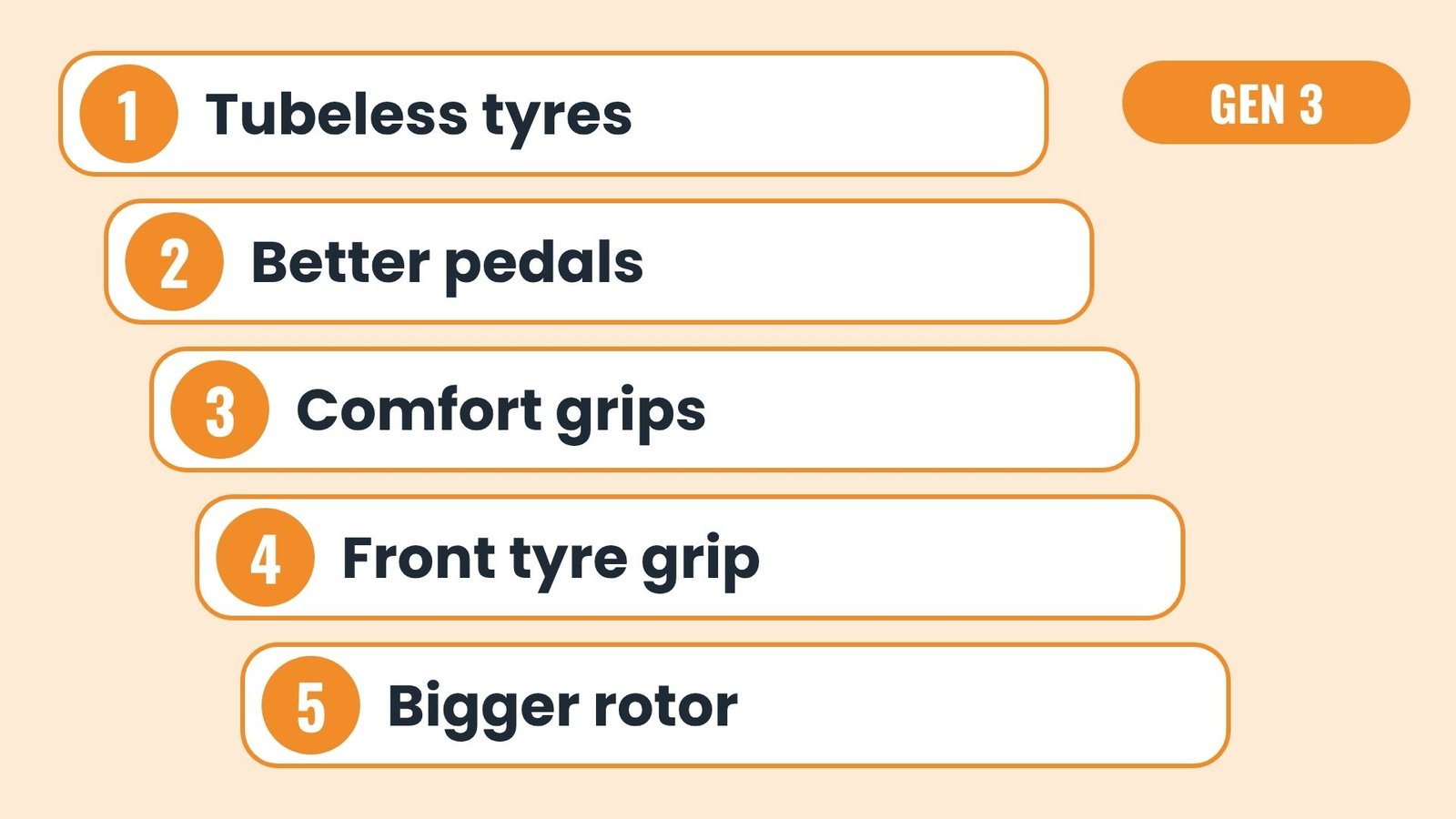
5 Gen 3 Marlin 7 (2024–2026) Upgrades Worth Spending Money On
As I mentioned earlier, the Trek Marlin 7 Gen 3 is already well-equipped. Why? Because it comes with a RockShox Judy air fork and a good dropper post. So, we won’t discuss major upgrades for it, as I don’t think they are necessary.
But you can still spend some money on smaller upgrades that might improve your comfort and control. So, here are
5 best upgrades for the Trek Marlin 7 Gen 3.
1. Switch to Tubeless Tires for Better Grip and Fewer Flat Tires
The Trek Marlin 7 Gen 3 comes with Bontrager Kovee tubeless-ready rims and Maxxis Rekon tubeless-ready tires. If you’re using inner tubes, you can switch to a tubeless setup.
I consider this a worthwhile upgrade for your Marlin 7. Without inner tubes, you can run lower tire pressure without worrying about pinch flats, which can happen when an inner tube gets trapped between the tire and the rim.
Another benefit is that tubeless sealant can automatically seal small punctures while you’re riding. Plus, you get better traction, a more comfortable ride, and protection against small punctures without spending too much money.
Here are my recommended tires:
Stan’s NoTubes 40mm Tubeless Valve Stems
Tubeless valve stems for converting your rims.
Orange Seal Endurance Tubeless Sealant (8oz)
Long-lasting tubeless sealant with a fast seal. Includes injector.
Stan’s NoTubes Tubeless Rim Tape (25mm)
Wide rim tape to seal the rim bed for a tubeless setup.
2. Replace the Stock Pedals With Better Platform Pedals for More Grip
The Marlin 7 comes with VP-536 nylon pedals, which are okay for regular riding. But they’re still basic in my opinion. They won’t provide good grip, especially if you ride during the rainy season and your shoes and pedals get wet. They will slip quite a lot.
So, I would recommend upgrading to pedals with a wider platform and metal grip pins. These will keep your feet in place and provide better support, allowing you to ride longer and more comfortably.
This is especially recommended if you’re into technical riding or frequently ride on technical trails. Plus, you can get them at a budget-friendly price.
Here are two options worth considering:
OneUp Components Composite Pedals (Black)
Large platform with metal pins to keep your feet planted on rough trails.
DMR V8 Classic Flat Pedals
Slightly larger platform for bigger feet or extra surface under your shoe.
3. Upgrade Your Grips and Saddle for More Comfortable Long Rides
There are two components that transfer the most vibration to our body: one is the saddle, and the other is the handlebar. So, I would recommend upgrading both of them.
For the grips, my recommendation would be the Ergon GA3 because it has a wider palm support area, which helps distribute pressure across your hands. I also found Race Face, Lizard Skins, and ODI Elite Pro grips very helpful.
Ergon GA3 Grips (Black)
Small palm wing that reduces hand pressure on longer rides.
Race Face Half Nelson Lock-On Grips (Black)
Comfortable lock-on grips with a good feel for trail riding.
Besides this, you can also switch to a WTB Volt saddle.
WTB Volt Trail Saddle (Medium, Steel Rails)
Comfortable medium-padding saddle for longer rides.
By the way, if you’ve just bought the bike, I would recommend continuing with the saddle that came with it. If you feel any discomfort, then consider upgrading it. Otherwise, focus on other things.
4. Replace the Front Rekon Tire With a Maxxis Minion DHF for More Cornering Grip
Your Marlin 7 already comes with stock Maxxis Rekon tires, which perform well for cross-country riding, climbing, hardpack trails, etc. But if you normally ride on dirt, muddy sections, or technical corners, you’ll need more grip from your front tire.
So, I recommend using the Maxxis Minion DHF. It’s a good, aggressive, expensive option. It has a tread pattern and larger side knobs that provide better cornering grip. This helps keep the front wheel planted when you’re leaning into loose corners.
And I’m not saying you need to replace both tires. You can keep the stock Rekon on the rear and just install the Minion DHF at the front. This will give you better grip.
But one thing you need to keep in mind is that the Minion DHF is slower than the Rekon. So, this upgrade makes sense if you mostly ride challenging trails rather than smooth ones.
Recommended options:
Maxxis Minion DHF 29×2.4 EXO TR
Aggressive front tire with strong cornering grip.
Maxxis Aggressor 29×2.3 EXO TR
Fast-rolling, durable tire that works well as a rear tire.
Also, make sure you choose the correct wheel size for your bike. The smaller sizes have 27.5-inch wheels, while the larger sizes have 29-inch wheels.
5. Upgrade the Rear Brake Rotor to 180mm for Better Braking on Long Descents
You already have Shimano MT200 hydraulic disc brakes on the Marlin 7 Gen 3. They’re good for regular trail riding, but I would recommend upgrading them, especially if you ride on steep descents.
One possible upgrade I like is increasing the rear rotor size from 160 mm to 180 mm. It will provide your bike with more braking power with less pressure, and it will also help manage heat during long descents.
You’ll need a compatible 180 mm rotor and the correct bracket adapter. Here are two options I recommend:
Shimano SM-RT86 180mm 6-Bolt Ice Tech Rotor
Ice Tech rotor that handles heat better on long descents.
Shimano 180mm Post-Mount Brake Adapter
Needed to fit a 180mm rotor on a post-mount caliper.
By the way, Trek itself lists the maximum rear rotor size as 180 mm for most Generation 3 frame sizes, while the XXS frame is limited to 160mm. So, you’ll want to check your frame size and existing brake mount before purchasing any of the options I suggested.
And if you feel your brakes lack power after checking the pads, rotor condition, and brake bleeding, you can also consider a more powerful braking system.
What You Don’t Need to Upgrade on the Gen 3 Marlin 7
There are three upgrades that you don’t need to make on the Trek Marlin 7 Generation 3:
- Front Fork: It has a RockShox Judy Silver air fork that lets you adjust the air pressure according to your weight and riding style. So, you just need to learn how to set it up properly instead of replacing it.
- Dropper Post: The 2026 model already comes with this from the factory, so there’s no reason to go for a dropper post.
- Drivetrain: The stock drivetrain provides a useful gear range for climbing and regular riding, so you don’t need to replace the entire system for better performance.
My advice: You should upgrade components that aren’t working well for you and replace them with ones that solve your actual problems, like the tubeless tires I recommended, your grips, saddle, etc. You can leave the expensive components that are already performing well as they are.
5 Gen 2 Marlin 7 (2021–2023) Upgrades That Can Improve Your Riding Experience
The Trek Marlin 7 Generation 3 doesn’t need as many upgrades as the Marlin 7 Generation 2. But I’ll still discuss just five upgrades that your bike actually needs to maximize its performance.
Here are five upgrades worth considering.
1. Replace the Stock Pedals With Better Platform Pedals for More Grip
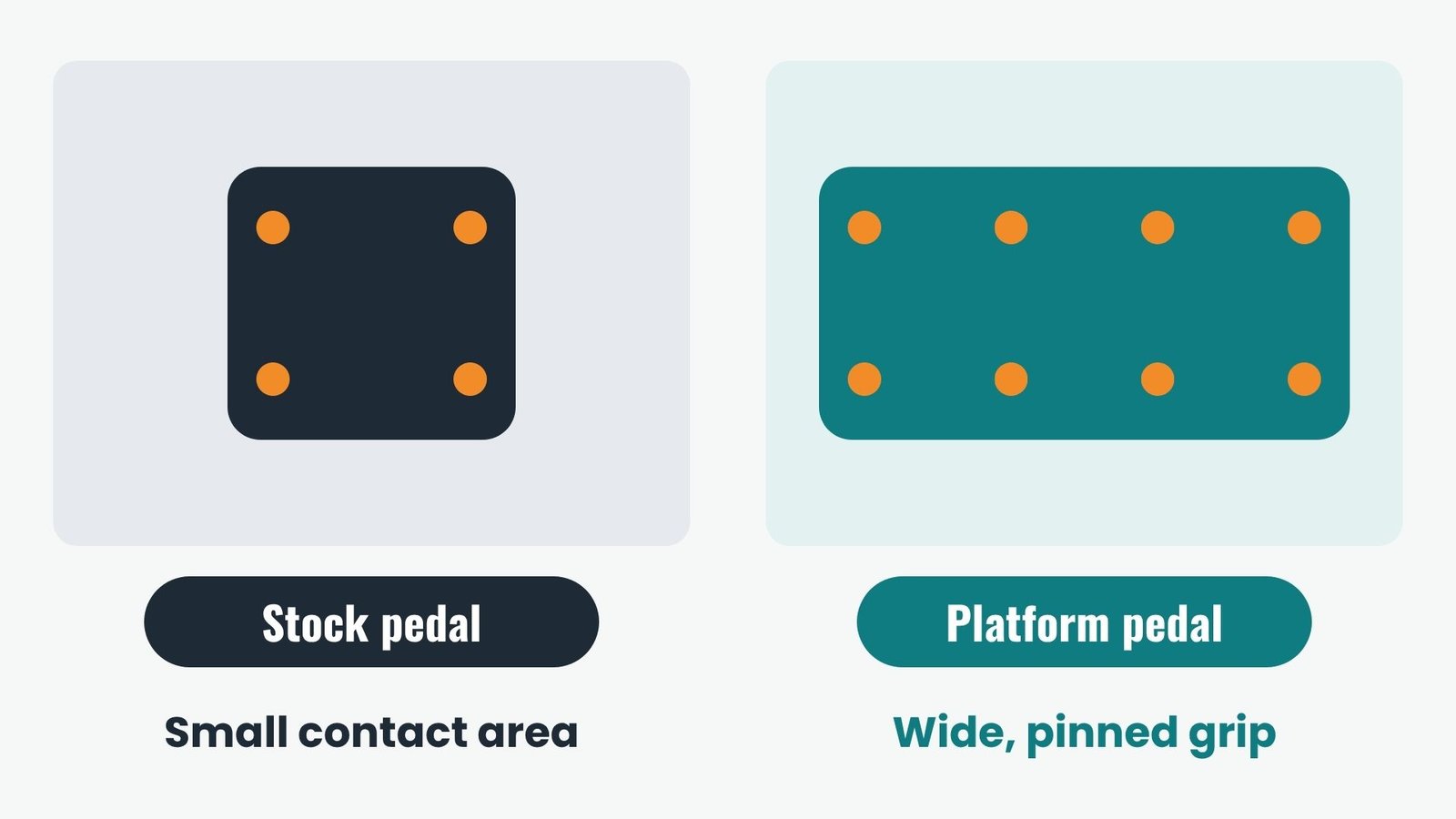
The Marlin 7 Generation 2 comes with basic VP-536 nylon pedals, which are fine for casual riding, just like the pedals on Generation 3. But they’re not ideal for technical trails or when your pedals or shoes get wet.
So, once again, I would recommend metal pedals, similar to the ones I recommended for Generation 3. Here are two options I like. Both will give you a wider platform and replaceable pins:
OneUp Components Composite Pedals (Black)
Large platform with metal pins to keep your feet planted on rough trails.
DMR V8 Classic Flat Pedals
Slightly larger platform for bigger feet or extra surface under your shoe.
2. Upgrade the Stock Tires for Better Grip on Loose Trails
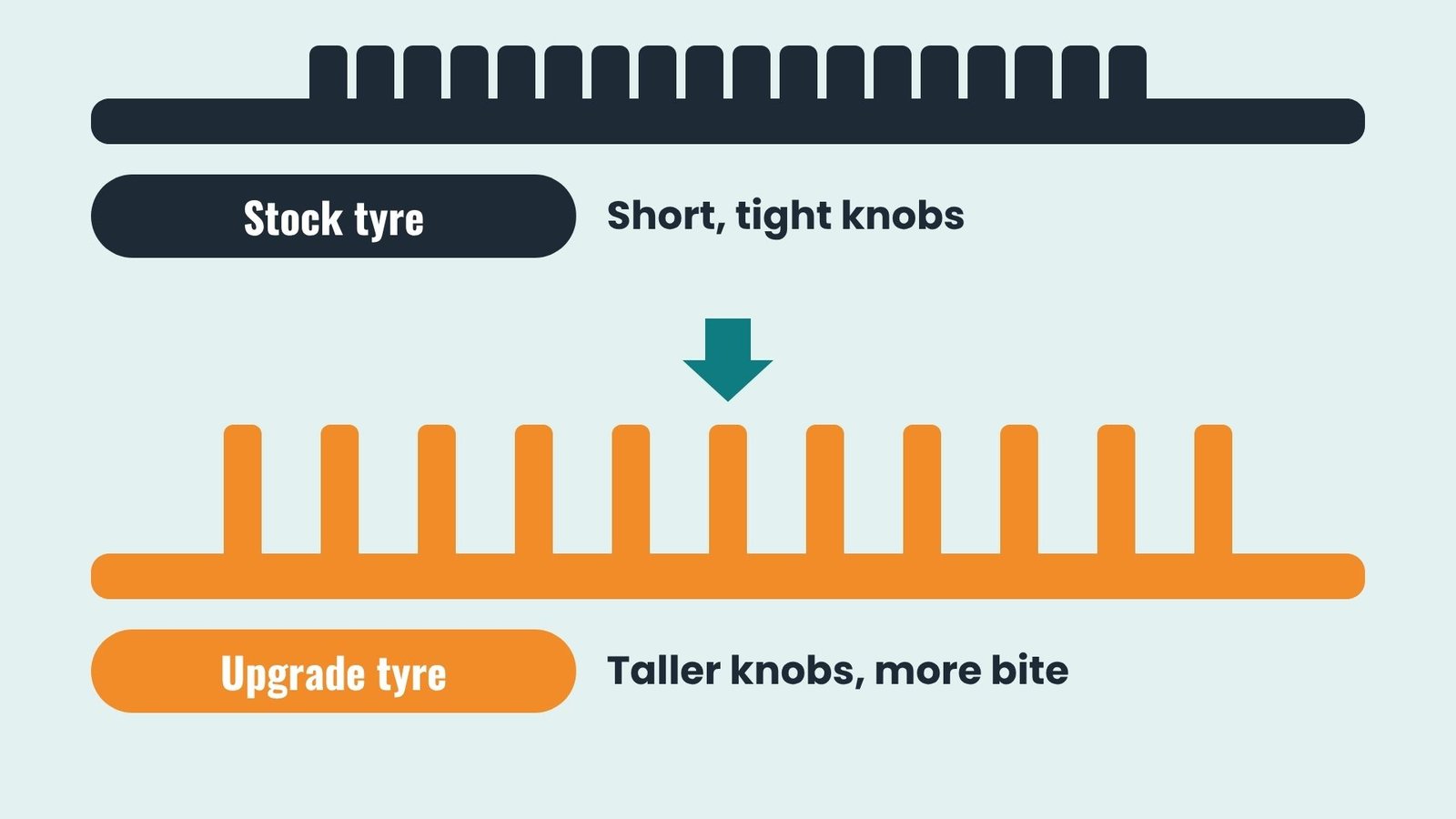
In Generation 2, you get Bontrager XR2 Comp tires, which are designed for general cross-country riding. They work well on hardpacked dirt and smooth trails.
But if you ride on technical or dirtier routes, I recommend the same Maxxis Minion DHF.
For the same reasons, it can seal small punctures and will provide better grip.
Recommended options:
Maxxis Minion DHF 29×2.3 EXO
Aggressive trail tire with strong cornering grip.
Maxxis Ardent 29×2.25 EXO
Faster rolling tire, great on hardpack trails.
3. Upgrade the Coil Fork to an Air Fork for Better Suspension Adjustability
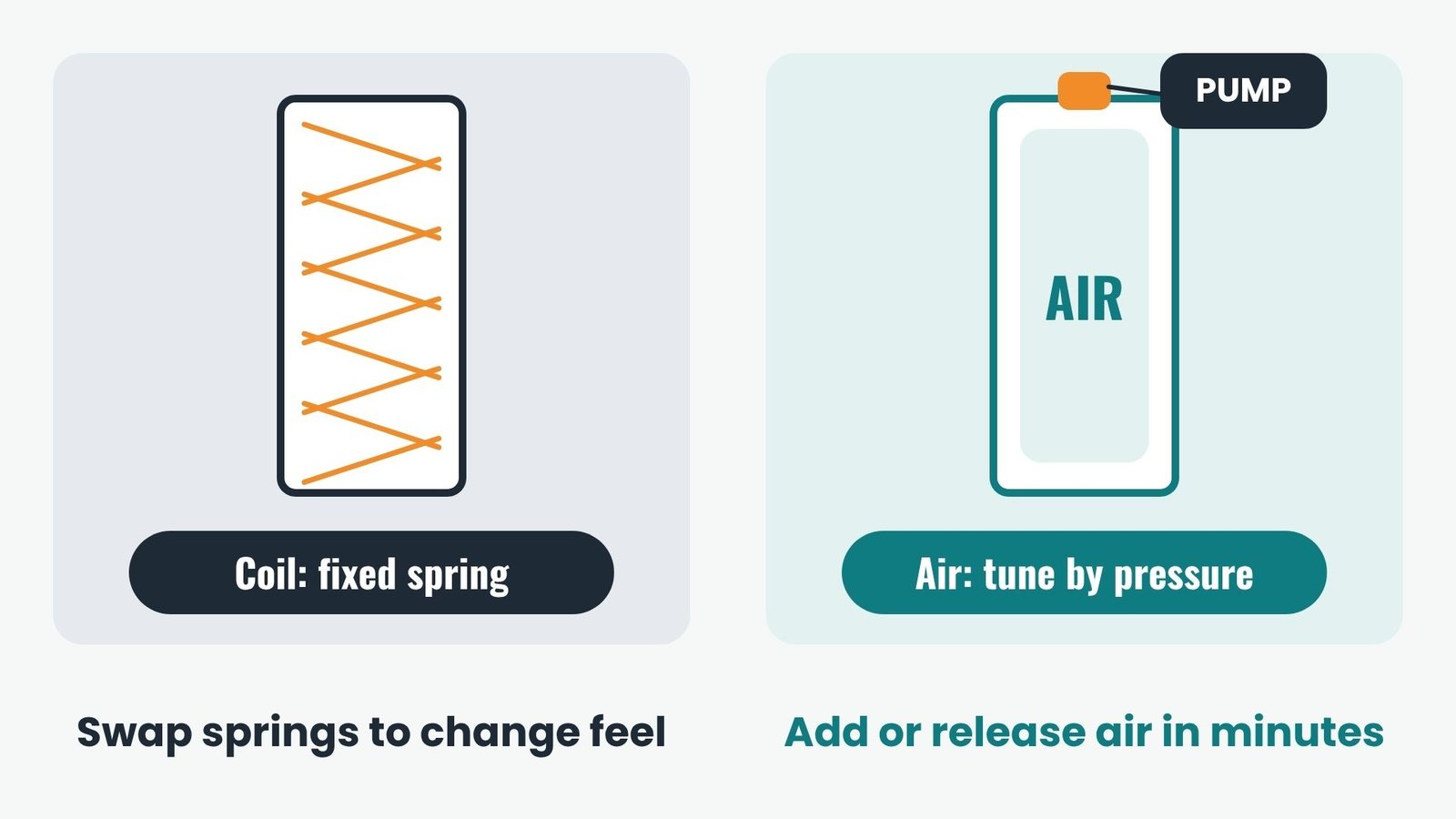
Okay, so the tires and pedals are quite similar. But the biggest difference in Generation 2 is the suspension.
As you know, Generation 2 comes with a RockShox Judy Coil fork, which uses a metal spring and has preload adjustment and TurnKey lockout. But the problem is that a coil spring offers limited adjustability compared to an air spring. You can’t simply adjust the spring pressure to match your body weight.
So, you’ll need an air fork to solve this problem.
Here are my two fork recommendations:
- RockShox Recon Silver RL: A popular upgrade option for riders looking for improved suspension adjustability.
- Manitou Markhor Air: Another option worth considering for a budget-friendly air fork upgrade.
RockShox Recon Silver RL 29 100mm Air Fork
Air fork with better damping and adjustability. Straight steerer, 9×100 mm.
Manitou Markhor Air Fork (29, 100mm)
Budget-friendly air fork. Straight steerer, 9×100 mm quick release.
Before buying either fork, check the following:
- Wheel size: Match the fork to your bike’s 27.5-inch or 29-inch wheels.
- Axle compatibility: The original fork uses a 9x100mm quick-release front axle. So, you want to make sure the replacement fork supports your existing wheel or budget for a compatible front wheel.
- Steerer compatibility: Check whether you need a straight or tapered steerer and the appropriate headset. Trek’s 2023 service documentation confirms that a tapered upgrade can require a different headset.
- Travel: Choose a fork with a suitable travel length and axle-to-crown measurement. Don’t increase travel without checking Trek’s frame specifications and compatibility requirements.
4. Install a Dropper Post for Better Control on Descents
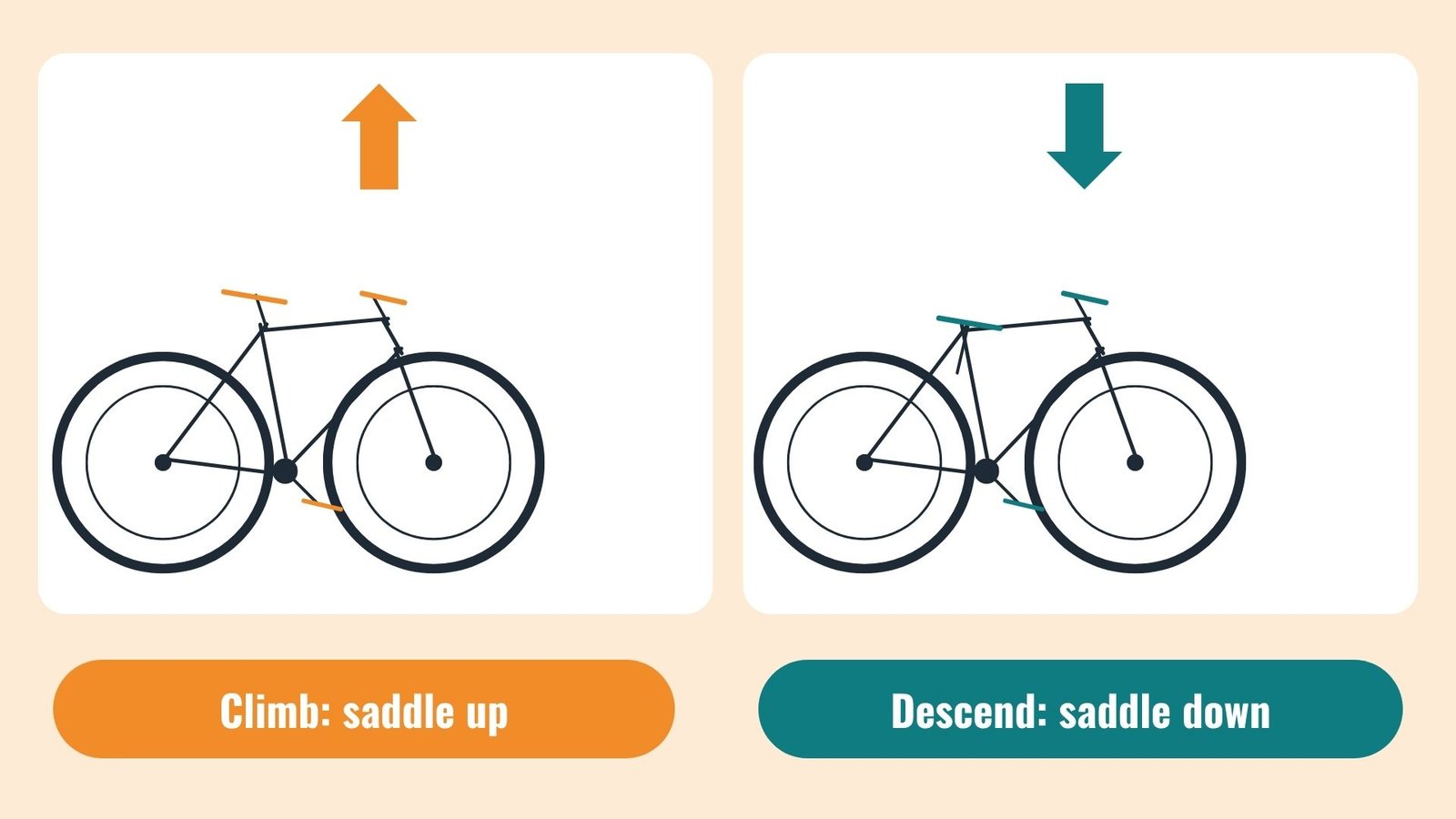
Trek Marlin 7 Generation 2 doesn’t come with a dropper post from the factory. So, you’ll have to buy one separately and add it to your bike.
It will make technical descents much easier. It allows you to lower the saddle using a handlebar remote without stopping your ride. When climbing, we generally want the saddle to be higher for efficient pedaling. But when descending, a high saddle can get in the way when you want to move your body around.
Therefore, it’s better to lower the saddle so you have more room to shift your weight backward and move freely over steep terrain.
So, here are the two options I recommend:
KS Eten R 31.6mm Dropper Seatpost
Remote dropper post, 31.6mm diameter, 100mm travel.
Brand-X Ascend II 31.6mm Dropper Seatpost
Budget dropper post in 31.6mm.
The 2023 Generation 2 frame also has internal routing for the dropper post cable. Although it shares the space with the standard gear cable, if you have an earlier model, you should check compatibility individually before buying an internally or externally routed dropper post.
Apart from this, you should also check the seat post diameter, available insertion depth, and dropper travel before ordering.
5. Upgrade to a 12-Speed Drivetrain When Your Stock Components Need Replacing
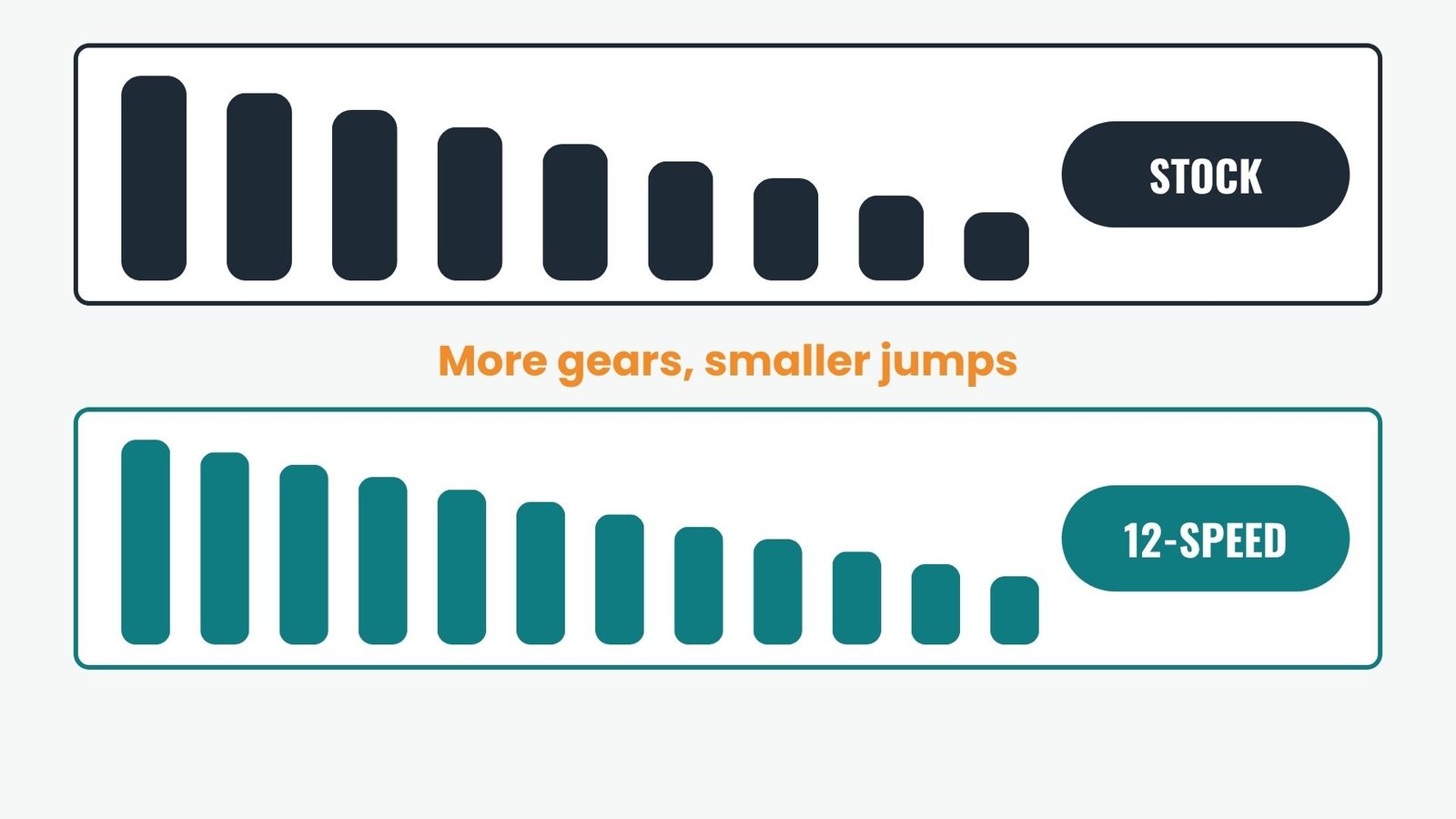
You have a Shimano Deore 1×10 drivetrain, including an 11-46 cassette on gen 2. So, it’s already providing you with a good gear range for everyday riding and climbing.
However, when your cassette, chain, or other parts wear out, you can consider upgrading to a 12-speed system instead of replacing everything with another 10-speed setup.
These are some options that I found really helpful:
SRAM SX Eagle Rear Derailleur (12-Speed)
Entry-level SRAM Eagle 12-speed rear derailleur.
SRAM SX Eagle Trigger Shifter (12-Speed)
Matching 12-speed trigger shifter with discrete clamp.
SRAM PG-1210 11-50T 12-Speed Cassette
Fits a standard Shimano HG freehub body.
SRAM GX Eagle 12-Speed Chain (126 Links)
12-speed Eagle chain with PowerLock quick link.
The SRAM PG-1210 cassette is designed to fit a standard Shimano HG freehub body, which is what Trek lists on the stock rear hub.
This means you may be able to keep your existing rear wheel.
However, you still need to check the compatibility of the chain, chainring, derailleur, shifter and cassette before buying the complete setup.
Note: Shimano’s 12-speed Deore, SLX, and XT MTB cassettes generally use a Micro Spline freehub. They won’t fit directly onto the stock HG freehub.
Pre-2021 Marlin 7: When the Fork Money Goes Further Toward a Newer Bike
If you have an older Marlin 7, from 2017 to 2020, it comes with a 2x or 3x drivetrain, older brake specs, and non-tubeless wheels.
So, you can upgrade the contact points, like pedals, grips, and better tires and tubes.
But when it comes to the fork and wheels, I wouldn’t recommend spending money on those either because they’re very expensive. A fork alone may cost you $200 or $300.
So, if you’re investing that much money in an old bike, I would rather recommend buying a new bike. That’s a lot of money to spend on a bike that would barely sell for $400 in the used market.
When Upgrading Your Marlin 7 Is No Longer Worth the Money
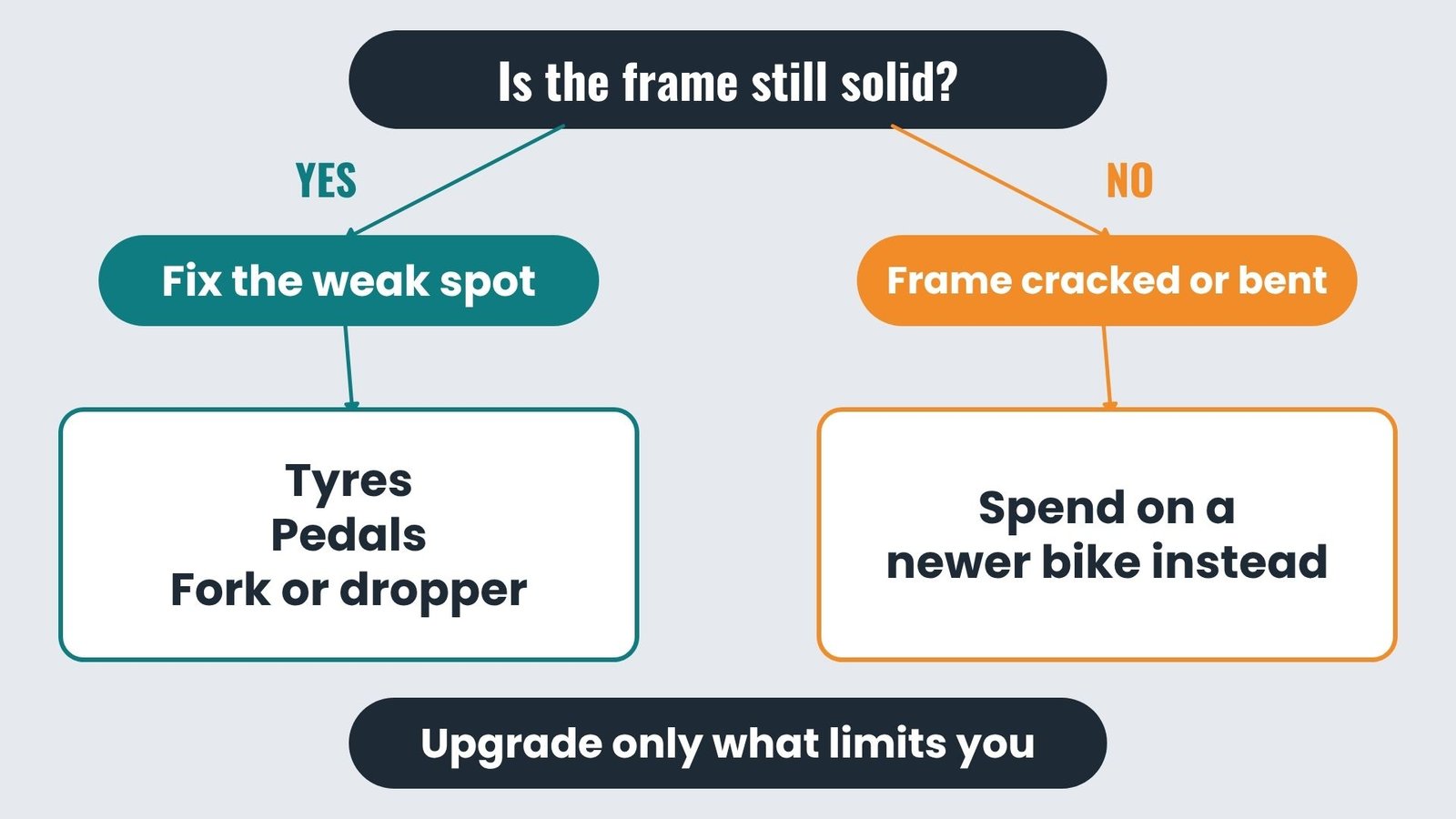
You already have an air fork and a dropper post, especially in the latest model. So, you can make small improvements, such as switching to tubeless tires, better pedals, grips, etc.
But spending $300 to $400 on a bike that would sell for only $400 to $500 in the used market, depending on its condition and a few other factors, would be a very bad decision in my opinion.
Instead, you should consider getting a new bike.
So, if your total upgrade cost is going to be approximately $500, I would recommend comparing that cost with the price of a new and more capable mountain bike.
Common Questions About Trek Marlin 7 Upgrades
Does the Trek Marlin 7 have a tapered or straight head tube?
Same on every gen, the Marlin specifies a 1-1/8″ semi-integrated headset across the full Marlin lineup.
What fork fits the Trek Marlin 7?
A straight 1-1/8″ steerer and 9x100mm quick-release front axle on every generation.
Max travel is 120mm on Gen 3, and Trek’s axle-to-crown limit for M and larger frames is 540mm.
The RockShox Recon Silver RL and Manitou Markhor in straight/QR spec are the most commonly used options. A thru-axle fork or a Boost-spacing fork will not fit without also buying a new front wheel.
Is the Trek Marlin 7 tubeless-ready?
Gen 3 (2024 to 2026): yes, the Bontrager Kovee rims and Maxxis Rekon tires are tubeless-ready from the factory.
We will have to add sealant and tubeless valves, plus rim tape if your specific retail build didn’t include it.
But you won’t find that on Gen 2 (2021 to 2023). The stock Connection 20mm rims are not TLR-compatible.
Can I upgrade the Gen 2 Marlin 7 drivetrain to 12-speed?
Yes, with SRAM, the Gen 2 rear hub has a standard Shimano HG freehub body.
What dropper post fits the Trek Marlin 7?
31.6mm diameter is suitable on every generation, if you have Gen 3 (2024 to 2026) it already ships with a TranzX dropper (100mm to 170mm of drop depending on frame size).
The Gen 2 has no internal dropper routing, so any externally routed 31.6mm dropper fits.
The Gen 3 MY2023 build came with a rigid post and does have internal routing available, so a standard internally-routed 31.6mm dropper fits there.
What is the maximum rear rotor size on the Trek Marlin 7?
180mm for XS through XXL frames, 160mm on XXS only.
Is it worth upgrading a Gen 2 Marlin 7 or should I sell it?
Depending on your total spending, if it stays under $300, you can go for it. But if it exceeds $300 and reaches around $400 or $500, then you shouldn’t upgrade the Marlin 7 Generation 2.