Disclosure: This post may contain affiliate links. As an Amazon Associate I earn from qualifying purchases.
One shop might recommend the Ergon GS1 Evo Small, while another suggests the Large size.
Then you check Ergon’s own size chart and find that both sizes meet exactly at 8.5 inches. So, which one are you supposed to choose?
This is a very common confusion when buying Ergon GS1 Evo grips. It gets even more confusing because some retailers list different sizes, such as S, M, L and XL.
What I recommend is that you measure your own hand and consider your comfort and preferences rather than relying entirely on glove sizes. After reading this post, you’ll have a clear idea of which option is better for you: the Small GS1 Evo or the Large one.
Ergon GS1 Evo Small or Large? The Short Answer
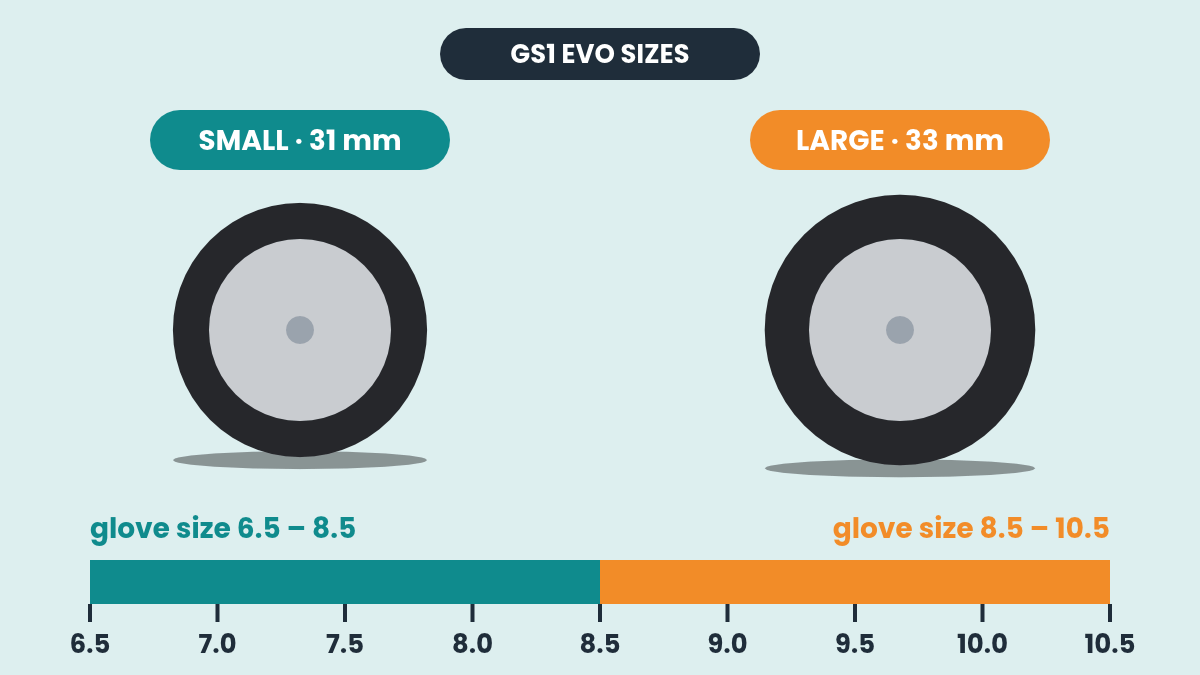
Ergon recommends the following sizes:
| Your hand circumference | Recommended GS1 Evo |
|---|---|
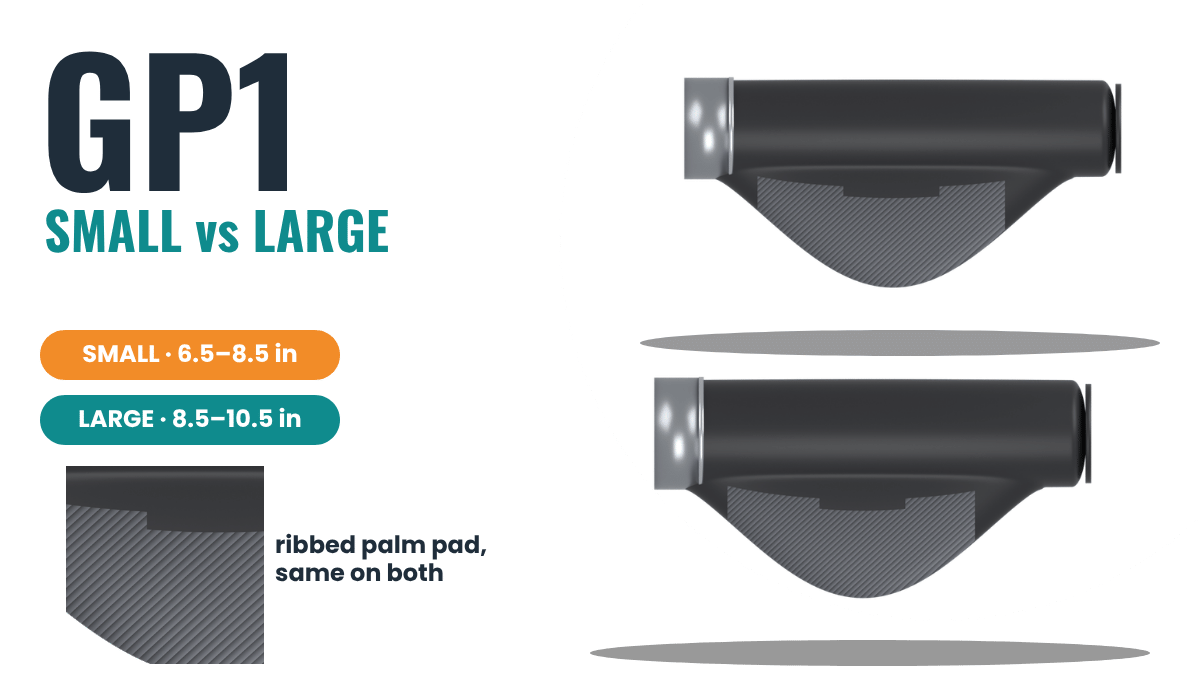
| 6.5–8.5 inches (about 16.5–21.6 cm) | Small |
| 8.5–10.5 inches (about 21.6–26.7 cm) | Large |
| Exactly 8.5 inches (21.6 cm) | Either may work; consider your riding preferences |
This measurement refers to the circumference around your hand, not the length from your wrist to your fingertips.
Besides this, the main difference between Small and Large is the thickness. The Small has a slimmer gripping surface, while the Large is thicker and recommended for people with bigger hands.
Ergon GS1 Evo grips, Small
Black. The standard version is for conventional shifters.
Ergon GS1 Evo grips, Large
Black. The standard version is for conventional shifters.
However, it’s also possible for a rider with small hands to feel more comfortable with the thicker version, while someone with bigger hands might prefer the slimmer one.
How Do I Measure My Hand Properly?
All you need is a measuring tape, like the one a tailor uses. It will help you measure your hand. Besides this, you can also check Ergon’s online tips at…
Soft measuring tape
Flexible 2-pack, 60 in / 150 cm, for measuring around your knuckles.
Measuring your hand in five steps
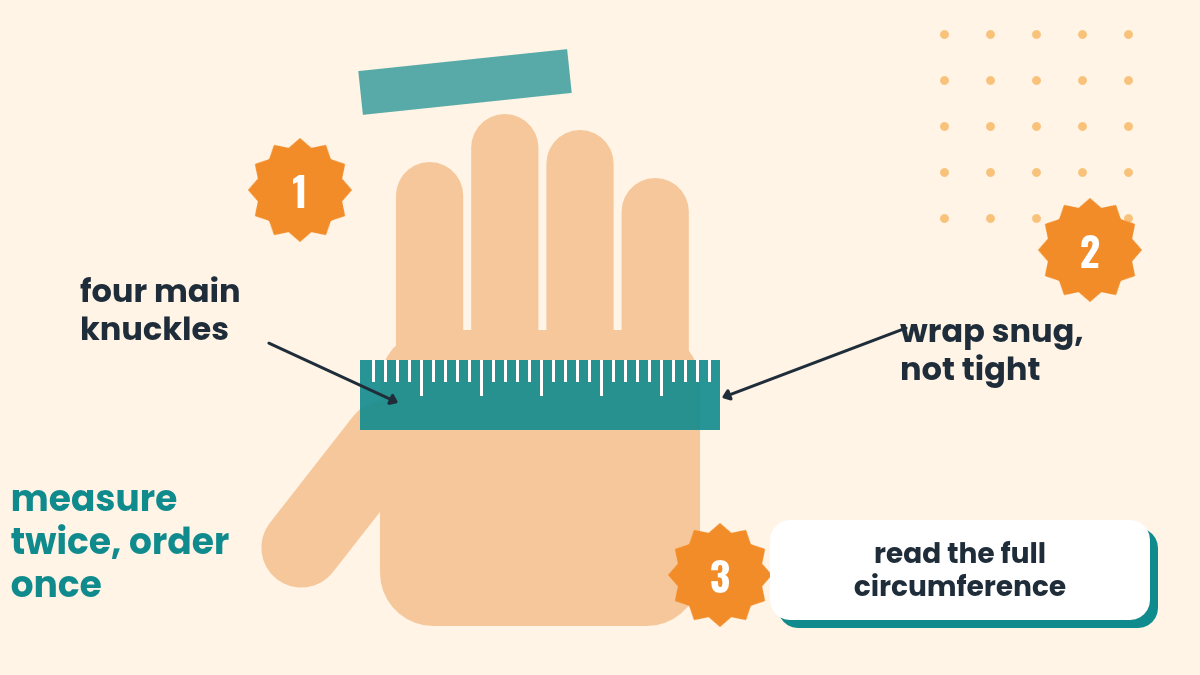
- Open your hand naturally: Keep your fingers together without stretching them apart.
- Find your four main knuckles: These are where your fingers join your palm, not the joints halfway along your fingers.
- Wrap the tape around that area: Run it around the hand near the knuckles, leaving your thumb outside the measurement.
- Keep the tape comfortably snug: It should follow your hand without compressing the skin.
- Record the full circumference: Repeat the measurement to make sure the result is consistent.
If you measure 20 cm, you have 7.9 inches around the hand, which places you in Ergon’s Small range.
If you measure 23 cm, you’re approximately 9.1 inches, so you can buy the large one.
Measure both hands if possible. If one is slightly larger, consider the larger measurement alongside how each grip feels when holding and braking.
Why Do Glove Size Charts Give Different Answers?
This is the biggest source of unnecessary confusion when buying the GS1 Evo online.
One retailer might tell you that medium gloves mean Small grips. Another might include large gloves in the Small recommendation.
Both cannot be used as universal sizing rules.
So, here’s an example of the conflicting guidance found in retailer listings.
| Glove size | GS1 Evo retailer mapping | Another retailer’s GP1 mapping |
|---|---|---|
| XS | Not specified | Small |
| S | Small | Small |
| M | Small | Small |
| L | Large | Small |
| XL | Large | Large |
| XXL | Not specified | Large |
Notice how the recommendations disagree for someone wearing Large gloves?
The second chart also belongs to the GP1 rather than the GS1 Evo, so you shouldn’t treat it as an interchangeable size guide.
Even Ergon’s glove measurements can vary between its glove models and generations.
A rider could wear an XL glove yet measure within the Small grip range.
That’s why I wouldn’t order the GS1 Evo based on a glove letter alone.
What if you don’t have a measuring tape?
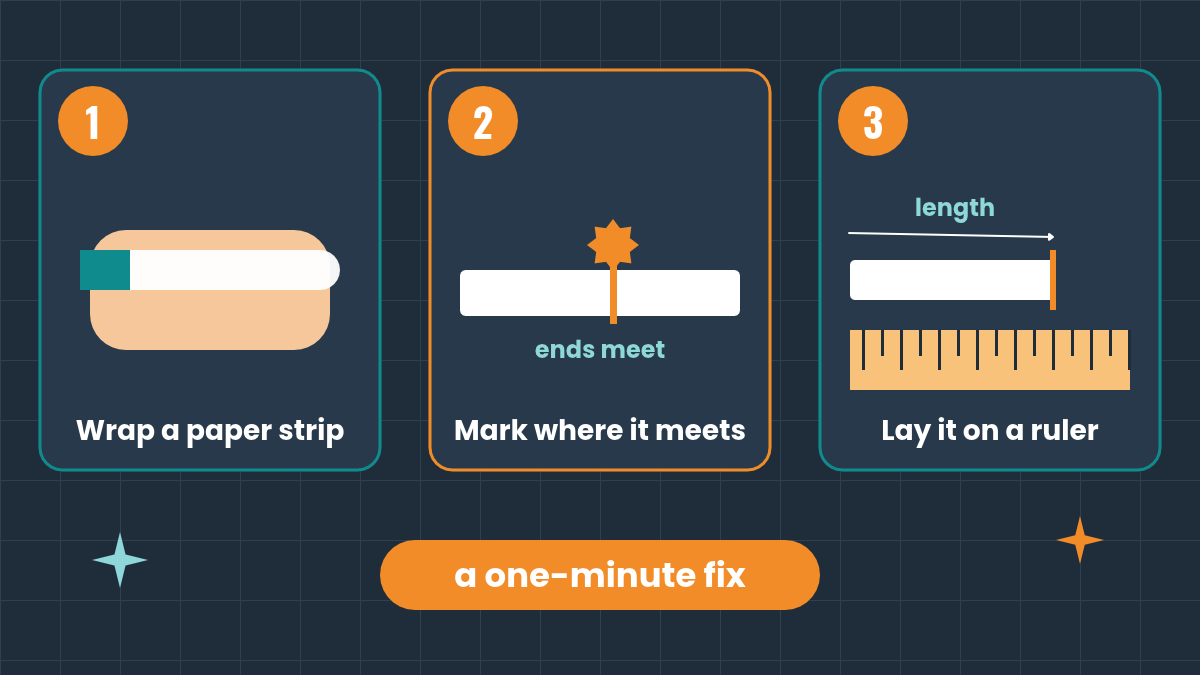
I recommend you use a narrow strip of paper.
Wrap it around the same four-knuckle area, mark where the ends meet, and measure the length against a ruler.
It will only take a minute, but it’s more useful than guessing based on whether your gloves say Medium or Large.
My Hand Measures Exactly 8.5 Inches, What Now?
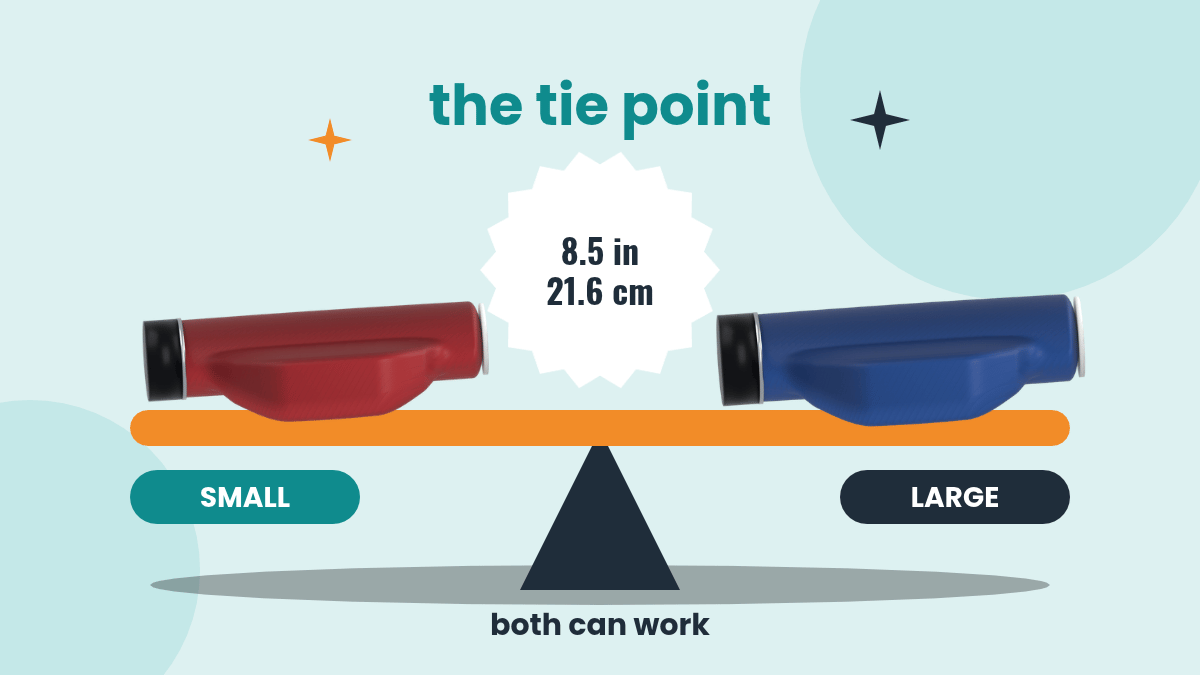
At 8.5 inches, both sizes fall on Ergon’s published boundary.
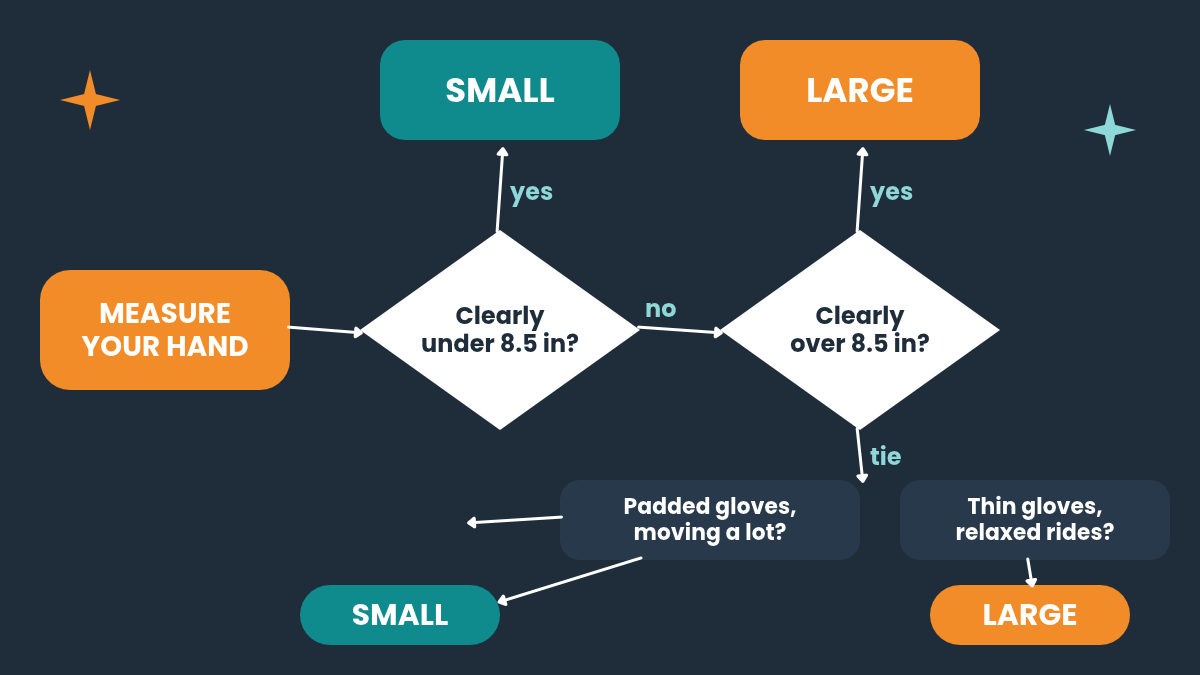
So, remember that your hand measurement gives you a starting point, but riding position and preferred grip thickness will influence how each size feels.
A slimmer grip lets your fingers curl farther around it.
A thicker grip fills more of your palm and changes how your fingers close around the handlebar.
Neither is necessarily better.
Here’s how I’d break the tie.
| Consider this | Lean toward Small | Lean toward Large |
|---|---|---|
| Cycling gloves | Thick or heavily padded gloves | Thin gloves or bare hands |
| Riding style | Dynamic MTB riding, frequent hand movement | Relaxed touring, commuting |
| Personal grip preference | You prefer a slimmer grip with more finger wrap | You prefer a fuller grip in your palm |
These are practical tie-breakers, not a replacement for Ergon’s size chart.
The guidance about padded gloves and dynamic riding also appears in retailer fitting recommendations. However, different riders can prefer opposite sizes even with similar measurements.
Do padded gloves really make a difference?
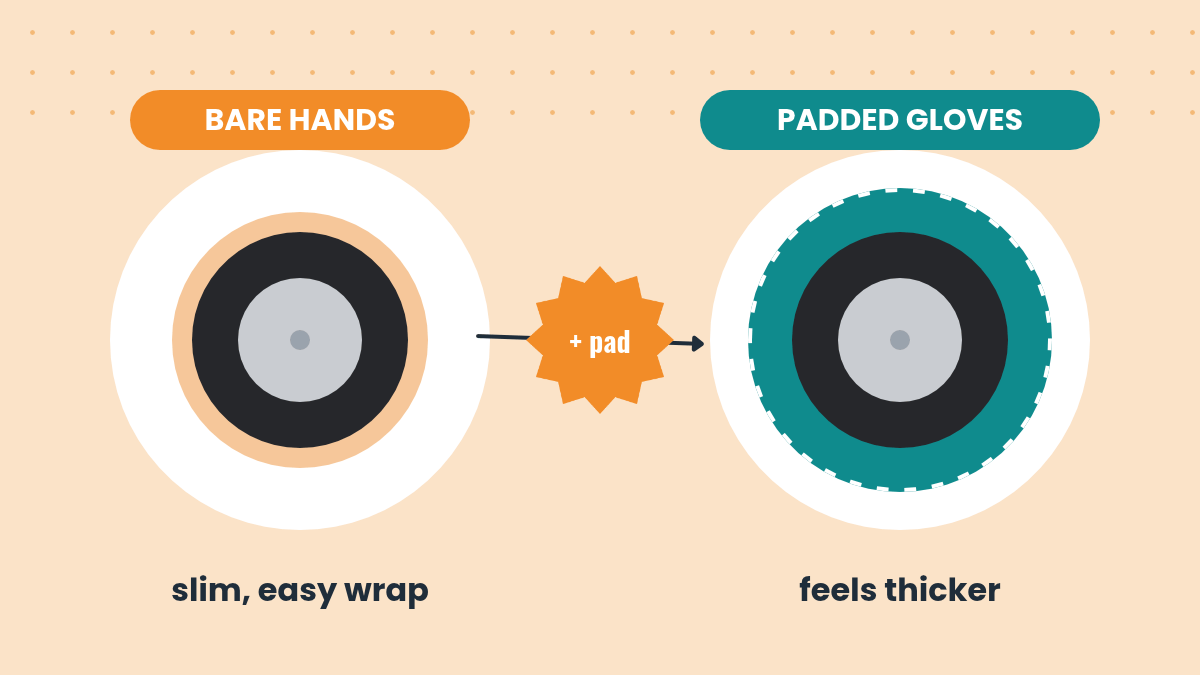
They can. Your actual hand circumference stays the same, but padding adds material between your hand and the rubber.
That can make a grip feel thicker than it does with bare hands.
A rider with an 8.5-inch hand who uses heavily padded gloves might prefer Small because the combination feels easier to hold.
Thin mountain bike gloves add very little bulk compared with heavily padded touring gloves. So, what matters is the thickness of the gloves you actually ride with.
What if Large feels more comfortable even though Small matches my measurement?
That’s possible too.
But whether you can maintain a secure grip and operate your brakes comfortably, without excessive stretching or awkward wrist positioning, is an important thing to consider.
If you can try both sizes in a shop, that’s the best option.
Owner experiences are useful here, but they aren’t as consistent as you might expect.
The reports identified during research point in several directions.
One rider with relatively small hands purchased both sizes and ultimately preferred Small. Other riders with medium-sized hands also reported choosing Small because the slimmer surface felt more natural.
On the other hand, some riders with smaller hands have preferred Large, particularly when they wanted a fuller gripping surface over rough ground.
A published GS1 Evo reviewer who normally wears XL gloves reported that Large fitted their hands very well.
So, even though the size chart gives you a clear starting point, riders don’t always agree about which size feels best.
There’s a reason for that.
Hand circumference doesn’t tell you everything about finger length, palm shape, grip strength, or how you hold your handlebar.
Two riders with an identical circumference might have quite different preferences.
I also came across an informal forum claim suggesting that Small accounts for a large majority of US sales. However, there was no verifiable sales data supporting that figure, so it wouldn’t be responsible to use it to recommend Small.
The owner accounts above are individual experiences, not results from a controlled test or an owner survey conducted by this website.
What I’d take from those reports: Don’t use somebody else’s glove size as proof that a particular GS1 Evo size will fit you. Their riding style and hand shape may be quite different from yours.
Will the Large GS1 Evo Crowd My Brake Levers or Shifters?
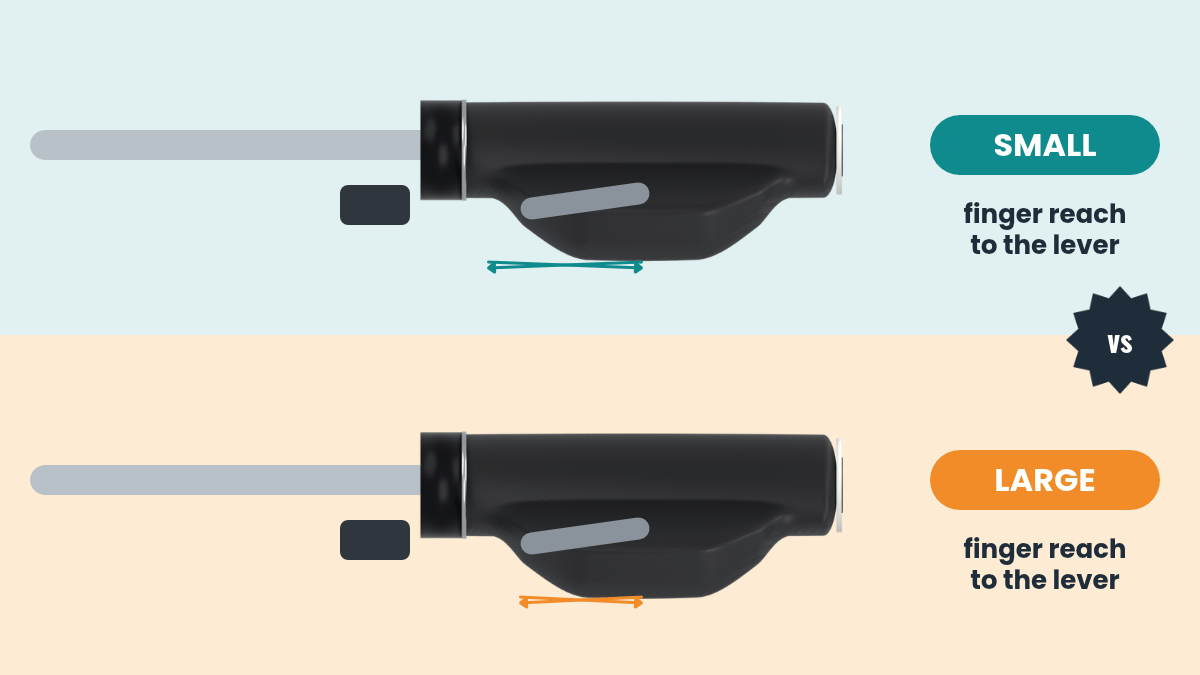
Choosing Large doesn’t mean you’re installing a longer grip. Small and Large grip sizes differ in thickness, not length or wing dimensions.
That means the Large GS1 Evo shouldn’t automatically take up additional handlebar width simply because it’s Large.
There is still another thing to pay attention to: how easily your fingers reach the brake levers when holding a thicker grip.
A larger diameter changes your finger position slightly. For riders, especially those with shorter fingers, that may make a difference to how comfortably they reach and control the brakes.
You might also notice that the wing changes where your palm naturally settles.
Check these three things after installation
- Brake lever reach: Hold the grip in your normal riding position and check whether you can operate the brake levers without stretching your fingers. Adjust lever reach where your brake model allows it.
- Wing angle: Rotate the ergonomic wing until it supports your palm without forcing your wrist into an uncomfortable position.
- Lever and shifter position: Make sure neither control interferes with your fingers or requires you to change your natural grip.
Set the wing to a natural wrist angle and specify a 3 Nm clamp-bolt tightening torque for the documented version. So, you should always follow the instructions supplied with your particular grips.
The standard GS1 Evo is designed for conventional shifter setups. If your bike uses a twist shifter, you need to look for the appropriate dedicated GS1 Evo twist-shift version.
If you’re worried about clearance, you should check the grip and control arrangement before ordering.
Small vs Large for Trail Riding, Touring and E-Bikes
The GS1 Evo is designed for more than one type of cycling. Ergon places it in categories including fitness riding, touring, MTB touring and e-touring.
The correct size still depends on your hand, but the way you use the bike can help you decide when you’re between sizes.
For mountain biking and rough trails
I’d recommend Small for a rider sitting on the size boundary who frequently moves around on the bike.
A slimmer grip may be easier to hold when you’re shifting your weight, standing over rough ground, or repositioning your hands.
However, the GS1 Evo is primarily an ergonomic comfort grip. For particularly aggressive riding, whether you want a large supporting wing at all may be a more important decision than choosing Small or Large.
For bikepacking and longer touring rides
You will spend hours holding the same handlebar position, especially on forest roads, gravel routes, or less technical trails.
That doesn’t mean Large automatically reduces hand fatigue.
So if your hands are small, the thicker grip will make it harder to hold the bar comfortably, so choosing Large for extra support could have the opposite effect.
Choose the grip thickness that allows a secure, relaxed hold, then adjust the wing to suit your riding posture.
E-bike riders often spend more time in a consistent, upright riding position, although this varies between commuting e-bikes and e-MTBs.
At the 8.5-inch boundary, Large may appeal to riders who prefer a fuller grip for relaxed commuting.
For an e-MTB used on rough trails, Small may feel more natural if you frequently change your hand position.
Again, these are preferences worth considering, not strict rules based on the type of bicycle.
What Should You Check Before Ordering?
Before paying for either size, check the actual product listing.
Small and Large look similar in photographs, and some shops combine both sizes into one.
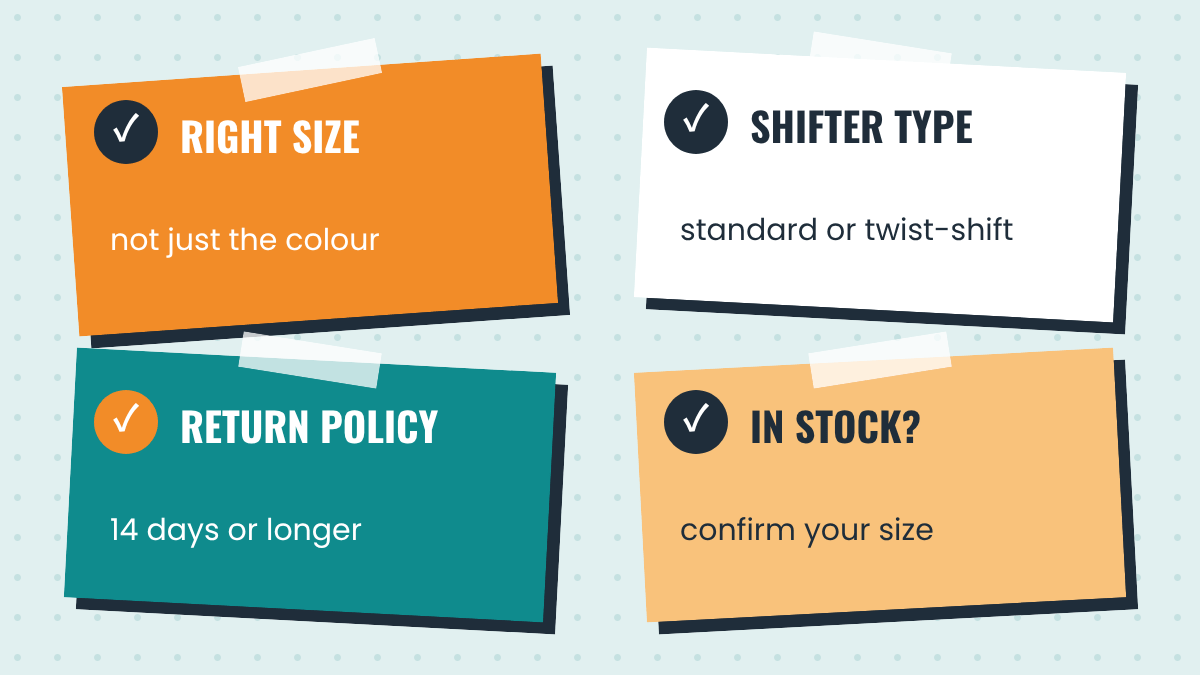
I’d check the following:
- Correct size selected: Small or Large, not just the color.
- Shifter version: Standard or the appropriate twist-shift variation.
- Return policy: Some retailers allow 14 days, while others offer longer return windows. Installed or used components may have different return conditions.
- Actual availability: Confirm that your chosen size is in stock rather than assuming both are available.
If you’re exactly between sizes and a shop allows you to compare them before installation, buy from them.
Is there much difference in weight?
Not enough to make weight the main reason for choosing a size.
Here’s the difference:
| GS1 Evo size | Listed weight per pair |
|---|---|
| Small | 160 g |
| Large | 180 g |
That makes the listed difference roughly 20 g between Small and Large.
For an ergonomic grip, I would prioritize comfortable finger placement and control over a small weight saving. What we couldn’t confirm: A few technical measurements weren’t consistently available in the information checked for this guide.
Some owner discussions mention approximate grip circumferences of 9.5 cm and 11 cm. Older Ergon documentation for other grip models also contains figures around 92 mm and 102 mm.
Those numbers shouldn’t be transferred directly to the GS1 Evo without confirmation.
They may refer to different grip models, measurement positions, or methods.
The GS1 Evo’s winged shape also means the grip isn’t a uniform cylinder, so a single thickness figure wouldn’t describe every point of contact.
For now, the confirmed distinction is that Large has a thicker gripping surface, while the grip length and wing dimensions remain unchanged between sizes.
FAQs
Should I buy the Ergon GS1 Evo Small or Large?
Small is recommended for hand circumferences from 6.5 to 8.5 inches, while Large is recommended from 8.5 inches upward. So you should measure your hand around your four knuckles, excluding the thumb, before choosing.
What GS1 Evo size should I get if I wear medium gloves?
Medium gloves often correspond to Small GS1 Evo grips in retailer charts. However, that isn’t universal. Your hand circumference is more useful than the glove label, especially if you wear different glove brands.
Can I use Large if I have small hands?
You can prefer Large even when your measurement falls within the Small range, but that doesn’t guarantee a good fit.
Do cycling gloves change which size I need?
Gloves don’t change your hand measurement, but thick padding can make the grip feel larger.
Do GS1 Evo Small and Large have the same wing size?
Yes, Ergon’s general grip-sizing guidance confirms that Small and Large differ in gripping thickness, not wing size or length.
Choosing Large doesn’t mean you’re getting a bigger palm-support platform.
How much do the Small and Large GS1 Evo grips weigh?
As per retailer specifications, 160 g for Small and 180 g for Large per pair.
What if I order the wrong size?
Check the seller’s return and exchange policy before purchasing.
Some shops won’t accept grips once they’ve been installed or used.
If you’re uncertain, a local bike shop that allows you to hold both sizes before buying is the safest option.
So, Which Size Would I Choose?
You should follow Ergon’s circumference chart.
If your measurement is clearly below 8.5 inches, get the Small, and if you’re above the boundary, get the Large one.
That’s the difference that should guide your purchase.