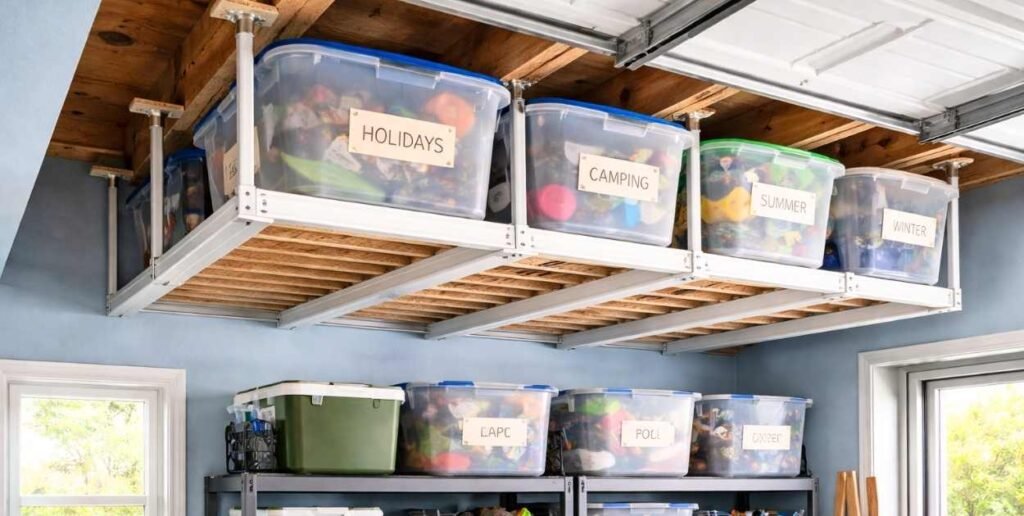
My aunt has a garage that is not too huge; two cars go in, but between those cars, she was losing a serious amount of floor space to her youngest daughter’s toys, seasonal stuff, and just general overflow.
Then she started using the overhead space, and the floor situation actually got manageable.
That is the short version of why small overhead garage storage ideas DIY projects are worth thinking about, even before you feel desperate.
The core idea is simple: most garages waste everything above your head. In a tight space, that overhead zone, basically anywhere from 7 feet up to the ceiling joists, is the only real storage expansion you have left without building outward.
You can tackle this with a plywood loft platform, a ceiling-mounted bin rack, a pulley lift system, or even just a simple beam-and-hook setup for bikes and long items.
None of these needs a full workshop or a big budget.
My aunt did most of hers with a drill, some lag screws, and two weekends; she also keeps changing that.
What Goes Up There and What Does Not
Before you build anything, it is important to know what actually makes sense to store overhead.
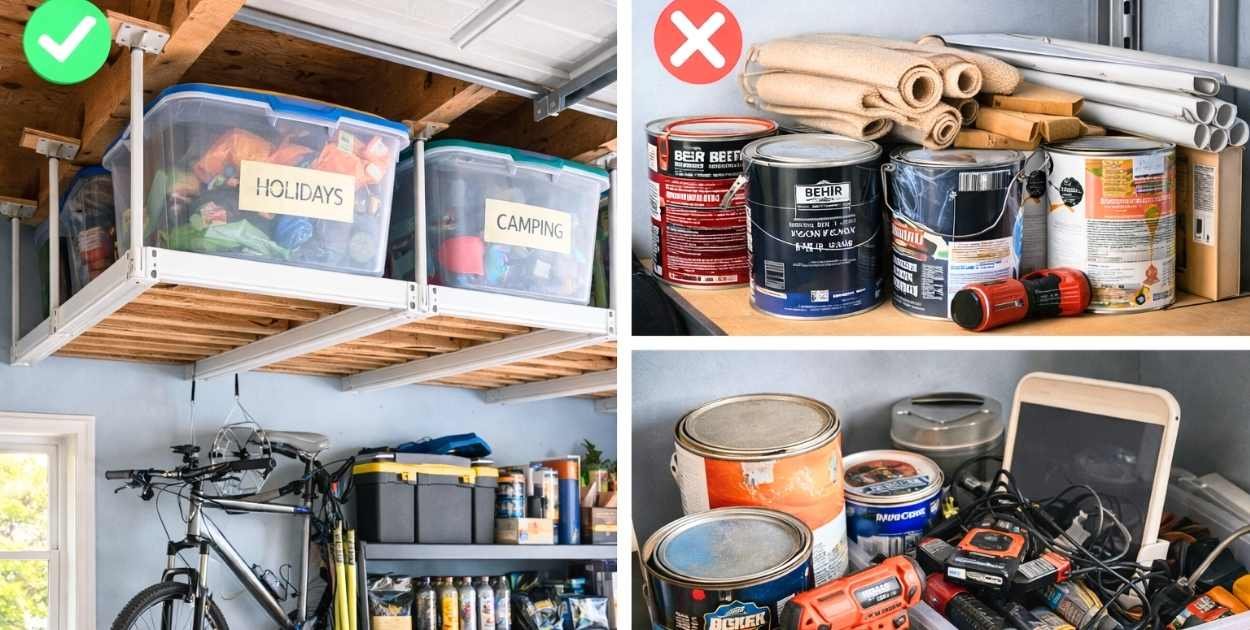
Good candidates for overhead storage:
- Holiday decorations. Used once or twice a year, not heat-sensitive if stored in sealed plastic bins, and easy to label.
- Off-season sports gear like cricket bats, camping chairs, and folded tent bags. Light, irregular shapes that eat floor space.
- Bikes, if you use a pulley or hook system. Keeps them totally off the floor.
- Large plastic storage bins with lids. Sealed bins protect contents and stack well on a loft shelf or ceiling rack.
- Rolled rugs, spare lumber, long PVC pipes. Items that have no flat place to live on the floor anyway.
Things to keep off the ceiling:
- Paint cans and anything with solvents. Garages get hot, especially in Indian summers, and heat degrades paint and causes pressure buildup in cans.
- Electronics, batteries, or anything moisture-sensitive. If your garage has humidity swings, overhead storage is not climate-controlled.
- Heavy power tools or anything over the weight limit of your setup. This is a real ceiling, not just a guideline.
- Items you need weekly. If you are climbing up for something every few days, find a lower home.
How High Should Overhead Storage Be
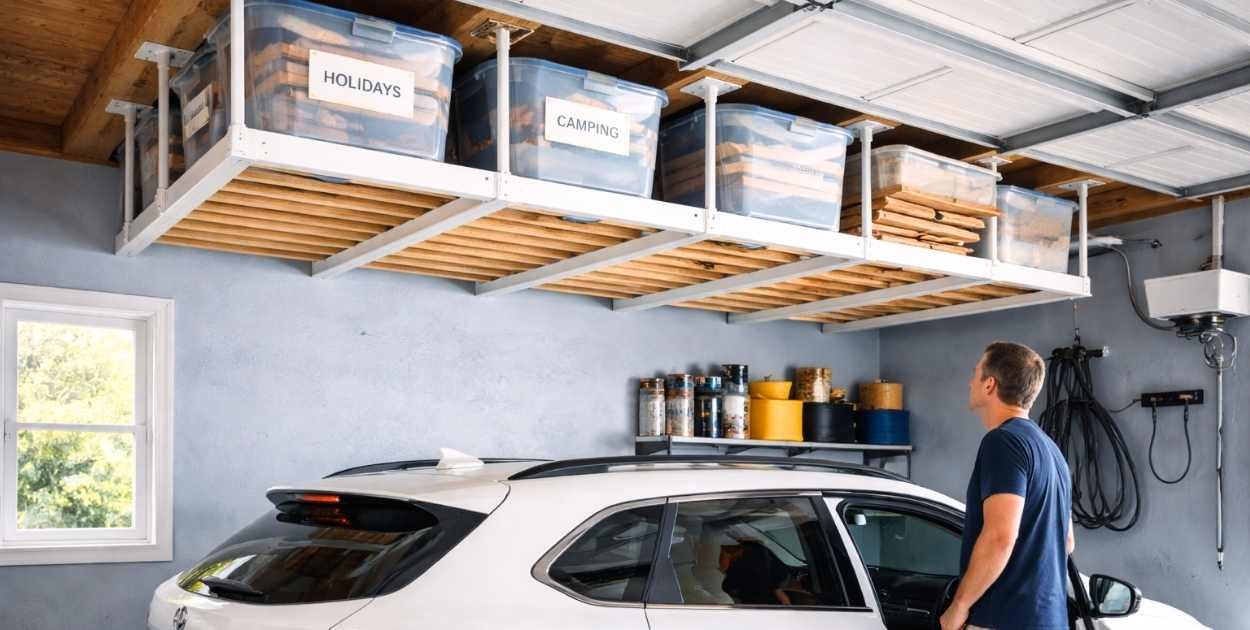
The minimum height for overhead storage in a garage where a car parks underneath is 7 feet from the floor to the bottom of whatever you are hanging or building.
That is the bare minimum so the car door can open, and you do not knock your head on a bin while walking past.
The ideal range is 8 to 9 feet from the floor to the bottom of the storage.
That gives you comfortable clearance over the car roof (which typically sits around 5 to 5.5 feet) and some buffers, so you are not ducking constantly.
If your garage has an 8-foot ceiling, you have less working room than you think.
A plywood loft at 7 feet leaves you one foot of shelf depth before you hit the ceiling.
In that case, a ceiling-mounted bin rack or a pulley system makes more sense than a full loft, because you are working with the ceiling rather than building a shelf inside it.
Five DIY Overhead Storage Ideas That Work in Small Garages
1. Ceiling-Mounted Bin Rack
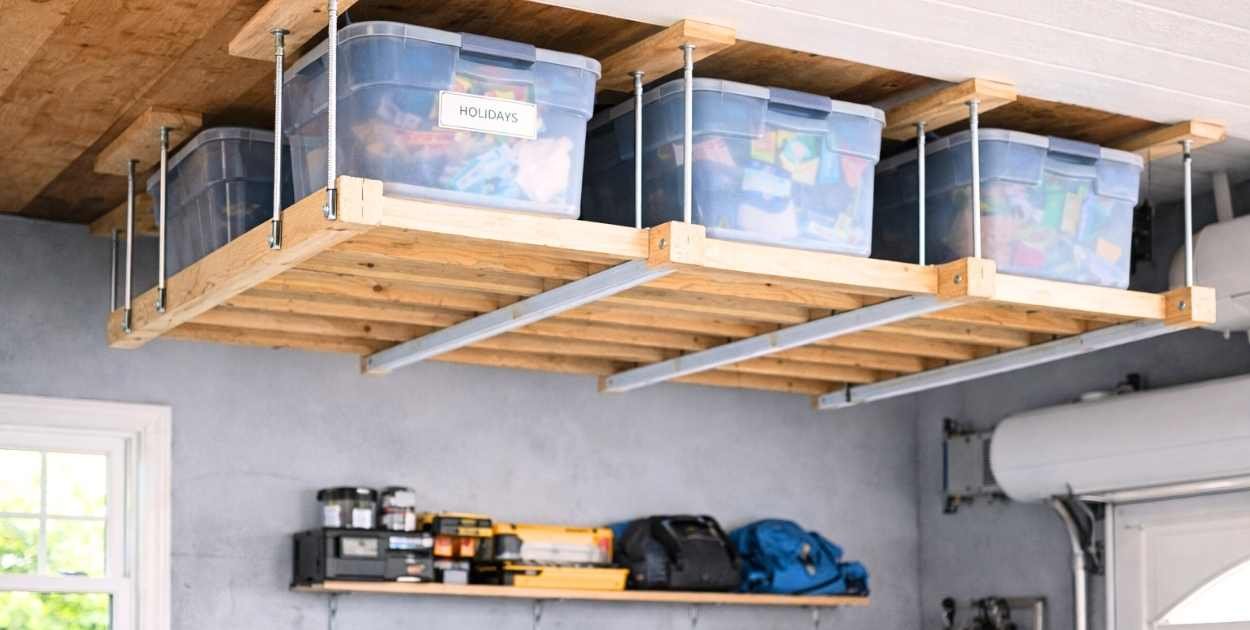
This is the easiest starting point and what my aunt prefers first.
The basic idea is two sets of parallel boards hung from the ceiling joists, spaced so that storage bins can rest across them like a shelf in mid-air.
What you need:
- 4 pieces of 2×4 lumber, length depending on how many bins you want to store
- Threaded rods or heavy-duty eye bolts with carriage bolts
- A drill, a level, and a stud finder
- Washers and nuts rated for the load you plan to put up there
The basic build: find your ceiling joists with a stud finder, mark them, drill up through each joist position, run threaded rods down through the 2×4 boards, and lock them in place with washers and nuts above and below the boards.
Space your two parallel boards about 18 inches apart so a standard storage bin can rest across both of them without tipping.
The weight limit for a properly built ceiling rack into solid joists is usually 200 to 250 lbs total, though you should always load it gradually and check for flex before fully committing.
My aunt started with one row of holiday decoration bins and added a second row a month later once she was confident in the build, and now she doesn’t have this one.
2. Simple Plywood Loft for a Corner or Side Area
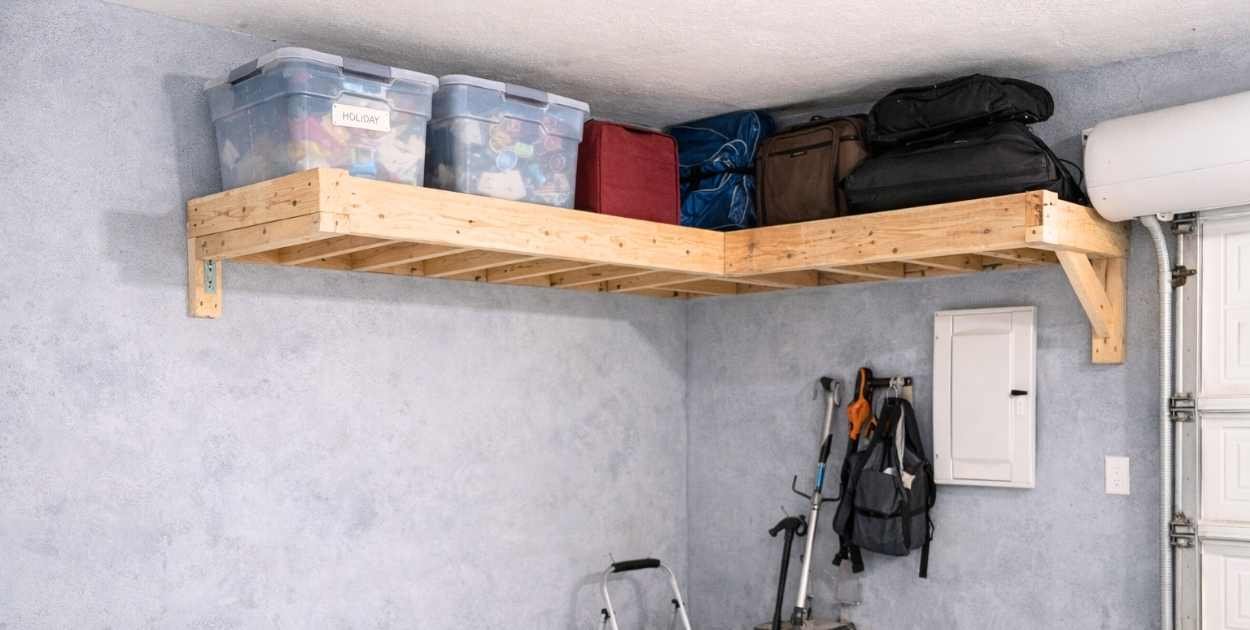
If your garage has a ceiling height above 8 feet, you can build a small plywood loft along one side wall rather than spanning the whole ceiling.
A partial loft over one bay of a two-car garage, like over the area where you do not park, is actually more useful in a small space than a full ceiling platform because you can access it standing on the floor with a step stool.
Basic build sequence:
- Attach a ledger board (a 2×6 or 2×8) directly to the wall studs at your desired height using lag screws.
- Run 2×6 joists from the ledger board out to a parallel front beam, which is supported by vertical posts or hung from ceiling joists using joist hangers.
- Lay 3/4-inch plywood across the joists and screw it down.
- Add a lip board or safety rail along the open edge so bins do not slide off.
You do not need a circular saw for this if you ask the lumber yard to cut the boards to length when you buy them.
A drill and a handsaw for any small adjustments are enough for a beginner.
The whole thing can come together in a day.
3. Pulley Lift System for Bikes or Bulky Gear
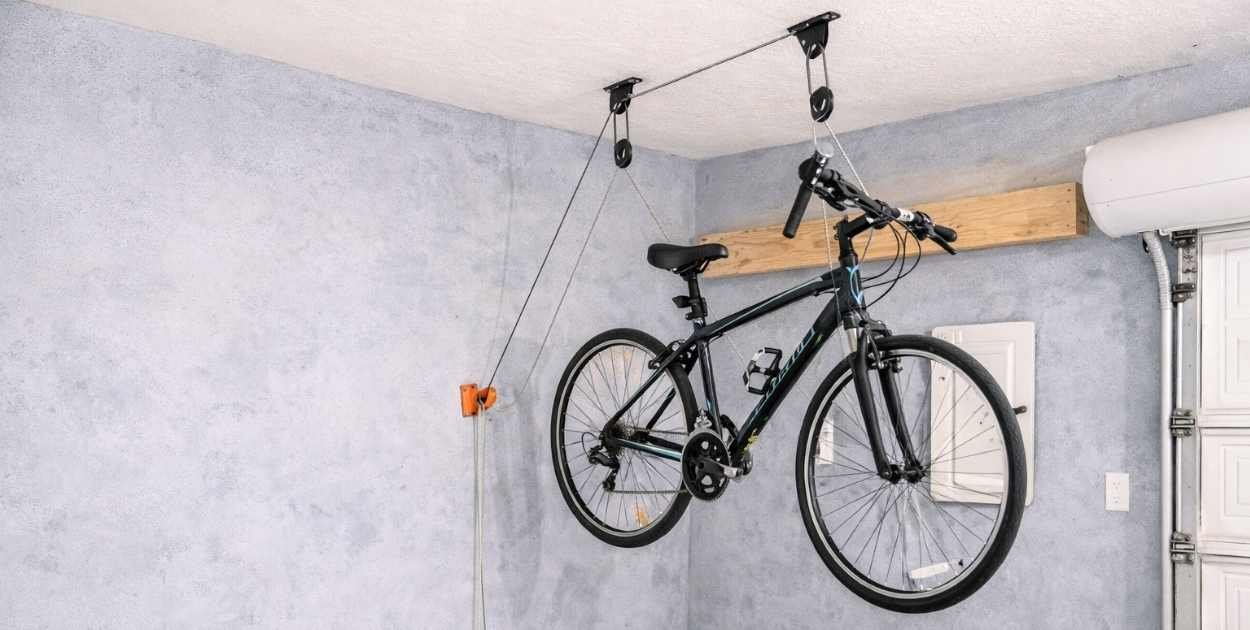
If bikes are your main problem, a pulley system is probably the most space-efficient solution in a small garage.
You mount a pair of hoisting hooks into the ceiling joists, attach a pulley and rope system, and then raise and lower the bike by pulling on a rope rather than lifting the bike manually.
There are ready-made bike hoist kits available for around $20 to $40 that come with everything, including ceiling anchors, pulleys, and a cleat to lock the rope off once the bike is up.
The install is just drilling two holes into a joist and screwing in the anchor bolts. It takes maybe 30 minutes.
The same idea works for kayaks, rolled-up mats, a stroller that is used monthly, or anything awkward and lightweight enough to hoist.
Always check that your ceiling joist can take the weight before you hook anything up.
A single 2×6 joist in good condition typically handles 50 lbs easily.
4. Wall-Mounted Overhead Shelf Along the Garage Door Wall
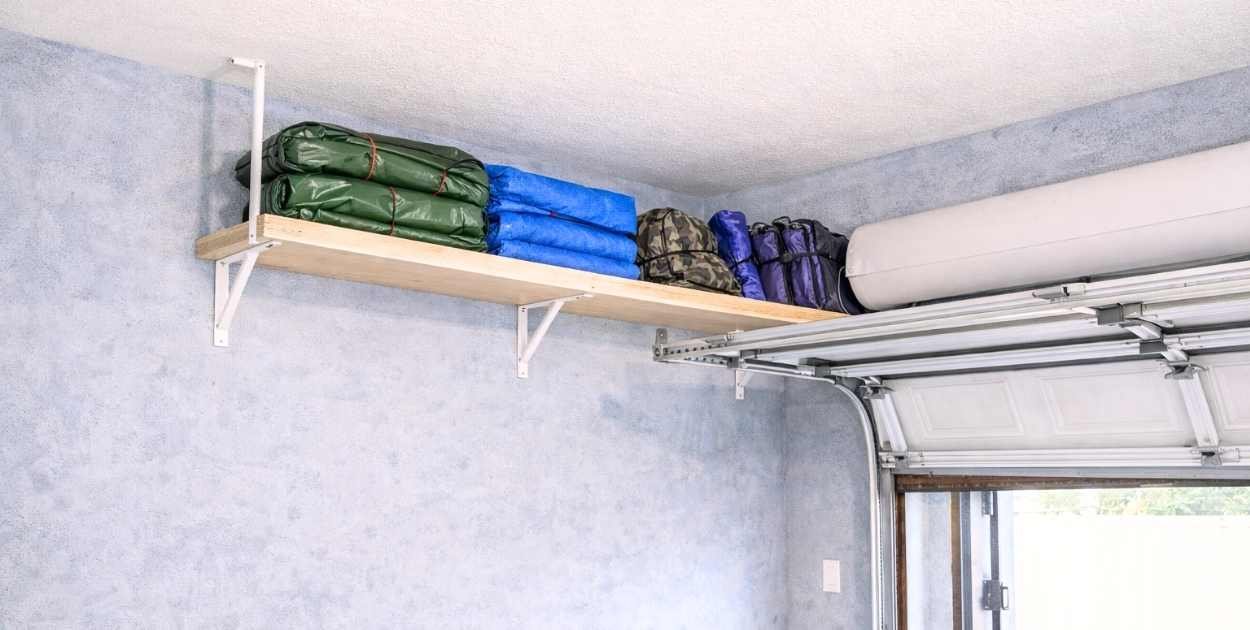
The wall above the garage door is often totally wasted.
The garage door tracks run along the side walls, but the back section of the wall directly above the door panel, once it is open, is clear.
You can mount a simple bracket shelf there at ceiling height and store flat items like folded tarps, folded cots, or long bags of garden stakes.
You just need two heavy-duty shelf brackets screwed into the wall studs and a plywood board cut to fit the space.
This takes maybe two hours and costs very little.
The only thing to watch: measure the clearance between the shelf and the top of the garage door when the door is in the open position.
You need at least a few inches so the door does not knock the shelf as it opens.
5. PVC Pipe or Conduit Racks for Long Items
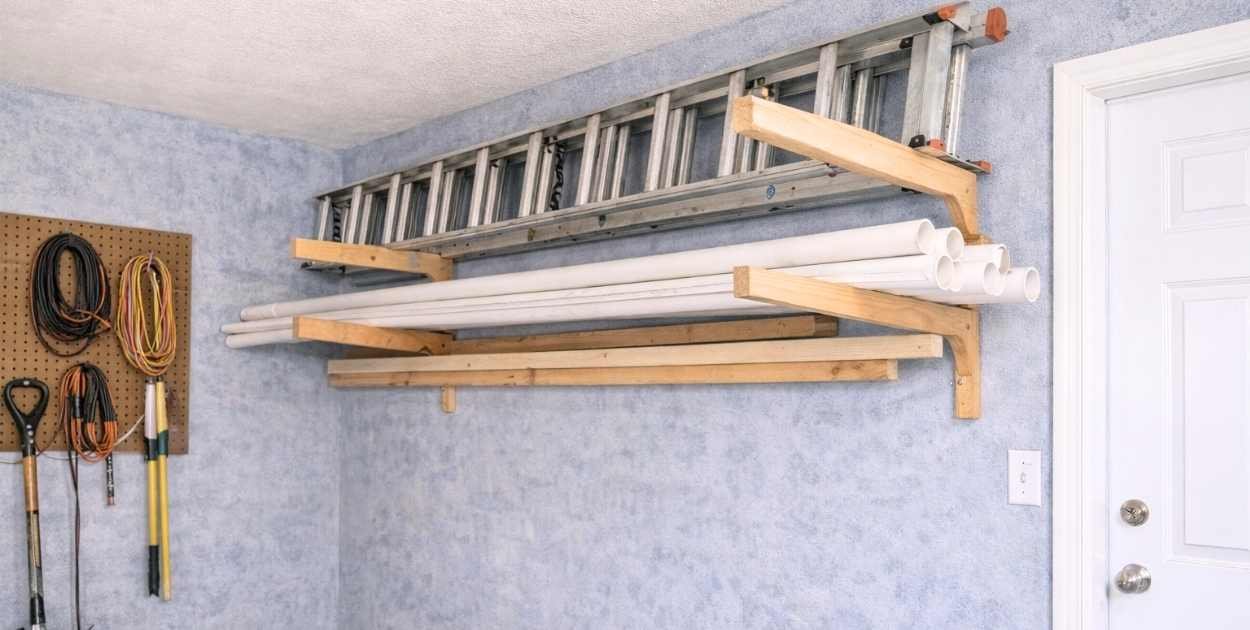
For storing ladders, long-handled tools, lumber, or pipes themselves, a simple overhead rack made from two sets of horizontal arms mounted on the wall works really well.
You mount 2×4 horizontal brackets into wall studs, spaced about every 4 feet, and just lay the long items across them.
No bins, no platform, no complicated hardware.
The items just rest there.
In a small garage, this often solves the problem of long things that have nowhere to lean or lie flat without blocking the car path.
My aunt uses a version of this for extension cords, a spare ladder, and some seasonal poles.
Safety Rules You Cannot Skip

Every overhead storage guide mentions safety in passing. Here is what actually matters in practice.
- Always anchor into structural ceiling joists, not just drywall or plywood sheathing. Drywall alone cannot hold weight overhead. Use a stud finder and verify you are drilling into solid wood before you trust anything to it.
- Use hardware that is rated for the load. Lag screws, carriage bolts, and threaded rods should be sized for the weight you are putting up. When in doubt, go heavier on the hardware, not lighter.
- Test with half the load first. Before loading a new ceiling rack with everything you own, put half the planned weight up there for a few days and check for flex, creaking, or any movement in the fasteners.
- Keep kids out of the fall zone. My aunt has a young daughter, so the area directly under the ceiling storage is off-limits to her. There is nothing that needs to be directly under a loaded overhead rack when children are nearby.
- Sort out your ladder situation before you build. Think about how you will actually access the storage before you commit to a height. A fixed step ladder mounted to the wall nearby is genuinely safer than constantly moving a freestanding ladder around a garage with a car in it.
If Your Ceiling Is Low or You Cannot Make Permanent Changes
Most DIY guides assume you have a 9 or 10-foot ceiling and an unfinished garage with exposed joists.
Well, not everyone does. If your garage ceiling is around 7.5 to 8 feet, your options narrow, but do not disappear.
In a low-ceiling garage, the safest approach is a wall-mounted shelf or bracket system rather than anything hanging down from the ceiling itself.
You build storage along the walls at the highest reachable point, which keeps the ceiling clearance intact for the car.
The overhead zone above the car can still be used for bike hooks or a pulley system since those are fixed when not in use and do not hang low constantly.
If you are in a rental situation or just do not want to drill into the ceiling, the bike hoist systems and some ceiling rack kits use toggle bolt anchors that work in finished ceilings with adequate backing.
Read the load ratings carefully, go lighter on what you store, and accept the tradeoff. Not every solution is ideal for every space, and that is fine.
Wrapping Up
A small overhead garage needs a ceiling-mounted bin rack, a partial plywood loft, a pulley for bikes, or even a simple bracket shelf above the garage door wall; any one of these can open up meaningful floor space without major cost or skill.
The two things that actually make it work in a small space are anchoring properly into the joists and being honest about what really needs to live up there.
My aunt ended up with a garage where both cars fit, the toys have a place, and you can actually walk through without moving something out of the way first.
That is a good outcome for a couple of weekends of work.
If you are working with a low ceiling or a rental setup, keep the builds simple and reversible.
You will feel better about the space even if the solution is not perfect.
A Few Questions That Come Up a Lot
Can I do this if I only have a drill and no other power tools?
Yes, for most of these builds. The ceiling bin rack and the pulley lift system both need basically just a drill.
The plywood loft needs some cuts, but as I said, you can have the lumber yard pre-cut everything to your measurements when you buy.
That is what I would do even if I had a full set of tools.
What if I do not know where my ceiling joists are?
A basic stud finder from any hardware store will locate them.
They usually run every 16 or 24 inches. If you do not have a stud finder, you can tap along the ceiling and listen for a solid sound rather than a hollow one, then confirm with a small nail before you drill.
Joists in most garages run parallel to the shortest wall, but not always, so it is worth confirming before you commit.
Is it safe to store things overhead in a hot garage in India or similar climates?
Hot climates do make a difference.
Sealed plastic bins handle heat better than cardboard boxes, which can warp, attract pests, or just fall apart over time.
Anything heat-sensitive, like candles, crayons, electronics, or paint, should stay off the ceiling.
Textiles, sports gear, camping equipment, and similar items in sealed bins are generally fine even if it gets warm up there.
How do I make sure the bins do not fall?
A front lip board along any shelf edge is the simplest fix.
For ceiling-mounted racks specifically, using bins with handles that hook slightly over the rack rails adds some retention.
Do not overfill bins to the point where the lid is loose or the bin is top-heavy.
And label the bottoms of the bins with a marker so you can read what is in them without pulling them down every time.

Abraham is the creator of Mountain Bike Insider. He is a writer and researcher who enjoys mountain biking, working on DIY projects, organizing spaces, and testing ideas in real life. He focuses on clear and honest explanations based on experience and research, without pretending to be a professional expert.