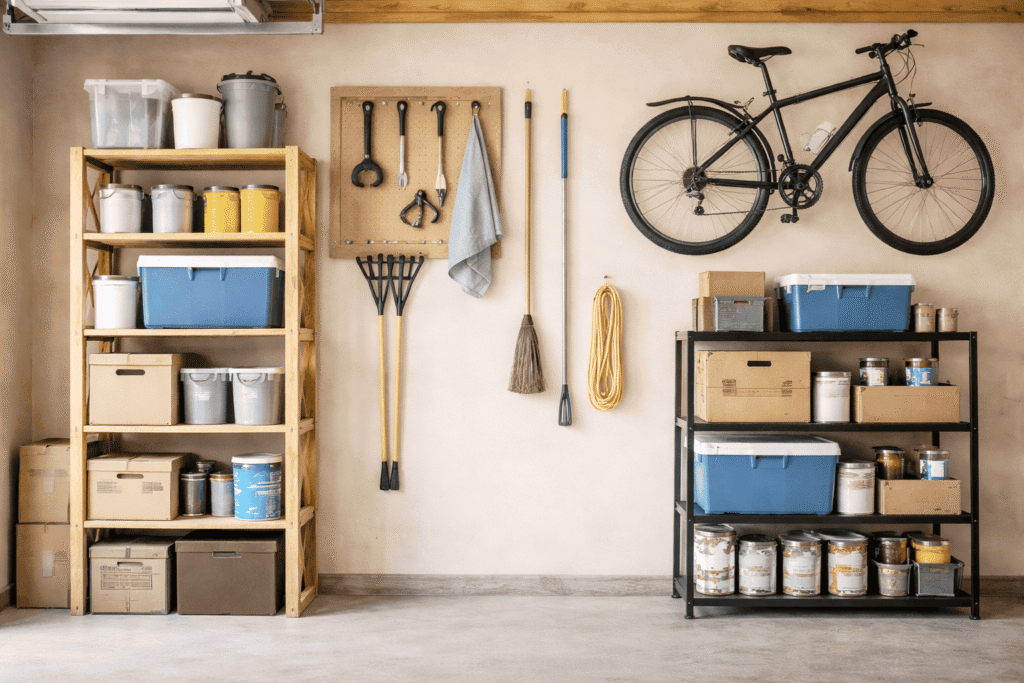
My aunt on my mom’s side has a garage that fits two cars and has a year of accumulated everything else.
She has tools her husband used twice, old paint cans, a bicycle, her daughter’s toys, and boxes from when they moved that still say “miscellaneous.”
When I was visiting, we spent a whole Saturday getting it organized.
No budget to speak of, so we worked with what was already there, old containers, a broken shelf we fixed up, cardboard boxes from a recent delivery (though we could spend money, and we have done it many times)
However, the garage looked good by evening.
So here is what I actually learned from that experience, and from going back and fixing it again with a different approach: cheap garage organizing ideas work when you stop trying to make the garage perfect and start making it harder to mess up.
That is the real answer, and everything below builds on it.
Key Takeaways: Sort everything into three zones (keep, donate, trash), then use vertical wall space and repurposed containers to store what stays. You can do this for under $20 or even $0 if you already have containers at home. The ideas below go deeper into each step.
1. Start With What You Already Have
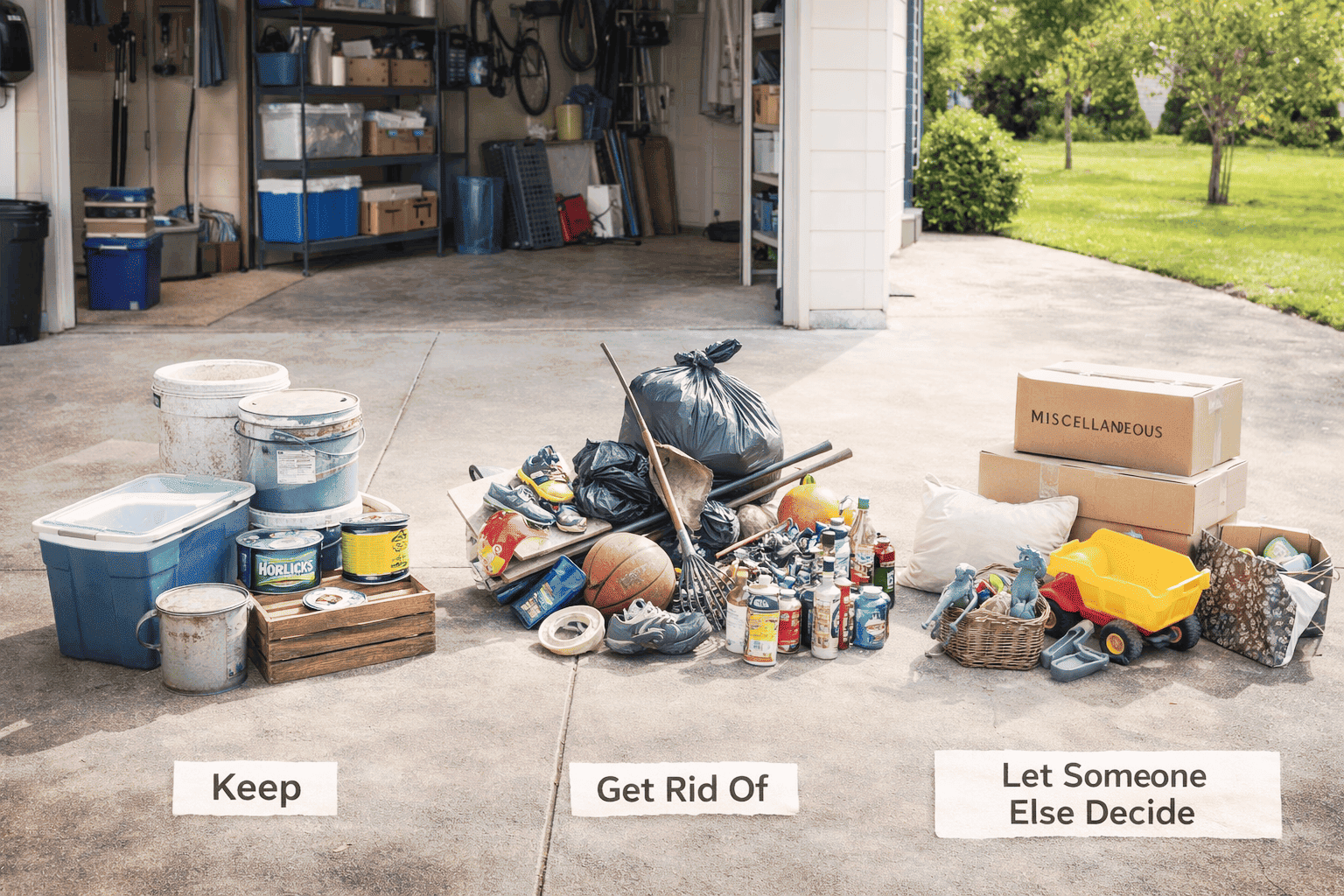
The first thing we did in my aunt’s garage was pull everything out and put it in three piles in the driveway.
Keep, get rid of, and “let someone else decide” (which is honestly where the real junk lives).
It sounds basic, but there is no point in organizing things you do not need.
Once we could see the floor, the garage looked bigger. And a lot of what we needed to store it better was already in the house.
My aunt had old paint buckets with lids, empty biscuit tins, a wooden crate that used to hold something from a gift set, and a bunch of plastic containers from bulk grocery shopping.
We used all of it.
The reason I say do this before buying anything is that most people go buy bins and hooks and then find out they needed different sizes, or they did not actually need that many, or the hooks do not work on their wall type.
Sort first. Then you know exactly what you are working with and what, if anything, is actually missing.
2. Go Vertical and Get Things Off the Floor
Floor space is always a problem in a small garage.
The moment you put one thing on the floor, it becomes a surface for six more things.
So the answer is to get things off the floor and onto the walls.
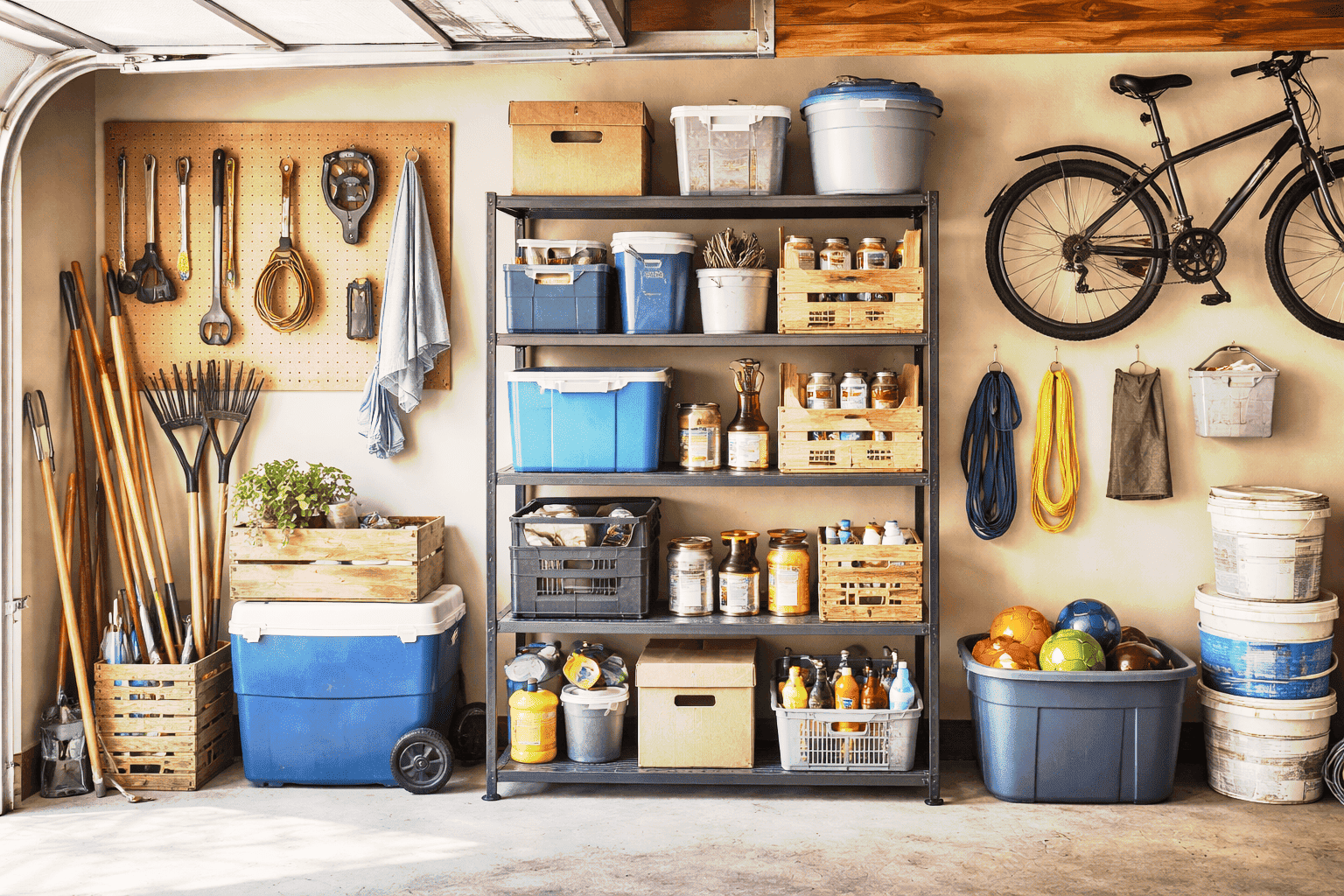
In my aunt’s garage, we used a mix of things:
- A secondhand wooden shelf unit we found in the back, cleaned it up, and stood it against one wall for heavier items
- A few large nails hammered into the wall studs for hanging tools, a broom, and a mop, no fancy hooks, just nails with wide flat heads.
- An old bicycle hook for the bike, so it stopped taking up floor space
- Stacked plastic containers on the shelf rather than scattered across the floor
If you rent and cannot drill into walls, freestanding shelves are the move.
Even a basic metal wire shelf unit from a hardware store runs around $25 to $40 and holds a surprising amount. You do not need to attach it to anything.
And if you truly have zero budget right now, stacking things vertically in sturdy cardboard boxes, clearly labeled, is still better than everything being flat on the floor. It is not pretty, but it works.
3. Use Repurposed Containers Instead of Buying New Ones
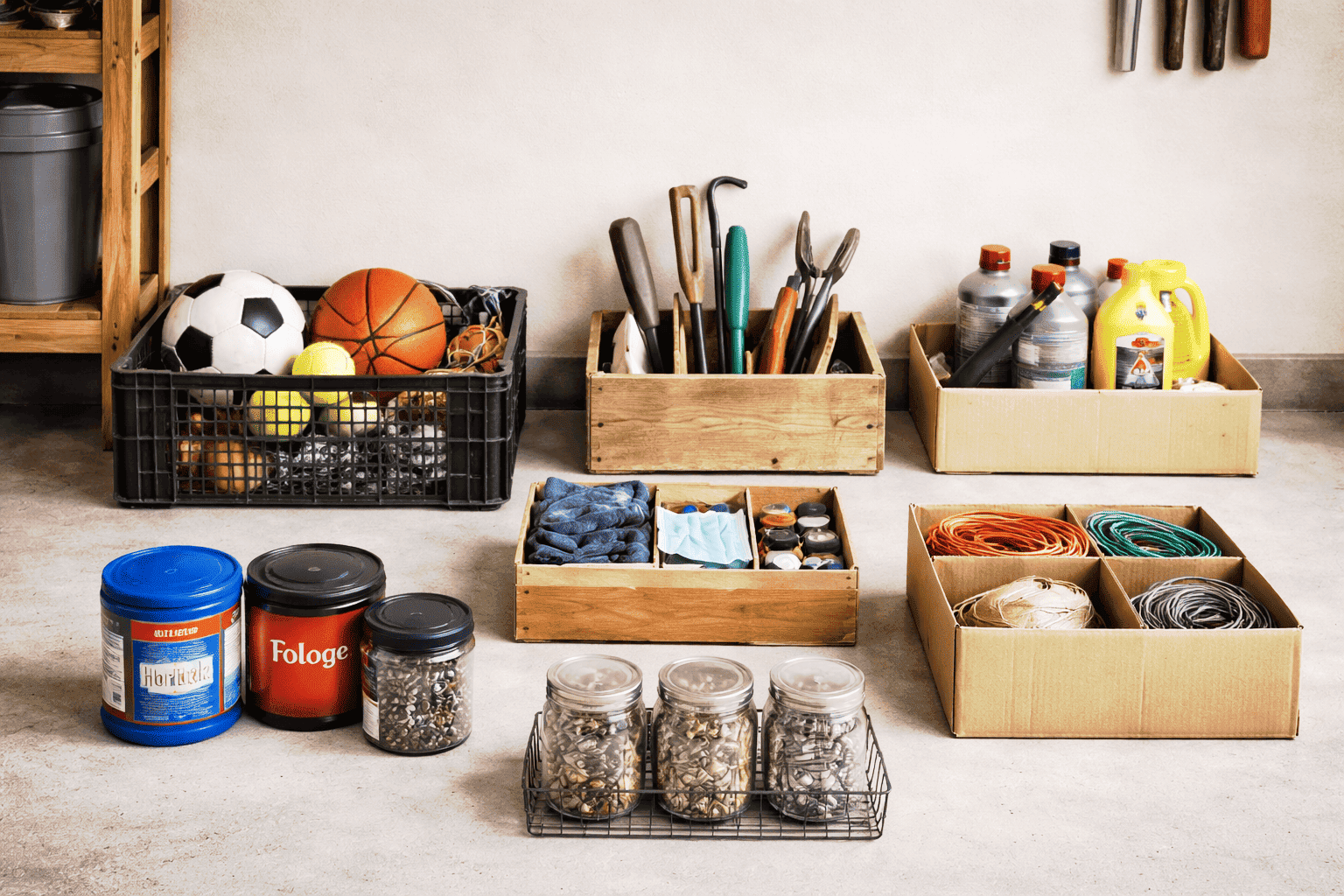
We used empty Horlicks containers for screws and small hardware.
We used an old wooden crate for garden tools standing upright.
We cut down a large cardboard box to make a shallow tray for oil cans so they would not roll around.
The thing about repurposed containers is that they are already the right size for your stuff because you picked them based on what you needed to store.
A bought bin is a standard size that may or may not work. An old ghee tin that perfectly fits extension cords and has a lid is just better.
Some containers worth hunting for at home:
- Large plastic coffee containers or protein powder tubs for small hardware
- Milk crates for sports equipment or bulky things
- Old shoe boxes (double them up so they hold weight) for categories of small stuff
- Cardboard boxes from online deliveries, folded into dividers inside a bigger box
- Glass jars for nuts, bolts, nails, you can see what is inside without opening
Label everything. Even if you know right now what is in there, six weeks later, you will not remember, and whoever else uses the garage definitely will not check before dumping something in the wrong place.
4. Make Zones and Make Them Obvious
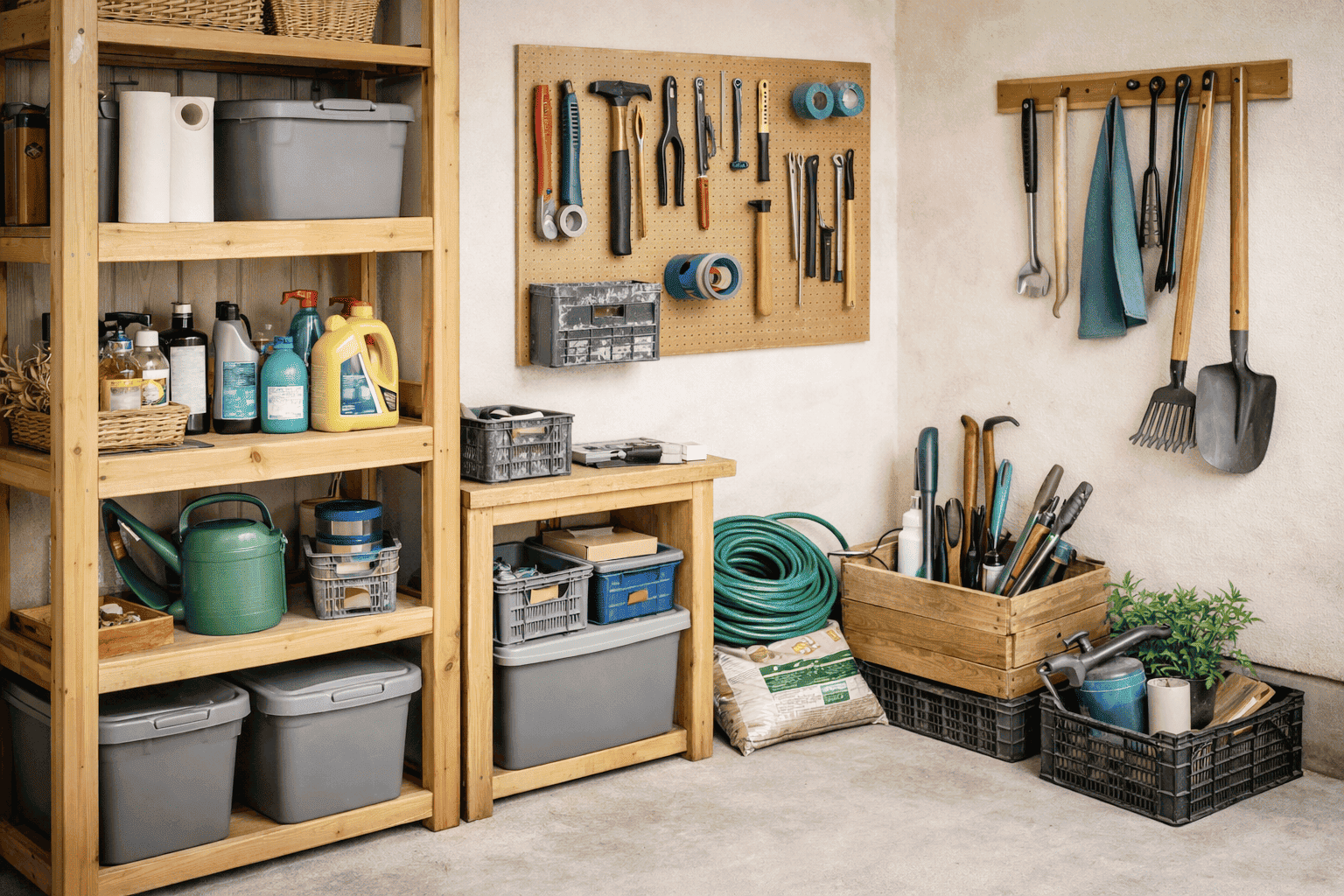
This is what we did differently the second time I helped my aunt organize.
The first time, we just put things away neatly.
The second time, we made actual zones and, more importantly, made them obvious.
Zones just mean: tools go here, car stuff goes here, garden things go here, and so on.
The key is making each zone physically distinct, different shelf, different corner, different container types, so it is harder to just put the wrong thing in the wrong place without noticing.
We taped paper labels to the shelf edges.
Big letters, clear categories. It sounds like something you do for a five-year-old, but that is the point.
When something has a specific home that is labeled and obvious, people are slightly more likely to use it.
At that time, For my aunt’s garage the zones ended up being: car maintenance items on one shelf, low down; tools on wall nails plus a small wooden tray; garden equipment in the corner with the crate; and a “random household overflow” zone on the top shelf for anything that belongs in the house but keeps ending up out there.
5. Accept the Family Chaos and Plan Around It
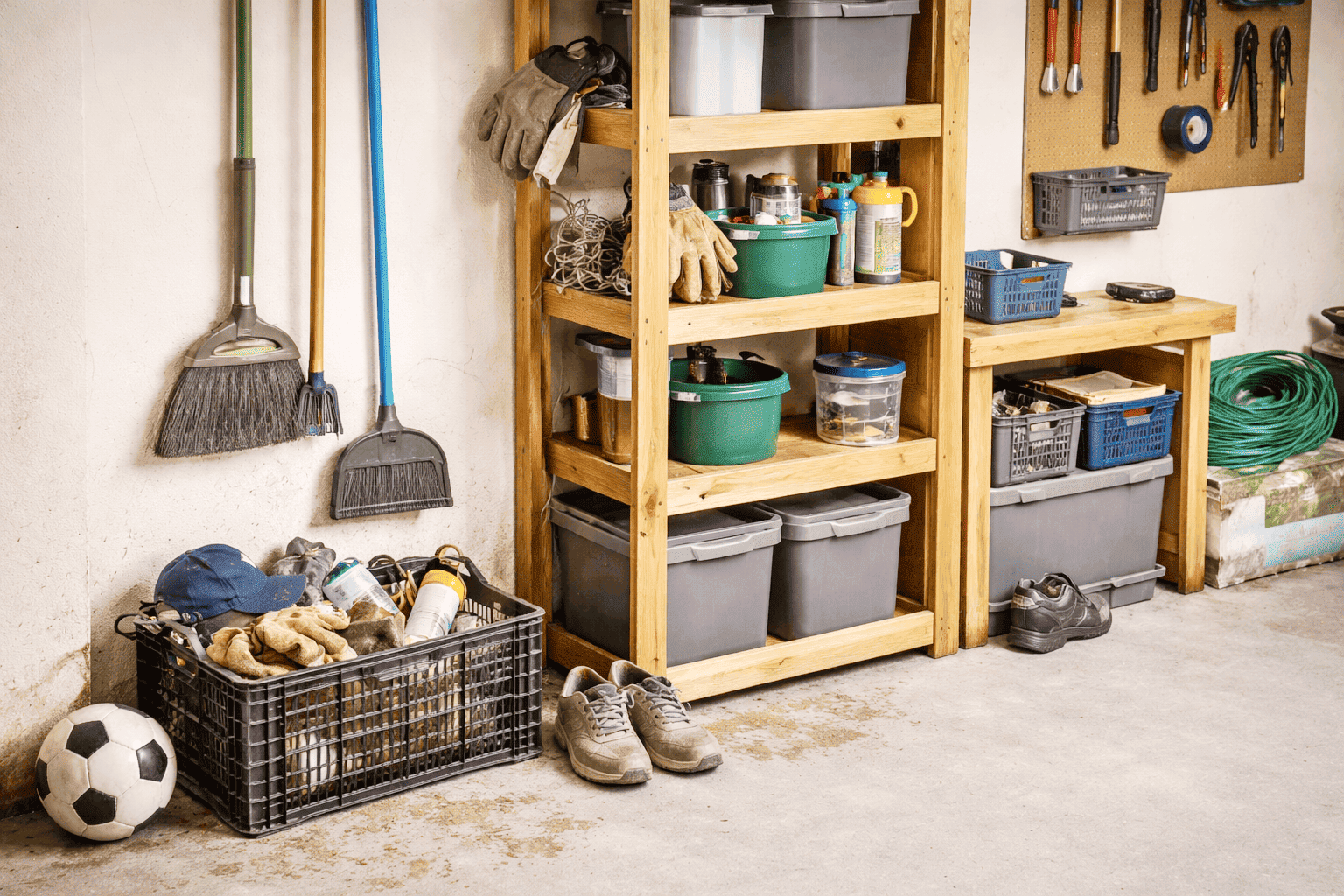
Organization in a shared space has a ceiling when not everyone in the household is on board.
My aunt’s husband means well. Her son, my younger cousin, does not think about it at all. Things end up back on the floor.
What actually helped a little:
- Making the right place easier than any other option. If the broom hook is right next to where you walk in, people use it. If it is across the garage, they lean the broom against the nearest wall.
- Keeping a real random dump zone, a single crate near the door where people can throw things temporarily, which gets sorted out once a week. Better than pretending everyone will put things away properly every time.
- Accepting some disorder as normal. The zone is still useful even if it is not perfect every day.
You probably cannot organize a shared garage once and have it stay that way.
That is just not how shared spaces work.
A lighter reset every few weeks, fifteen minutes, not a whole day, keeps things from getting back to where you started.
Quick Notes for Small or Renter Garages
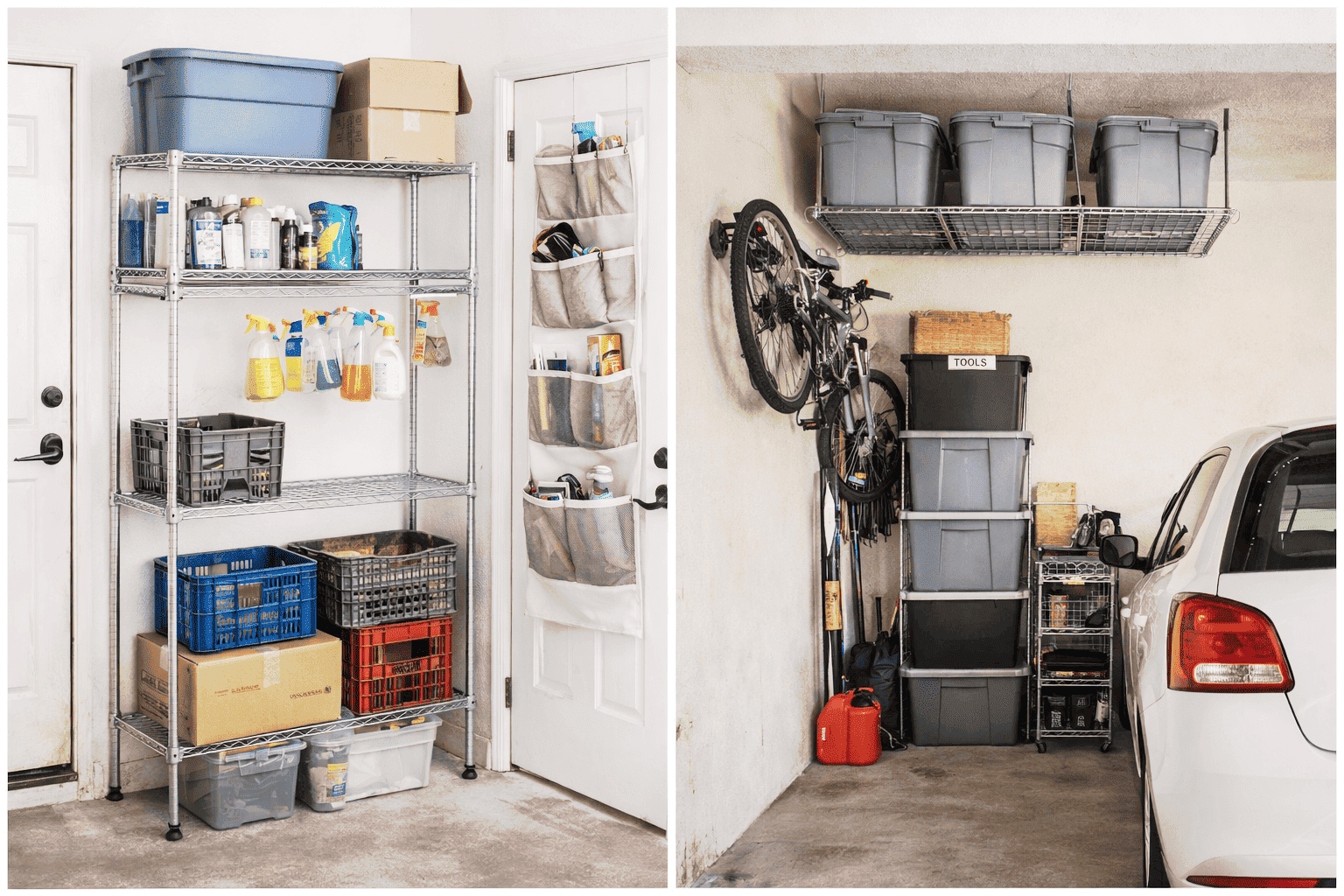
No drill options:
- Freestanding wire shelves, no wall attachment needed, stable enough for most loads
- Over the door organizers, if your garage has an interior door
- Stackable crates or bins arranged in a corner tower
- Tension rods between shelves for hanging spray bottles or small bags
Tiny garage under 200 sq ft:
- Dedicate one wall to all storage so the rest stays clear for the car or movement
- Use the ceiling if it is accessible and safe, and an overhead shelf for rarely used items saves both floor and wall space
- Be ruthless about what actually belongs in the garage versus what is just stored there out of habit
Where to Actually Start
If I were doing my aunt’s garage again from scratch, I would spend the first hour just sorting everything out, three piles, no skipping.
Then I would bring in whatever containers are already in the house and figure out zones before touching a single shelf or hook.
That sequence matters because everything else depends on knowing what you are actually keeping.
The cheap garage organizing ideas that hold up over time are not the most elaborate ones. They are the ones that are easy enough for even the less cooperative family members to mostly follow. Lower bar, better odds.
You will not get it perfect the first time. Neither did we. But you will feel better about the space, and that is worth the Saturday.
A Few Questions People Actually Ask
Can I organize my garage without spending any money?
Yes, if you have containers at home and can do the sorting yourself.
The zero-cost version is: empty everything out, get rid of what you do not need, bring in containers you already own, and put things back in zones.
What is actually worth buying if I do have a small budget?
A freestanding wire shelf is the most useful single purchase, especially if you cannot drill.
After that, a pack of large adhesive labels so zones stay clear. That is probably $30 to $50 total, and it makes the biggest difference per dollar spent.
How do I keep it organized when everyone else keeps messing it up?
You probably cannot keep it perfect.
What you can do is make the right spots very obvious and easy, keep a landing zone for things people dump, and do a short reset every few weeks rather than waiting until it is completely gone again.
Is a pegboard actually worth it for a small garage?
It is useful for tools if you use them often, but it needs drilling and some upfront cost for the hooks.
If your budget is tight, wall nails and a wooden crate get you most of the same result for almost nothing.
Pegboard is a nice upgrade, not a starting point.

Abraham is the creator of Mountain Bike Insider. He is a writer and researcher who enjoys mountain biking, working on DIY projects, organizing spaces, and testing ideas in real life. He focuses on clear and honest explanations based on experience and research, without pretending to be a professional expert.